The bond market seems worried about oil prices and inflation, implying investors foresee a potential interest-rate hike ahead.
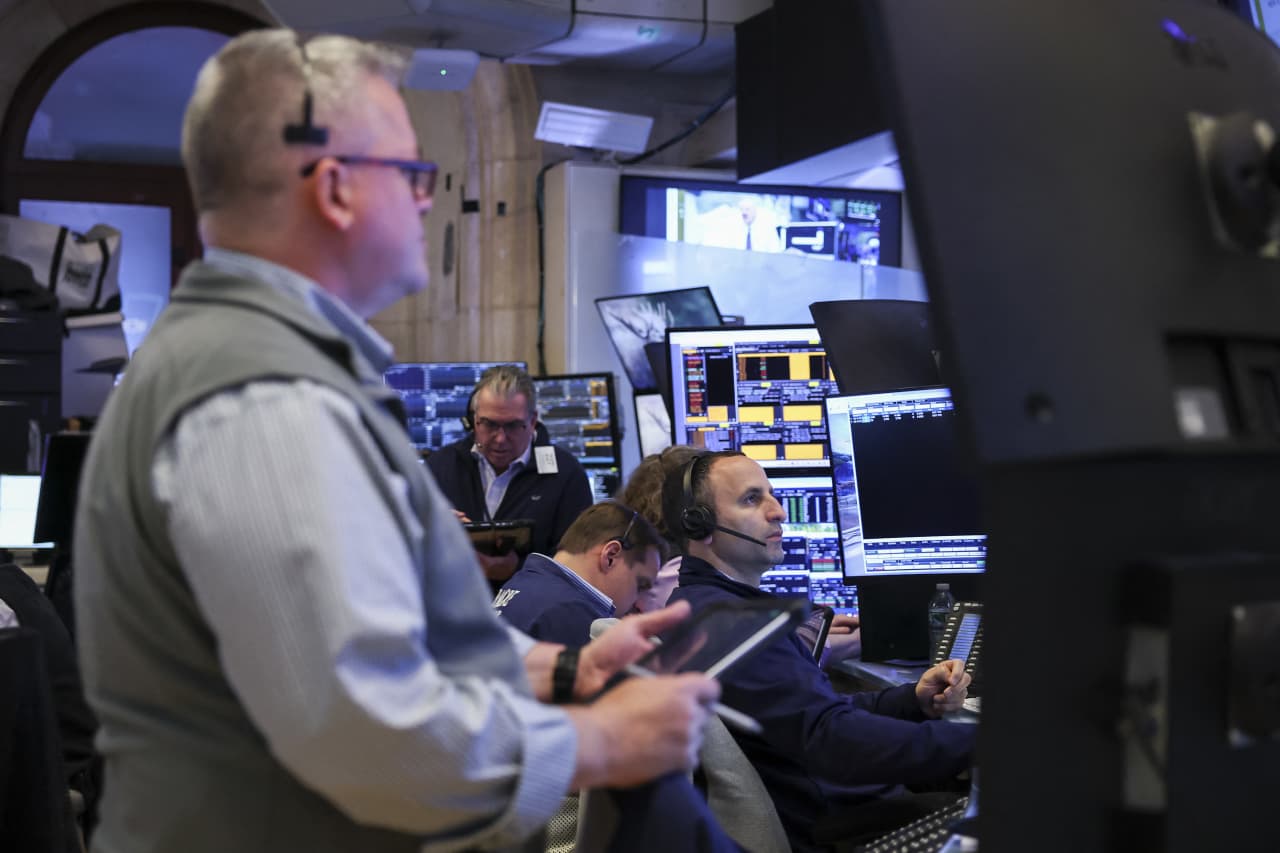
Forget oil and water. The market is moving on oil and AI, but mostly the latter.
The Dow Jones Industrial Average was up 0.04% this week, while the S&P 500 index was rising 0.59% and Nasdaq Composite was gaining 0.65%.
April’s consumer price index on Tuesday showed inflation jumped to a three-year high on higher energy prices. Stocks initially dropped on the news but quickly recovered because they were taking their cues more from the artificial-intelligence trade.
That tracks with Wall Street’s recent pattern of ignoring Main Street’s pain. Only the bond market seems worried about oil prices and inflation. The two-year Treasury yield traded above the current federal-funds rate on Thursday, implying investors foresee a potential interest-rate hike ahead. The 10-year Treasury yield surged above 4.50%, its highest level in nearly a year.
While consumer sentiment remains near historic lows, the K-shaped recovery means higher-income Americans are still spending, offsetting everyone else’s belt-tightening: Real spending among households earning more than $125,000 is up 7.6% since January 2023, dwarfing that of other cohorts, and the top 20% of earners now account for about 60% of spending, according to Moody’s.
Similarly, Big Tech is the engine behind earnings growth, creating a K-shaped dynamic among stocks too, notes Ameriprise Financial Chief Market Strategist Anthony Saglimbene. The 10 largest S&P 500 stocks now make up more than 40% of the index, eclipsing the dot-com-era peak. Amazon.com, Alphabet, and Meta Platforms alone represent some 70% of this year’s increase in the index’s earnings expectations, he writes. “Notably, the two K-shapes feed off each other as well…the top 10% of households by wealth hold over 87% of all corporate equities and mutual funds.”
No surprise, then, that a few tech stocks were enough to push the S&P 500 to three new records this past week, and bolster confidence among America’s wealthiest.
It also works the other way, however.
Friday saw profit-taking in tech after a monster month when the iShares Semiconductor exchange-traded fund rose by more than 25%, and even the formerly out0of-favor iShares Expanded Tech-Software Sector ETF rose by double-digits. Without that focus on AI’s growth expectations, investors were reminded that the “the remainder of the market is reflecting more mixed outlooks as Iran/oil/inflation concerns,” writes Citi strategist Scott Chronert.
On that last point, oil prices again moved higher on Friday, as there remains no movement on reopening the Strait of Hormuz. In fact, there was little substantive to emerge from the summit between President Donald Trump and China’s Xi Jinping that ended Friday, despite hopes that the meeting would result in deals from aerospace to semiconductors.
READ MORE TRADER
Still, at least the status quo was maintained, and the White House predictably called the meeting a success. Nonetheless, “underlying tensions remain unresolved,” writes Capital Economics’ Julian Evans-Pritchard. “And the durability of this truce depends less on the warmth of the words exchanged by the two leaders than on the credibility of the deterrents they can wield against each other.”
None of that might matter once tech gets its mojo back. The S&P 500 is set to rise for seven straight weeks for just the third time in a decade. In each of the 30 times that has occurred since 1950, the index was positive over the following three months by an average of 8%, notes Mark Hackett, chief market strategist at Nationwide’s Investment Management Group.
Onward and—one hopes—upward.
Write to Teresa Rivas at teresa.rivas@barrons.com