India’s youthful population is more interested in domestic consumption than citizens in export-focused nations like China and Japan. That should drive growth for local businesses.
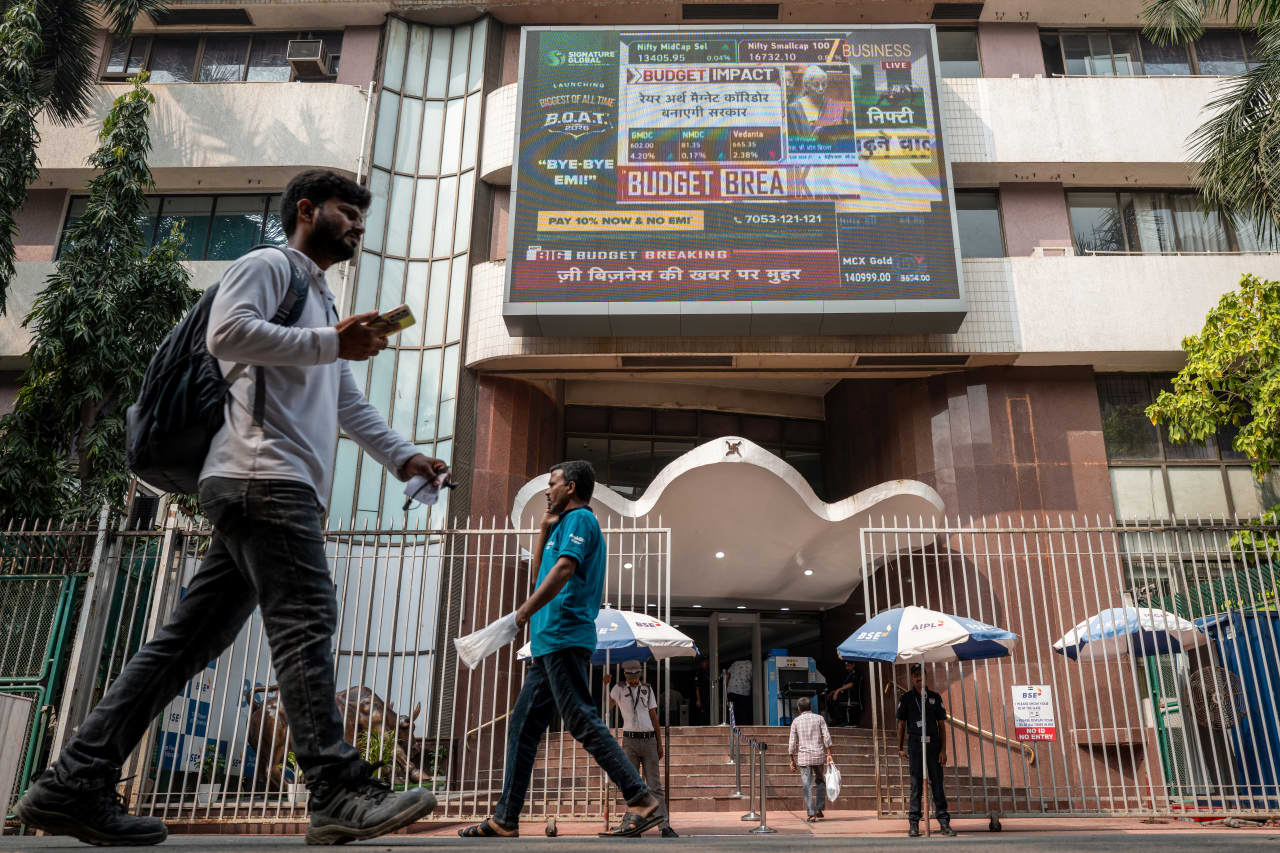
With a population of 1.5 billion and an economic growth rate exceeding 6%, India should be a financial powerhouse. But lately its stock market returns have been downright weak.
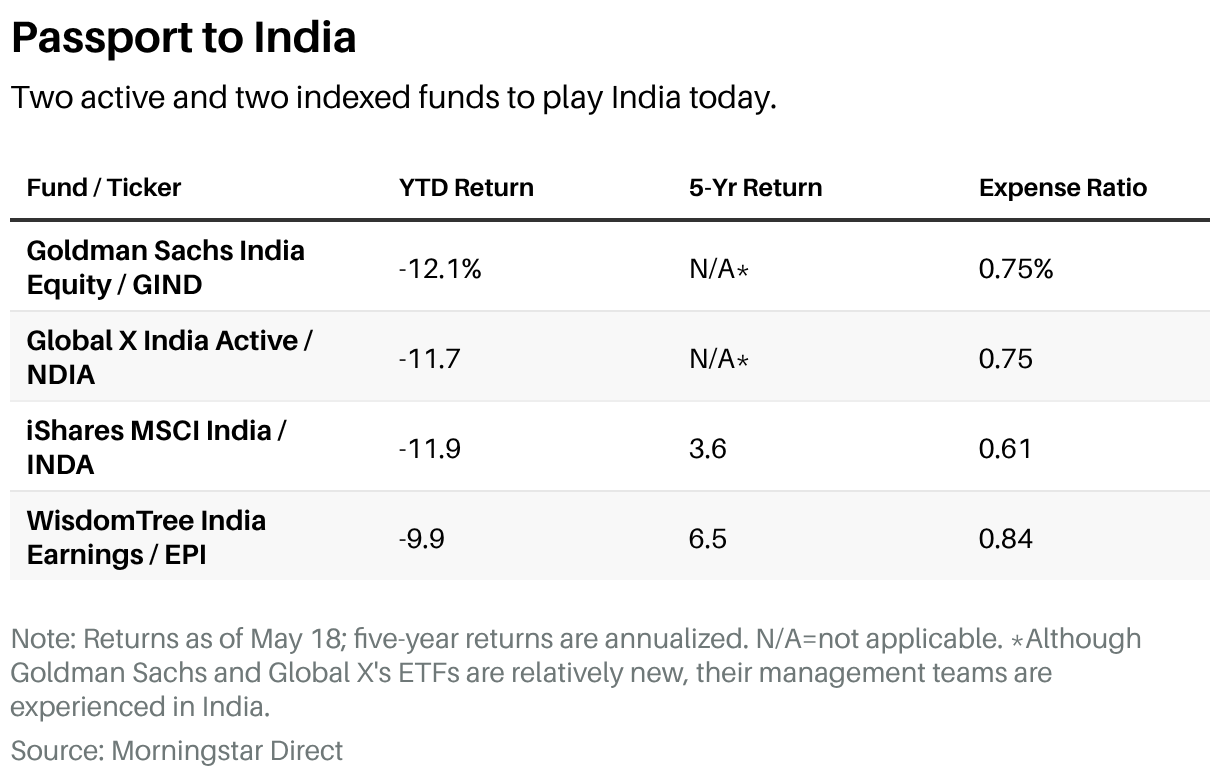
The largest India-focused exchange-traded fund, the $6.7 billion iShares MSCI India ETF, is down 12% in 2026 after returning only 2.5% in 2025—even though India is the world’s most populous country, with the fastest gross-domestic-product growth rate of any country represented in the $29 billion iShares MSCI Emerging Markets ETF. That diversified fund returned 33.3% in 2025 and is up 18.7% this year, leaving India in the dust.
One reason for the outperformance of other emerging markets is the artificial-intelligence boom. First there was the news about Deep Seek AI from China, says Malcolm Dorson, lead manager of the Global X India Active ETF. China started getting some of the emerging markets asset flows, but Taiwan and Korea benefited the most, thanks to semiconductor companies like Taiwan Semiconductor Manufacturing, Samsung Electronics, and SK Hynix. Those three now account for 26% of MSCI’s emerging markets index, each soaring more than 100% in the past year.
In the process, India has been overlooked. Worse, this year, the Iran war has caused oil prices to spike, leading to a 10% drop in the iShares MSCI India ETF in March. India is the world’s third-largest oil importer.
Despite that backdrop, India remains a powerhouse. “You can’t ignore India’s demographic picture,” says Chris Gannatti, WisdomTree’s global head of research, referring to the country’s increasingly educated population and its median age of 28. “It’s probably the best singular demographic picture worldwide.”
India’s youthful population is more interested in domestic consumption—buying cars, houses, and so on—than citizens in export-focused nations like China and Japan. That should drive growth for local Indian businesses, making them more resilient to geopolitical problems like trade wars and tariffs. Even oil is less problematic for local companies that don’t ship goods overseas.
All of which means that careful stock-picking that focuses on local consumer-driven businesses should pay off in India. Perhaps the most promising actively managed fund is Goldman Sachs India Equity. Although the ETF only launched in April 2025, its management team has been running India funds available outside the U.S. successfully for 17 years via the $3.8 billion Goldman Sachs India Equity Portfolio. That fund has beaten its peers handily in the past 15 years.
“We continue to like financials and also have a good overweight in consumer-discretionary companies,” says Basak Yavuz, the Goldman fund’s co-manager. But she has a particular focus on wealthy consumers “who would be able to deal with high oil prices in a much better way” than those of more modest means.
Yavuz has a team of 10 analysts and experts working in India, often researching smaller domestic companies not found in the MSCI India index, or only in tiny amounts. One consumer-driven example is Amber Enterprises India, a rapidly growing household air-conditioner manufacturer, which the team has invested in since it went public in 2018. “India’s household AC penetration stands at under 10% versus 30% globally,” Yavuz says. “That number in India is expected to hit close to 50% by 2037, according to government projections.” India is one of the world’s hottest countries.
Global X India Active is also a solid actively managed choice. It collaborates with a 12-person analyst team in Mumbai run by Mirae Asset, Global X’s parent company. WisdomTree India Earnings isn’t active, but its earnings-based screen captures smaller, highly profitable companies catering to India’s domestic consumers.
“The domestic local story is critical, in our opinion,” Gannatti says. “The reason India is growing at 6% is not exports. India is a consumption-based economy, similar to the U.S.”
That shouldn’t be overlooked, regardless of where oil prices head.
Corrections & Amplifications: The Global X India Active ETF collaborates with a 12-person analyst team in Mumbai run by Mirae Asset, Global X’s parent company. An earlier version of this column incorrectly said that the analyst team was run by Global X.
Write to editors@barrons.com