The emergence of military drones in the 21st century could undermine the importance of naval supremacy.
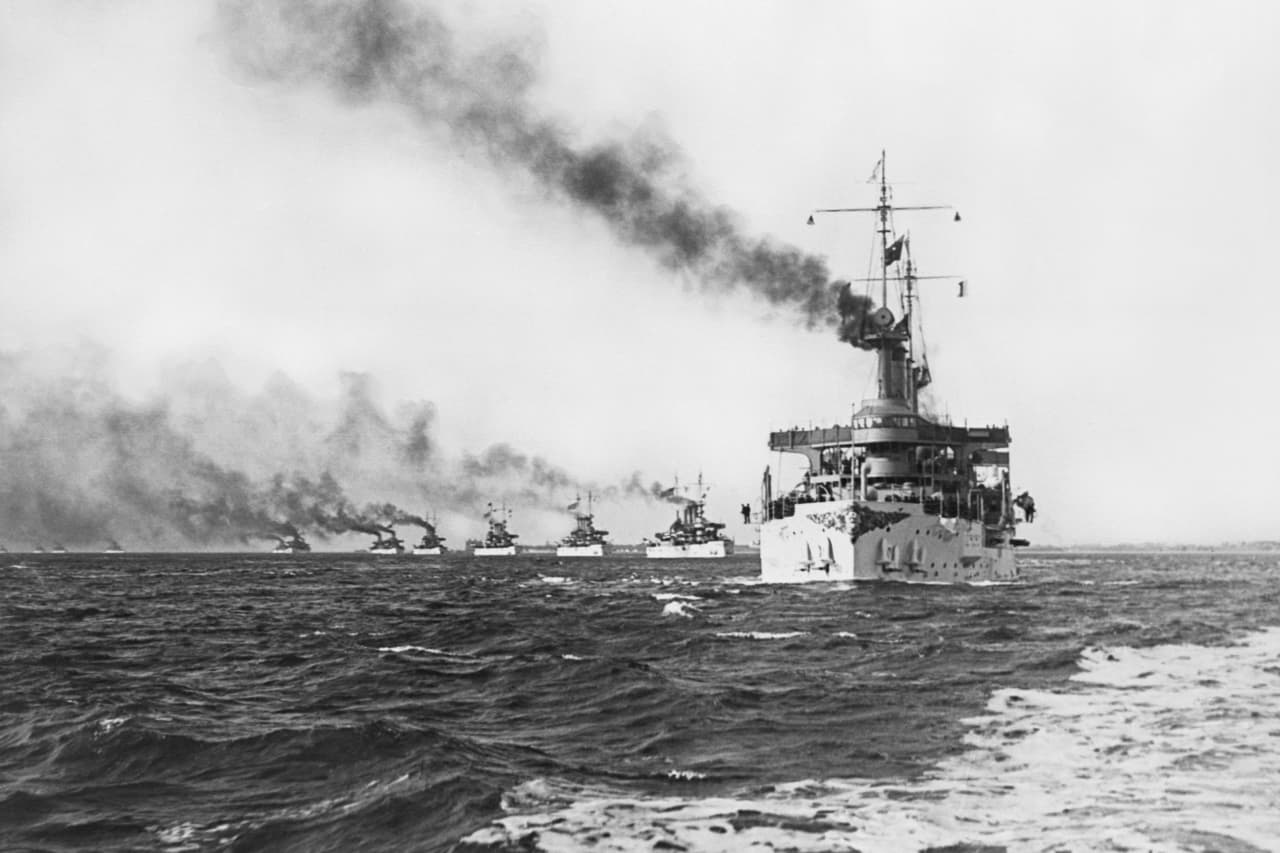
Alfred Thayer Mahan, father of the theory that naval supremacy is the key to national power, would approve of Donald Trump’s plan to build a new “golden fleet” of battleships.
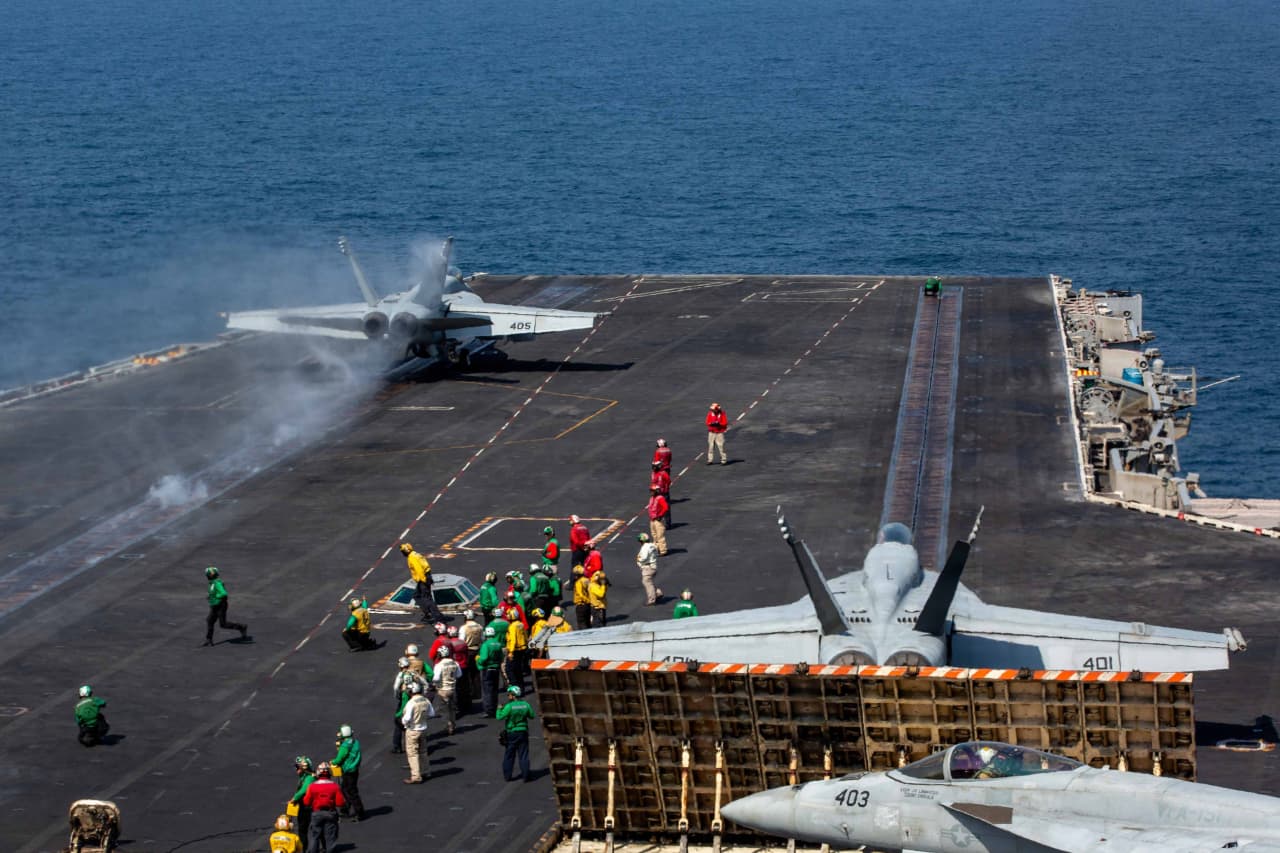
But Mahan died in 1914. Military tactics and equipment have evolved. The battleship was supplanted as king of the seas in the 1940s by the aircraft carrier. And the emergence of military drones in the 21st century is changing the paradigm again.
Nowhere is this more evident than in the Strait of Hormuz, the narrow Persian Gulf waterway through which a fifth of the world’s oil normally travels. Iran shut the strait after the U.S.-Israeli attack on Feb. 28, and has enforced the closure with drones, speedboats, and mines—even as three American carriers are deployed in the region.
The U.S. and Iran continue to negotiate the strait’s reopening. Meanwhile, the resulting increase in oil prices has acted as a drag on the global economy, with the International Monetary Fund cutting growth forecasts and raising inflation expectations.
Russia’s invasion of Ukraine in 2022 caused similar spikes in commodities as it disrupted Black Sea shipping.
From Houthi piracy on the Red Sea to China’s military buildout on the South China Sea, freedom of the seas is under its most serious threat since World War II.
And, for the first time since then, the U.S. may not be able to enforce that freedom. The resulting economic costs range from rising consumer prices to a drop in international investment to higher taxes to increased military expenditures.
Mahan would be dismayed.
A U.S. naval officer, historian, and military theorist, Mahan argued that control of the seas was the key to empires from Rome to Britain. His book, The Influence of Sea Power Upon History, 1660-1783, published in 1890, found disciples in Theodore and Franklin Roosevelt, Winston Churchill, Kaiser Wilhelm II, and the Japanese imperial naval ministry, and shaped 20th-century history.
For Mahan, military power ensured economic stability.
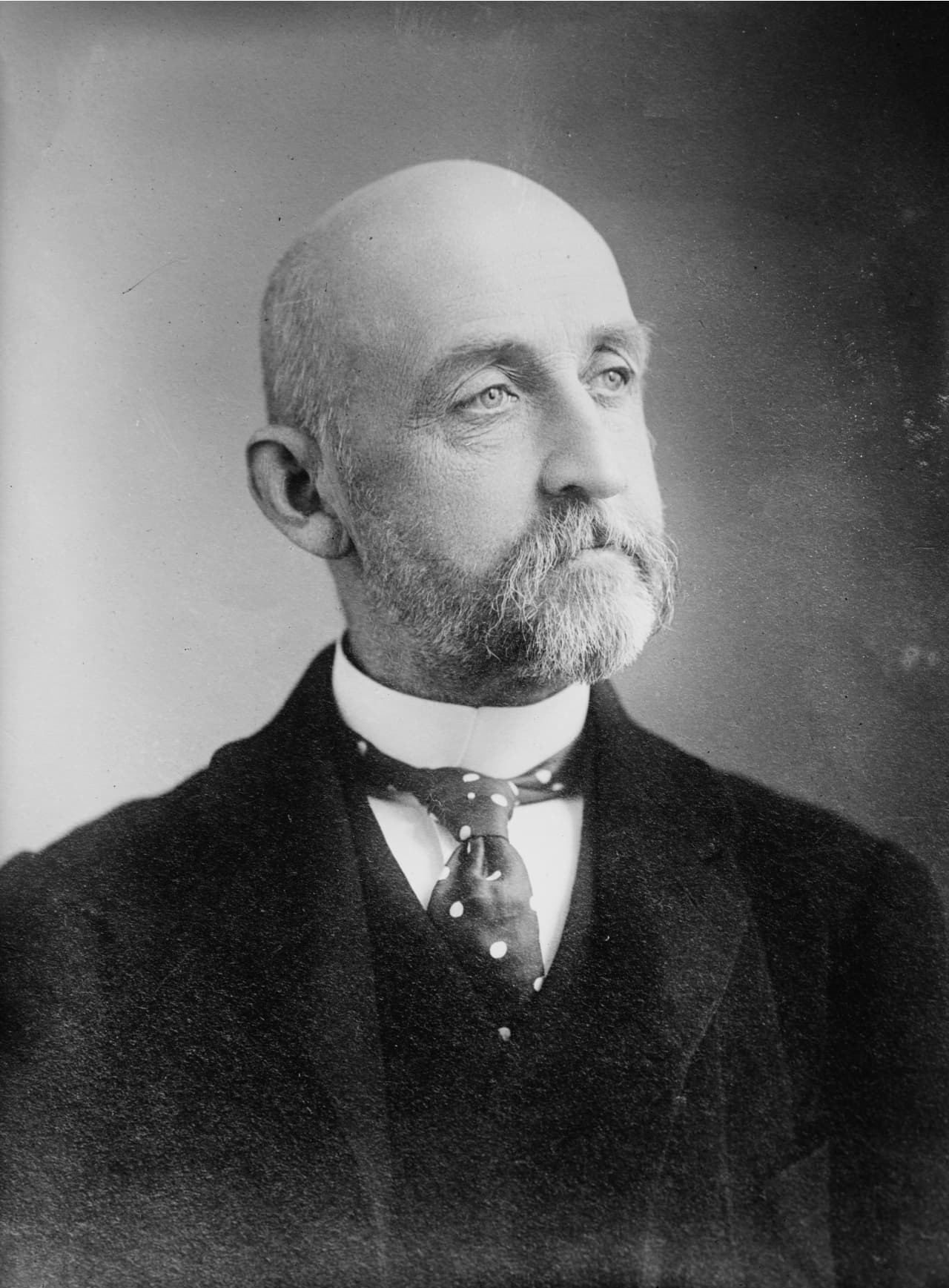
“The ships that thus sail to and fro must have secure ports to which to return, and must, as far as possible, be followed by the protection of their country throughout the voyage,” he wrote in Influence.
When ports aren’t secure, and when protection isn’t assured, the costs of commerce go up. And the power of empires, which depend on free trade, is threatened.
The U.S. became a maritime nation by fate of geography.
“[T]ravel and traffic by water have always been easier and cheaper than by land,” Mahan wrote, and that was especially true for the 13 states stretched across 1,200 miles of eastern seaboard. American settlement hugged natural ports and navigable rivers. Roads were poor and mostly local.
Wall Street established itself as a trading center in colonial days. Brokers gathered at Merchant’s Coffee House there to speculate on goods, including slaves, hauled up from Murray’s Wharf on the East River. Stocks, bonds, and humans were sold at outdoor auctions.
Colonial trading was protected by Britain’s Royal Navy. Once the Revolutionary War commenced, and for years after, America’s merchant marine fleet was targeted by pirates of every stripe.
Only in 1794 could the U.S. afford a navy, thanks in part to a $200,000 loan from Alexander Hamilton’s Bank of New York. Seven years later, President Thomas Jefferson sent the fleet—three frigates and a schooner—to subdue pirates disrupting shipping along North Africa’s Barbary Coast.
“Our commerce in the Mediterranean was blockaded; and that of the Atlantic in peril,” Jefferson wrote in his message to Congress on Dec. 8, 1801. “The arrival of our squadron dispelled the danger.”
It wasn’t that easy. The Barbary wars went on for more than a decade. Trade was also at issue in the War of 1812, when the U.S. sided with Napoleonic France in its death struggle with Great Britain. America paid for its choice with a torched capital.
Mahan graduated the Naval Academy in 1859 and, after an undistinguished career at sea, led the Naval War College in Newport, R.I.
There he formulated his concept of sea power, centered the college’s curriculum around it, and earned international acclaim for his writing.
Mahan had no bigger fan than Teddy Roosevelt, who in a review for the Atlantic Monthly called Influence “the best and most important” modern book on naval history. Both men were imperialists who saw the uncompleted Panama Canal as key to U.S. power.
Roosevelt employed Mahan’s theories as assistant secretary of the Navy during the Spanish-American War in 1898, when the U.S. seized Cuba, Puerto Rico, the Philippines, and more.
And, in December 1907, President Roosevelt sent America’s 16 battleships—the “Great White Fleet”—on a yearlong tour of the globe. “Big Stick Afloat” was the New York Times headline on Aug. 21, 1908, when the fleet arrived in Sydney. Some locals saw it as a show of strength against “the yellow peril.”
By World War I, the U.S. had the world’s largest Navy, as well as the biggest economy. American production during the 1920s was so robust that foreign markets were needed to take its excess.
The losses inflicted on the U.S. fleet in 1941 at Pearl Harbor by the Japanese, in whose navy Mahan was required reading, were soon replaced, and then some.
FDR’s “arsenal of democracy” produced 10 battleships, 27 carriers, 211 submarines, and 310,000 aircraft to help win the war and establish Pax Americana. This era of (almost) free trade held sway into the 21st century.
Now, threats abound. China’s navy outnumbers the U.S.’s and is catching up in quality. Drone warfare has shown its effectiveness against traditional military strategies.
The new fleet of Trump-class ships, the first perhaps ready for delivery in the early- to mid-2030s, may find Pax Americana in tatters.
Write to editors@barrons.com