Once the war ends, there will still be a long period of adjustment as countries rebuild stockpiles and Middle East producers restore lost production.
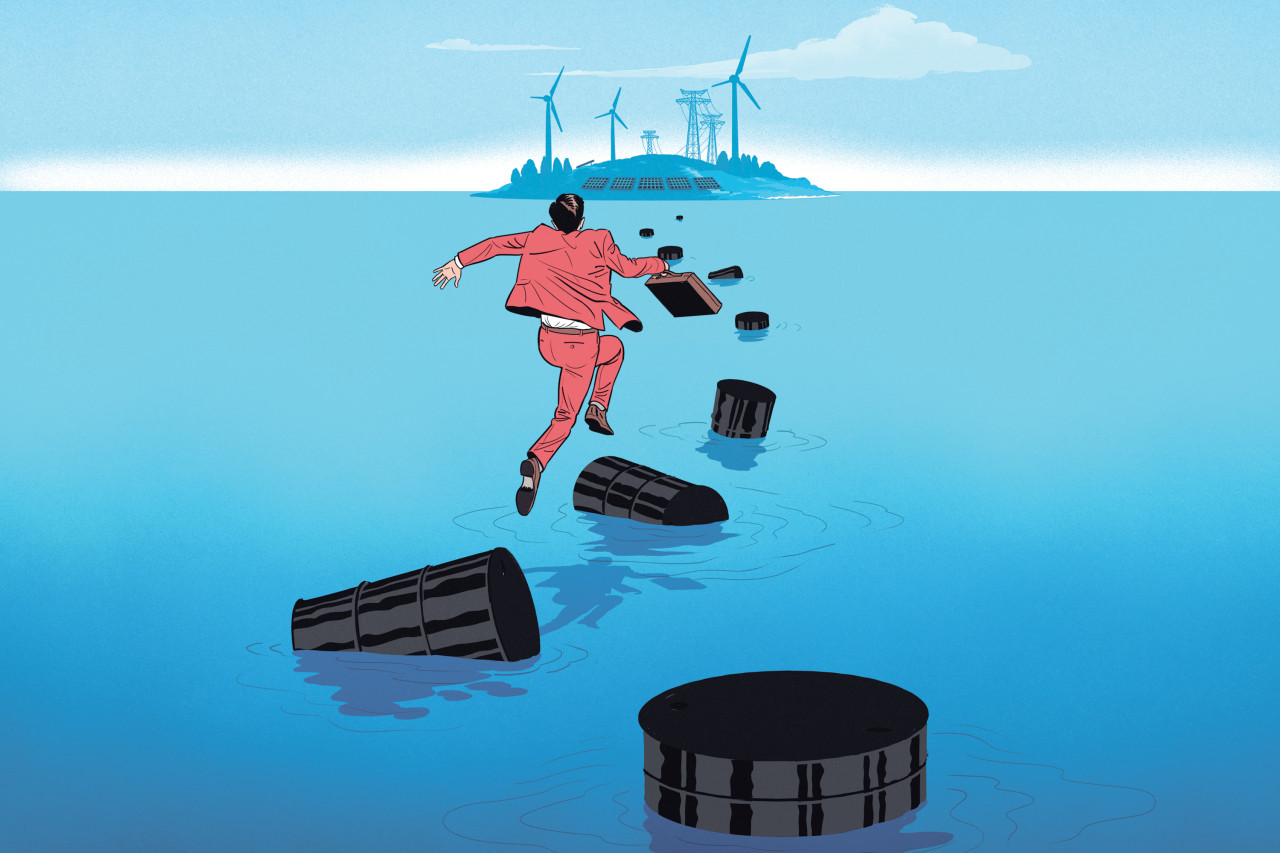
A new world order is emerging in global energy markets, creating both havoc and opportunity for investors.
The Iran war’s historic disruption of oil-and-gas production and shipping through the Strait of Hormuz has resulted in shortages and soaring prices. It has also set off a global rush to secure supplies.
The chaos won’t be sorted out quickly. Even when the war ends, there will still be a long period of adjustment as countries rebuild stockpiles and Middle East producers restore lost production. Oil prices will be volatile and likely higher for a while. In the case of Qatar, it will be years before a portion of its liquefied natural gas shipments resume.
“The crisis in the gulf and the Strait of Hormuz is a defining moment for world energy that will reshape energy markets globally,” says S&P Global Vice Chairman Daniel Yergin, an energy historian. “It means a rethinking and new emphasis on energy security and resilience, a drive to develop new sources globally, an increase in investment, and a further push to electrification.”
READ MORE GUIDE TO WEALTH
Where there is disruption, there can be opportunities for investors. U.S. crude oil prices briefly surged to nearly $120 a barrel in March, and even if they remain in the $70s and $80s when the conflict is resolved, that is high enough to allow energy companies to expand capital budgets and increase exploration and production, or E&P.
This also comes as the world faces tremendous growth in demand for power to fuel the data centers required for artificial intelligence. Data center electricity demand will grow from 5% of total U.S. demand to about 14% by 2030, says Yergin.
The need to produce more energy and provide secure and reliable supplies has made all energy sources, from fossil fuels to renewables, more important. And for investors, the cycle during which traditional energy investments are rewarded may in fact be lengthened.
The War’s Impact
The shutdown of the Strait of Hormuz has choked off shipments of crude, LNG, and refined fuel.
Shutdowns and damage to Middle Eastern infrastructure have also resulted in a more than 40% decline in oil production there. According to S&P Global Energy, 84 million metric tons of LNG—or 17% of global capacity—is offline, and 13 million metric tons won’t be restored in Qatar until 2030.
The share prices of oil-and-gas companies rallied ahead of the Feb. 28 start of the Iran war, but trading has been choppy since then. The State Street Energy Select Sector SPDR exchange-traded fund is up nearly 32% year to date but just 6% since the war began.
“I think the problem at this moment is that energy investors are basically paralyzed,” says Bank of America analyst Jean Ann Salisbury. “Nobody wants to be the sucker who buys energy the week before the strait opens.” Once there is a resolution in the Middle East, she expects energy stocks will first sell off, followed by an influx of buyers.
“Everyone is waiting for a pullback” in energy stocks, says Lloyd Byrne, head of North American energy research at Jefferies. Once the war ends, he expects near-term oil prices to hover in the $80 to $85 a barrel range as crude supplies are rebuilt. That should push up industry profit margins.
U.S. Energy
The global energy picture has become more complicated, but the U.S. is well positioned for the future. U.S. exports of oil and fuel have risen. And while citizens have felt the impact of the war at the gas pump, the U.S., as the world’s largest energy producer, has been relatively insulated from supply shocks, unlike countries in Asia and Europe.
The environment today is far different from earlier this year, when there was an oil glut and U.S. producers worried about low prices. Oil prices would have gone even higher after the war began were it not for drawdowns of inventories around the world, including the U.S. Strategic Petroleum Reserve.
Both Exxon Mobil and Chevron warned in late May that the world is running low on inventories and prices could rise even more this summer.
“The buffers and the shock absorbers are being steadily drawn down, and the ability for the market to absorb this imbalance is drastically diminished today versus where we started,” Chevron CEO Mike Wirth said at an investment conference.
The market keeps assuming the war will end within weeks, but the outlook for oil prices remains clouded. If peace isn’t reached soon, prices could go higher. If they go too high, that could crush demand and hurt the global economy.
“The strait has to be opened within weeks at this point for prices to remain stable,” says John Kilduff, founder of Again Capital, a commodities consulting firm. “If that doesn’t happen, you’ll see more shortages, first in Asia and then Europe. You’ll see more flights canceled, and the price here at the U.S. pump will be at record highs.”
The war was expected to end within weeks but now has entered a fourth month. Some of the most intense fighting since the start of the cease-fire in April broke out in the past week, as diplomatic efforts seemingly stalled.
• • •
“The market is much more comfortable, calm, and complacent around the outcome,” says Dan Pickering, chief investment officer at Pickering Energy Partners. “That’s either going to be right or wrong. If peace is breaking out, that is a good thing.” But he says normal conditions will take time to reappear because of supply disruptions.
“What you have heard consistently from the industry is that opening the strait is the prerequisite, and then you’ve got to fix everything that is broken and get the supply chain back into shape,” he says. “The reality is that normal is pretty far off.”
The longer the strait is closed, the higher prices could go, and they won’t go back to where they were just because the war ends. Pickering expects oil could initially be in the mid $70s to low $80s a barrel after the war, but stay in the mid to high $70s even through 2027 and 2028.
Investing Opportunities
LNG exporters, major and independent oil-and-gas companies, refining companies, and services companies are among those that could benefit in the post-Iran war world. Natural-gas stocks have lagged behind those other categories, but growing gas demand from data centers and LNG—which expands the geographic market for natural gas by freeing delivery of the energy source from reliance on pipelines—could make them more attractive. According to S&P Global Energy, LNG cargoes represent 15% of the global gas market.
Byrne says companies are waiting to see where prices go before making new commitments to increase spending and drilling. The focus on supply security makes demand for energy from new and diverse sources even greater.
“You’re going to have an offshore deepwater cycle caused by diversification of supply. People will be looking for sources of gas or resources in different regions,” he says, adding that will be good for oil services companies like and Baker Hughes.
Pickering says the industry’s profit outlook has improved with higher prices and the drawdown in oil inventories. “If you want to play a tightening oil market, I think the upstream sector far and away gives you the best leverage to that,” says Pickering. Upstream refers to oil and gas exploration and production, while midstream refers to transportation, pipelines, and storage, and downstream is refining and production.
Pickering favors the large independent E&P companies over majors like Exxon Mobil, Shell, and Chevron, which handle all facets of the energy business. “The majors have the same type of exposure but just less financial leverage to them. You’ve got more oomph from the independent E&P companies,” he says. Occidental Petroleum, ConocoPhillips, Diamondback Energy, and Devon Energy are examples of these stocks.
Even though he likes the independents more, Pickering says the majors will do well in an energy upcycle. “There’s a lot to like in those companies,” he says. “They’re obviously more complicated, and their earnings won’t grow quite as fast as the independent E&Ps,” he said. The majors have exposure to E&P, refining, chemicals, and diverse geographic assets.
“As far as access to global projects, nobody’s better positioned than Exxon, Chevron, Shell, BP, et cetera,” he says.
RBC analyst Scott Hanold says some independent E&P companies are doing all they can to produce more by increasing efficiency in their wells without adding more equipment, as they wait for the war to end.
If oil remains above $70 a barrel, U.S. production should grow as profits plus the need to replenish oil stocks justify spending on new equipment. Hanold expects to see the U.S. produce 400,000 to 500,000 additional barrels a day next year, on top of an increase of 200,000 to 300,000 barrels a day this year.
During the conflict, U.S. production edged higher and is currently at a record 13.7 million barrels a day, according to the Energy Information Administration. Globally, production of oil and other liquids fell because of disruptions caused by the war and is expected to be down 6.4 million barrels a day this year from the total 107 million barrels a day last year. Next year, production is expected to climb 10.1 million barrels a day from this year for a total of 110.8 million barrels a day, according to S&P Global Energy.
Independent E&P companies have made themselves more attractive in recent years because of their focus on stock performance and return on capital. “There’s a certain amount of maturation that is happened in the U.S., and a lot more discipline with the operators,” says Hanold. “The bottom line is companies will be disciplined even if this good pricing persists into the coming years.”
Among stocks he likes are Diamondback Energy and Permian Resources. Both are focused on the 75,000-square-mile Permian Basin, the largest U.S. shale basin, which stretches from western Texas into New Mexico. Both are cost leaders with strong inventories. He also likes ConocoPhillips, which is much larger and diversified with global operations.
While majors may not be as nimble as independents, they offer diversified revenue streams and steady dividends. Of the major oil companies, Salisbury prefers Chevron over Exxon, which has 20% of production in the Middle East, putting it more at risk for disruption.
Chevron now gets 2% of cash flow from Venezuela, and that percentage could double. “It feels like one outcome of all of this is there’s going to be a lot more opening up of new places” to extract oil, says Salisbury. She mentions Chevron’s holdings in Argentina, Libya, and Namibia. “There are all these pots they have on the fire….This could allow them to close some of the gaps.”
Natural Gas
Investors need to be strategic when it comes to natural gas. The stocks of gas producers have underperformed, while LNG stocks moved higher this year. Natural-gas producers extract the commodity from the ground. LNG companies, through a process called liquefaction, rapidly cool the resource into a liquid form so that it can be exported by ship.
“You have LNG infrastructure, which in theory is benefiting because so much LNG energy is going to be offline,” Salisbury says, adding that production in Qatar won’t be back to full strength for several years and new projects there slated for next year will be delayed. She recommends Cheniere and Venture Global.
An LNG glut looms, but Salisbury says it will now arrive in 2030 instead of 2027 because of current shortages. According to S&P Global Energy, the U.S. delivered a quarter of global LNG cargoes in 2025. U.S. liquefaction capacity is expected to more than double by 2032 and reach a third of global capacity.
U.S. natural-gas prices are low, even though global prices have jumped. Natural gas in Europe is five times more expensive than in the U.S., where supplies are ample.
“If you want to go totally against consensus, look at U.S. gas,” says Byrne. Global gas demand is large and growing, and while the U.S. is the largest exporter, the market hasn’t rewarded producers.
“The one I would buy right now is something that is a value and out of favor,” says Byrne. “Buy the best company with the best assets, and that is EQT.” Weak natural-gas prices in the U.S. have weighed on stock prices. EQT stock is down 3.4% over the past 12 months, and down about 10% since the war began.
What About Refiners?
Refining companies are attractive because of high margins, and they should benefit from rebuilding diesel inventories, says Byrne. But concerns that the White House could curb fuel exports if domestic gasoline gets too expensive overhang the sector. Energy Secretary Chris Wright has said the U.S. isn’t considering limiting exports.
“I think [refining] margins stay higher than people think for longer,” Byrne says. “It’s a lot of free cash flow, and these guys just buy back stock.” He recommends Valero Energy, up nearly 60% year to date. He also likes Cenovus, which owns refineries and produces oil in the Canadian oil sands in Alberta.
The margin on gasoline processed with West Texas Intermediate crude during May averaged $48.61 per barrel, up nearly 80% from a year ago, according to OPIS, a Dow Jones company.
According to Jefferies, the margin on gasoline processed with West Texas Intermediate crude was recently up 80% from a year ago, and is now at $45 a barrel.
Salisbury says that although refining margins are “through the roof,” she is neutral on the refiners she follows, including Marathon Petroleum and Phillips 66. She expects refining stocks to sell off when the strait opens, creating an opportunity. “I think at 10% to 15% lower, I would be a buyer,” she says.
The outlook for energy stocks will ultimately be determined by how the Middle East conflict is resolved and what the details of a peace agreement mean for oil and gas prices. Byrne points out that with each day that goes by, the industry will need to provide more supply to restore inventories.
The larger backdrop is that energy security has become even more critical, and U.S. oil-and-gas companies are well positioned to provide energy to the world.
“A cycle of profitability and higher values should be more apparent after the war when the dust settles,” says Pickering. With higher oil prices, “the companies should be more consistently profitable, and that means they should be more valuable.”
Write to advisors@barrons.com