On the night of July 14, 2018, a gang of rebels stormed a village in India’s Chhattisgarh state. Their target: the village chief, Poseram Kashyap, and his son, whom they beat savagely with sticks. Kashyap’s offense had been to support the construction of a bridge that the insurgents feared would lead to an influx of police looking to root out their hideouts in Bastar, an expanse of deep forests in the southern part of the state.
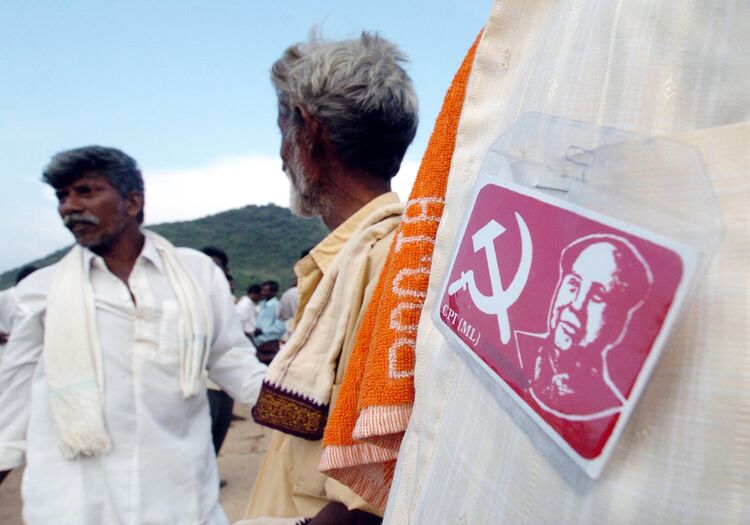
Kashyap didn’t survive the assault by the Naxalites, a group that originated in West Bengal in the 1960s and, drawing from the revolutionary ethos of China’s Mao Zedong, aspired to turn India into a loosely federated republic ruled by peasants and workers. His son Dhaniram was bedridden for a long spell and went into hiding with the rest of his family after another group of rebels returned to the village a year later to finish him off. “I could see death standing in front of me,” the 31-year-old says now of the ordeal.
As it turned out, the Naxalites were right to oppose the bridge. It was completed in 2022, and police patrols soon ramped up. In Chhattisgarh more than 550 rebels were killed in the last two years, over 1,300 were arrested, and almost 2,800 surrendered, according to India’s Ministry of Home Affairs.
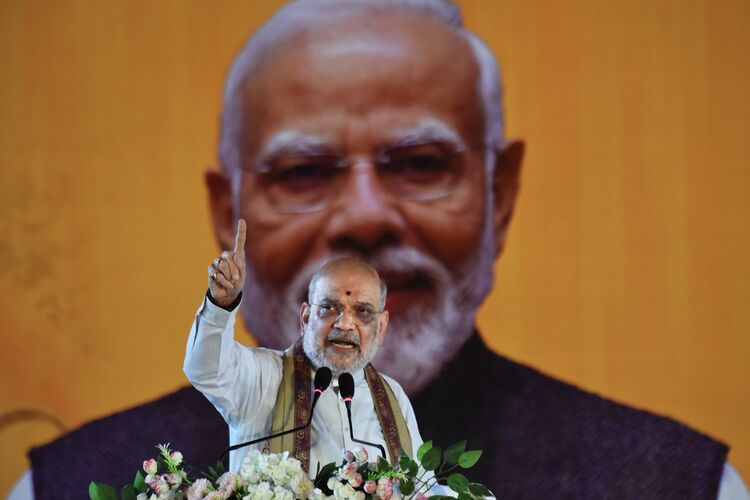
Amit Shah, minister of home affairs and the architect of the counterinsurgency campaign, declared to Parliament on March 30 that India was officially “Naxal free,” meeting a deadline Prime Minister Narendra Modi’s government set two years earlier to crush the insurgency once and for all. For Modi the milestone represents a triumph of a carrot-and-stick approach that combined a crackdown by security forces with an aggressive development push that plowed money into schools, clinics and social programs. As part of the strategy, authorities also offered payouts and other incentives for militants to lay down their arms.
At its peak in the 2000s, the movement counted more than 20,000 members spread out across the so-called Red Corridor, covering a third of India, including some of its most resource-rich territory. In 2010, Chhattisgarh was the scene of an infamous massacre in which rebels ambushed and killed 76 police . The incident marked a turning point, hardening the stance of authorities and dealing a severe blow to romanticized narratives that cast the rebels as merely idealistic freedom fighters .
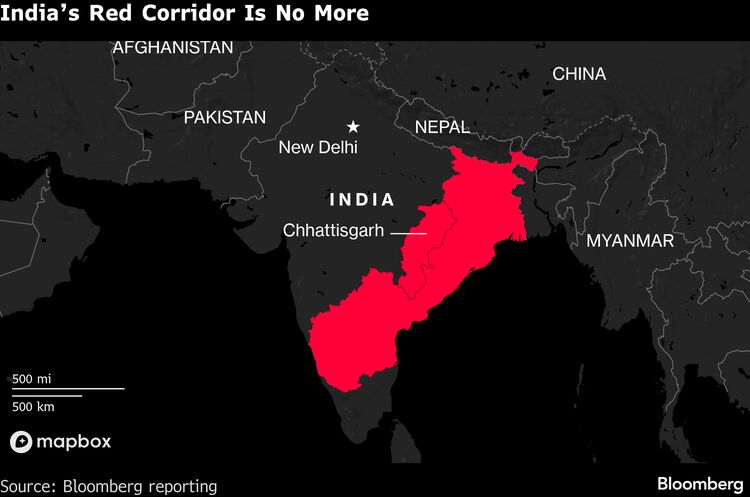
One of the militants’ last holdouts, Chhattisgarh is home to significant reserves of industrial metals and is thought to contain tantalizing amounts of highly prized critical and rare-earth minerals. Clearing the area of Naxalites and outfitting it with roads, telecommunications towers and other infrastructure opens the door to potentially billions of dollars in mining investment, which could further the government’s interlocking goals of boosting economic growth while curbing the country’s reliance on imports .
For now, local authorities are reluctant to discuss the possibility of opening up new tracts in the district to mining, out of concern this could reanimate a movement that had drawn support from lower-caste and tribal communities fearing expropriation of their land. Instead, officials say, connecting the area to basic government services is the priority. “At this point in time, the government’s focus is only development,” says P. Dayanand, Chhattisgarh’s mining secretary. “The local people of Bastar were deprived of basic amenities for so long.”
Opposition politicians and activists in Chhattisgarh, where Modi’s Bharatiya Janata Party has been in power since 2023, have long criticized the counterinsurgency drive as a Trojan horse for mining interests. Last year a top figure in the rival Indian National Congress party said the BJP sought to turn Chhattisgarh “ into a grazing ground ” for big Indian corporations. Meanwhile, some nongovernmental organizations and journalists have accused officials of concealing killings of innocent civilians and other human-rights violations by security forces. The Indian government and security forces have denied that abuses have occurred. The Ministry of Home Affairs didn’t respond to a request for comment.
The sparsely populated state is known for its lush forests, pristine waterfalls — and an abundance of raw materials. Official figures show it’s home to about a fifth of the country’s coal, bauxite and iron-ore reserves, as well as more than a third of its tin ore. Bastar itself contains niobium and tantalum, metals used in the manufacture of rockets, satellites and advanced batteries. Mining and mineral-based activities are already the second-biggest contributor to the state’s economy.
Last year the Chhattisgarh government auctioned two iron-ore blocks in Bastar. One was snapped up by a joint venture between ArcelorMittal SA and Nippon Steel Corp., two of the world’s top steelmakers; the other was awarded to a local private miner. The only major miner currently operating in Bastar is a government-owned company, NMDC Ltd., which runs two mining complexes producing 36 million tons of iron ore in the region.
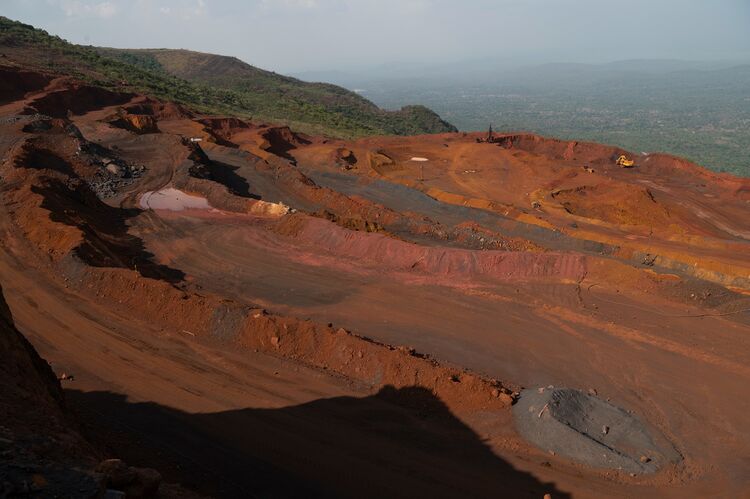
Sreedhar Kodali, the NMDC executive who jointly oversees the company’s mining operations in Bastar, recalls his days as a lower-level worker in the region in the 2000s. He says trucks and other mining equipment would be targeted for attacks, explosives used in mine blasting would be looted by militants who turned them into bombs, and rail lines used for transporting ore would be torn up in acts of sabotage. The incidents ended years ago, he says, but towers manned by police guards still dot the peaks of the company’s sprawling hillside mines. With the rebellion over, NMDC now has plans to substantially boost output in Chhattisgarh by the end of the decade, thanks to two mines slated to open in Bastar in the next few years, Kodali says. The expansion will cost about 260 billion rupees ($2.72 billion). According to Kodali, the expansion wouldn’t have been possible had the BJP leadership not succeeded in driving out the rebels. “This current government has taken strict measures,” he says.
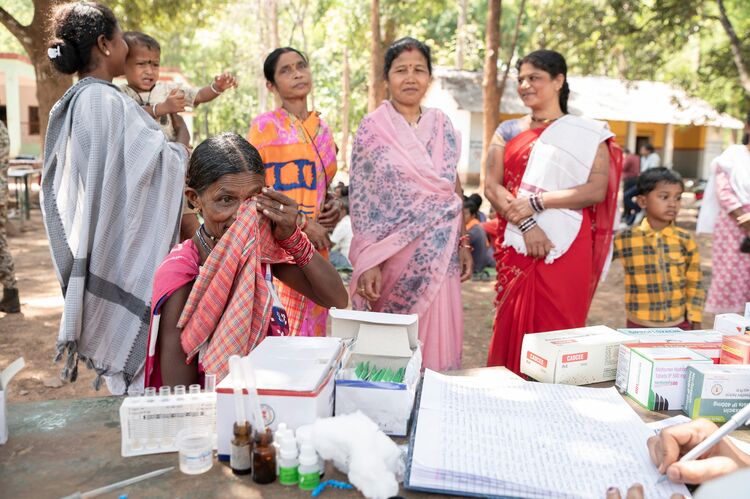
Once-remote villages are now wired for mobile phone service, while new roads have made the area accessible to public transport and other government services. In Raigondi — the site of a bloody shootout between Naxalites and police in 2012 — Mani Ram Kashyap waits to board a new bus service to take him to a nearby market. Armed militants used to visit the village regularly, he recalls, forcing residents to supply them with food and deliver letters for them. “Those who didn’t comply had to face consequences,” says Kashyap, who’s not related to the father and son who were attacked by the Naxalites.
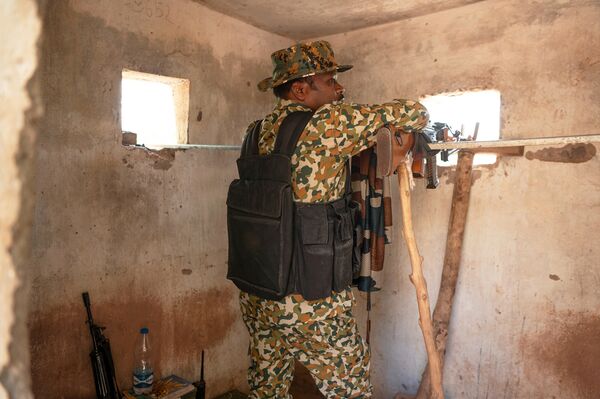
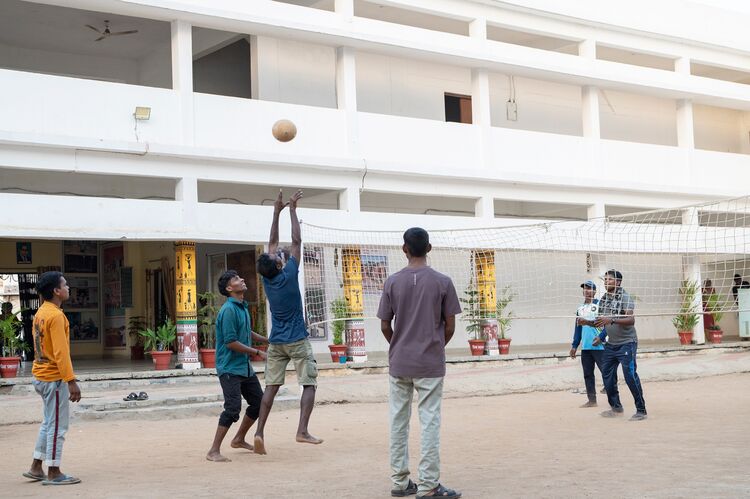
A network of police bases scattered across the jungle double as centers for government services, where villagers can get help obtaining identification cards and applying for welfare benefits. At one hilltop base — whose exact location authorities asked not to be revealed, because of security concerns — about 30 officers share lunch platters of okra, cauliflower, lentils and steamed rice underneath a tree, rifles slung over their shoulders. Just past the entry gate, a volleyball court stands empty in the blistering summer heat. Surrounding the perimeter is a ring of small fortifications from which machine-gunners scan the valley below, where trucks rumble across a single main road.
Often coordinating with such bases is Rahul Kumar Uyake, a burly veteran who’s participated in multiple jungle gun battles against the Naxalites since joining the police in 2019. Uyake recalls how every patrol carried the risk of an ambush or the possibility of stepping on a hidden land mine. During his years on the force, he has been involved in almost 150 operations against the rebels. “Anything could happen anywhere,” he says. “You never knew when you would step on a bomb in the jungle or on the roads.”
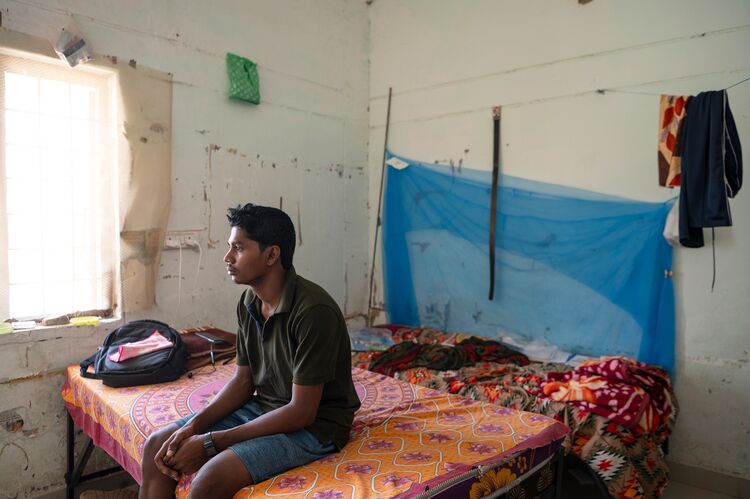
Across the countryside, so-called rehabilitation centers are up and running, where surrendered militants receive shelter and job training, plus housing and living stipends once they depart. At one center, 27-year-old Markam Kesha says he was recruited to join the Naxalites as a high school student, convinced by the movement’s promise to prevent the jungle from being despoiled. He became a field medic and tagged along with the rebels. “I was given a box containing some medicines and lifesaving equipment and asked to move with the team,” Kesha says, adding that he’s treated hundreds of gunshot wounds and bomb blast injuries over the years, as well as more run-of-the-mill ailments such as flu outbreaks among village children.
After police killed several of his top commanders in a gunfight earlier this year, Kesha says, he felt the movement was looking more and more like a lost cause. So in March, he turned himself in — lured by the promise of an 800,000-rupee stipend, plus an additional 120,000 rupees toward a home. Now he’s learning how to raise chickens at the rehabilitation center. “They brainwashed me,” he says of the rebels. “I just want to live in peace with my parents.”
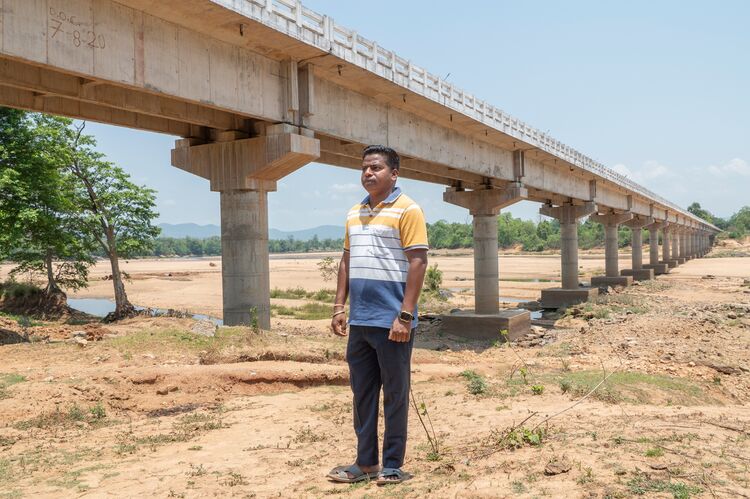
As for Dhaniram Kashyap, the Chhattisgarh government helped him rebuild his life by offering a position in the state police department. Authorities named the bridge that stretches nearly a kilometer across the Indravati River after his father. Kashyap says he’s grateful for the dramatic improvement in the region’s security and hopes to one day move back to his family’s village with his wife and two daughters. “Now we can roam freely,” he says. “There is no fear.”