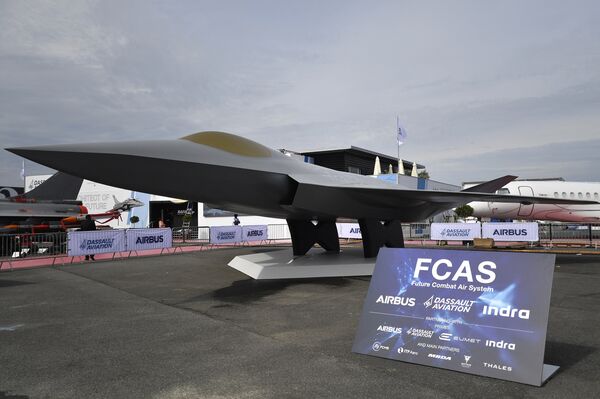
The demise of the Franco-German sixth-generation fighter program should not derail future collaboration at a time when Europe is pushing to be more self reliant, industry leaders from both countries said a day after the program officially collapsed.
Speaking at the Berlin Aviation Summit on Tuesday, Michael Schoellhorn, head of Airbus Defense and president of the BDLI aerospace trade union, said that the Future Combat Air System (FCAS) program was “more than just the fighter jet” and that there was excellent cooperation between French and German aerospace companies in other areas.
“Is it a disappointment? Yes, it is,” Schoellhorn said. “We were at an impasse with the fighter, but the bigger story has to continue.”
Olivier Andries, the head GIFAS, a French trade group, and chief executive officer of enginemaker Safran SA, warned against drawing broad conclusions from the FCAS debacle. He said it was not an issue between French and German industries, or even their countries’ governments — just a disagreement between two companies, Airbus SE and Dassault Aviation SA, the major contractors of the fighter program alongside junior partner Indra Sistemas SA of Spain.
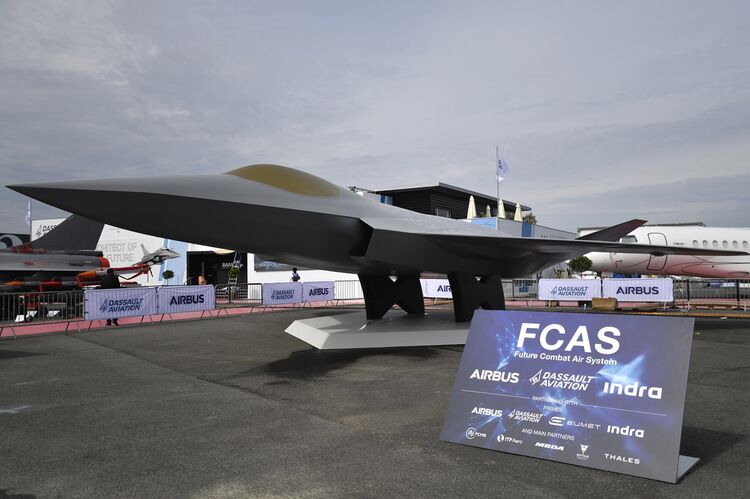
Chancellor Friedrich Merz and President Emmanuel Macron made a joint assessment that the companies involved in the €100 billion ($115 billion) FCAS initiative were unable to find common ground, a German official said Monday.
Read More: Germany and France Pull Plug on Next-Generation Jet Project
Germany is now looking at Spain and Sweden for the launch of an alternative fighter jet project without France, officials said on condition of anonymity. Another option could be to join the GCAP sixth-generation fighter project of Britain, Italy and Japan.
“Every country will have to find its own way now going forward,” Andries said. “I think that we are living in a particular moment, and this is a European moment, where Europe has become increasingly aware that we need to spend more money on defense because of the geopolitical situation.”