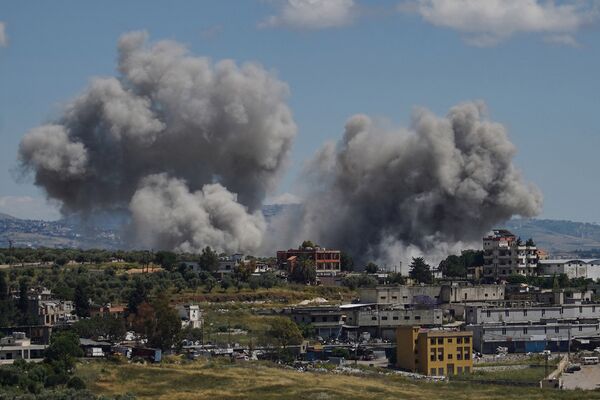
After the US and Israel began their war with Iran on Feb. 28, the Iran-backed Lebanese militia Hezbollah was quick to join the fray, firing rockets and drones into Israel. Officials there saw in the crisis sweeping the region a chance to finally drive Hezbollah, already weakened by a series of setbacks, away from Israel’s northern border.
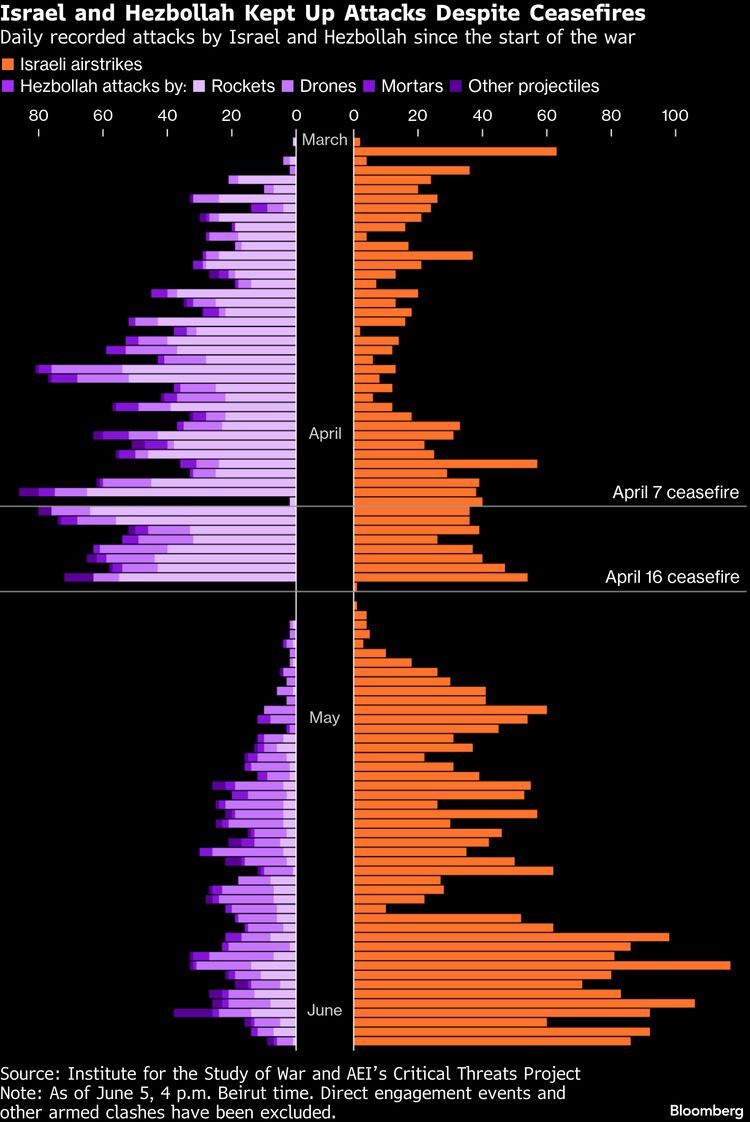
While the US and Iran have largely refrained from attacking each other since they agreed to a ceasefire on April 7, Israel and Hezbollah have continued to trade blows. Their fight threatens to reignite a larger conflagration. In response to an attack on what Israel said was a Hezbollah site on the outskirts of Beirut on June 7, Iran launched ballistic missiles at Israel , provoking Israeli airstrikes on Iran.
What is Hezbollah?
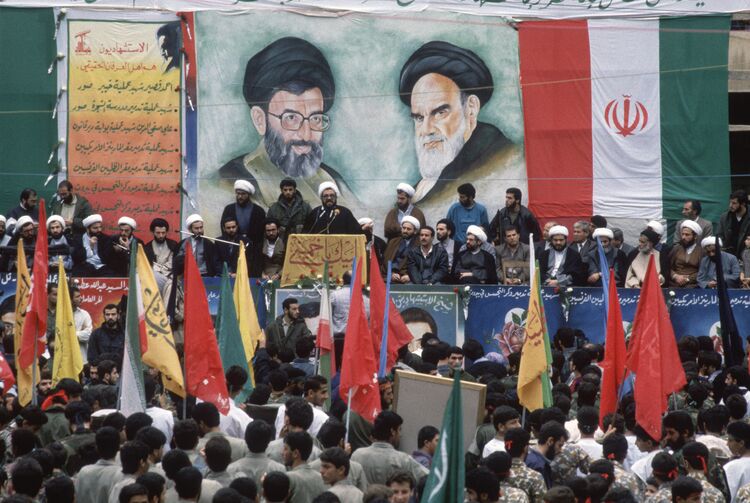
Shiite Muslims in Lebanon formed what would become Hezbollah — “party of God” — in 1982, a reaction to Israel’s occupation of the country’s south, which at the time was meant to prevent attacks on Israel from Palestinian fighters. The militia’s founding was inspired by the Islamic Revolution in Shiite-majority Iran three years earlier, and Hezbollah would be guided by Iran’s elite Islamic Revolutionary Guard Corps. Shiite and Sunni Muslims each comprise about 30% of Lebanon’s population.
Hezbollah is thought to have been behind a number of major attacks on US targets in the 1980s and is designated a terrorist organization by the US , several Western countries, and the Arab states that belong to the Gulf Cooperation Council.
Hezbollah guerrilla attacks contributed to Israel’s decision to withdraw in 2000 from the so-called “security zone” it had established in southern Lebanon. However, skirmishes with Hezbollah — whose manifesto calls Israel’s departure from Lebanon “a prelude to its final obliteration from existence” — persisted, culminating in a devastating 2006 war that ended in a US-brokered ceasefire that endured until 2023.
Hezbollah grew to become the Middle East’s most powerful militia, easily outgunning the Lebanese army. It’s the top member of Iran’s network of allied groups , which have included Yemen’s Houthi rebels and, in Gaza, Hamas and Islamic Jihad .
What setbacks has Hezbollah experienced?
After Hamas launched a war with Israel by attacking the country from the Gaza Strip on Oct. 7, 2023, Hezbollah joined in with its own strikes on Israel, which responded in kind. A year of cross-border attacks crested with an Israeli war on Lebanon that hammered Hezbollah’s capabilities and decapitated its leadership. Its communications network was compromised by an Israeli operation targeting the group’s use of pagers, and its command structure was shredded, including by the assassination of long-time leader Hassan Nasrallah in an airstrike on Beirut in September 2024.
In December that year, the group experienced a blow to its supply lines when it lost its close relationship to Syrian President Bashar al-Assad, whose regime was overthrown by Sunni insurgents. Under Assad, Syria had served as a route for Hezbollah to receive arms from Iran, which has no border with Lebanon. Hezbollah’s fighters had fought alongside Iranian and Russian forces to keep Assad in power during Syria’s 14-year civil war.
A November 2024 ceasefire between Israel and Hezbollah, mediated by the US and France, allowed for the election of a US-backed president in Lebanon, Joseph Aoun, and the formation of a technocratic government there to help the ailing economy. In an unprecedented step, Lebanon’s cabinet last year tasked the army with drawing up a plan to disarm all militias including Hezbollah, something the group called a “grave sin.” That plan went unrealized.
The fighting in 2023 and 2024 devastated swaths of land in south Lebanon, where Hezbollah enjoys influence, and the group has been unable to help its constituency rebuild homes and rehabilitate agricultural land. That contrasts with the aftermath of the 2006 war, when Hezbollah dispersed funds to help with reconstruction.
How strong is Hezbollah as a fighting force?
Israel has said it has destroyed a significant portion of the group’s stockpile of arms and has bombed tunnels under southern Lebanese villages that were used for storing and transporting weapons and militants. Israel believes Hezbollah’s arsenal is down to about one-sixth of its strength at the time of Hamas’ Oct. 7 attack. It has around 8,000 rockets left, according to the Israeli estimate.
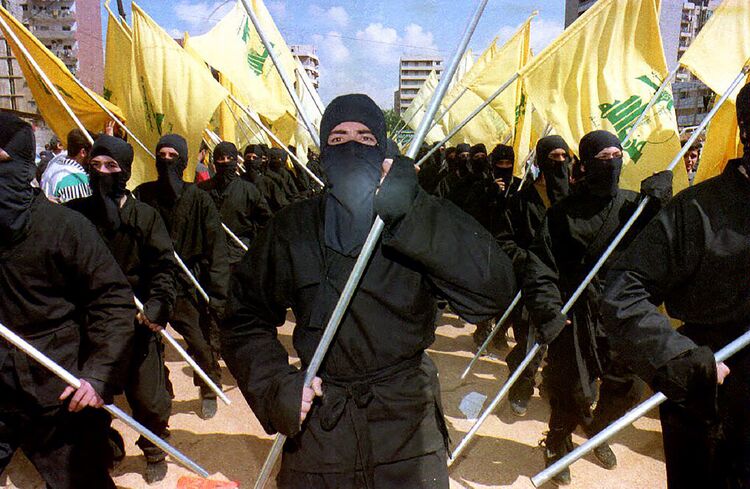
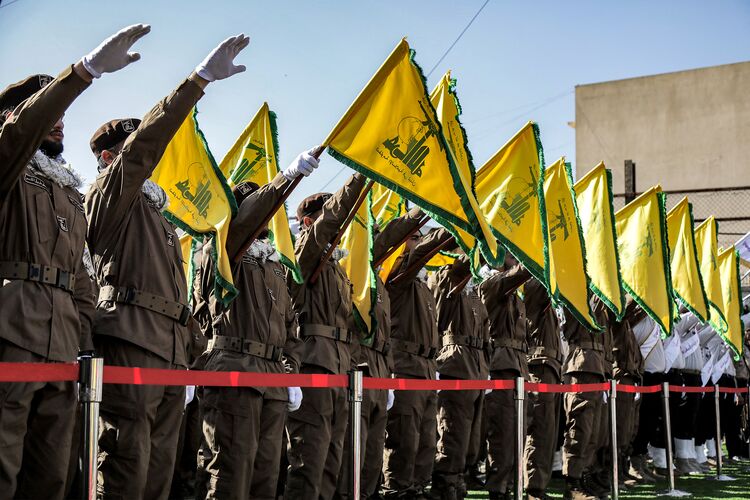
Even with its challenges, Hezbollah remains a serious force. According to Tom Barrack, the US ambassador to Turkey and special envoy for Syria and Iraq, the group has some 40,000 full-time and reservist fighters.
In the recent escalation, Hezbollah has blindsided the technologically superior Israeli military to threaten civilians in northern Israel with exploding drones guided by fiber-optic cables that elude electronic countermeasures.
What’s Hezbollah’s relationship with Iran?
Hezbollah is much closer than the Houthis or Hamas to Iran’s regime. Iran provides Hezbollah with “most of its funding, training, weapons, and explosives, as well as political, diplomatic, monetary, and organizational aid,” according to the US State Department. Iran’s financial backing is estimated at hundreds of millions of dollars annually, it said.
The US also says the group gets funding from legal and illegal sources, including “smuggling contraband goods, passport falsification, narcotics trafficking, money laundering, and credit card, immigration and bank fraud.” Hezbollah has said in the past that all of its resources come from Iran, and it has repeatedly denied involvement in drug trafficking.
Since Nasrallah’s assassination, experts say, the group has been directly managed by Iran’s Revolutionary Guard, as evidenced by its decision to join Iran’s war with Israel and the US, which the Iranian regime has considered a fight for survival.
What’s Israel’s most recent strategy for combating Hezbollah?
The November 2024 ceasefire agreement allowed Israel to keep five army outposts within Lebanon at vantage points just over the border. During the current conflict, it has sent additional soldiers over the border to take up a total of 15 positions and hold a line 10 kilometers (6.2 miles) deep. That, the army said, was meant to prevent a resumption of Hezbollah cross-border attacks on Israeli towns with guided missiles, whose ranges are generally between 8 and 10 kilometers.
Israel’s military said on May 26 that its ground forces were operating “ in a targeted manner ” beyond that line to “remove direct threats to citizens.” Israeli officials put the range of Hezbollah’s cable-guided drones at around 15 kilometers.
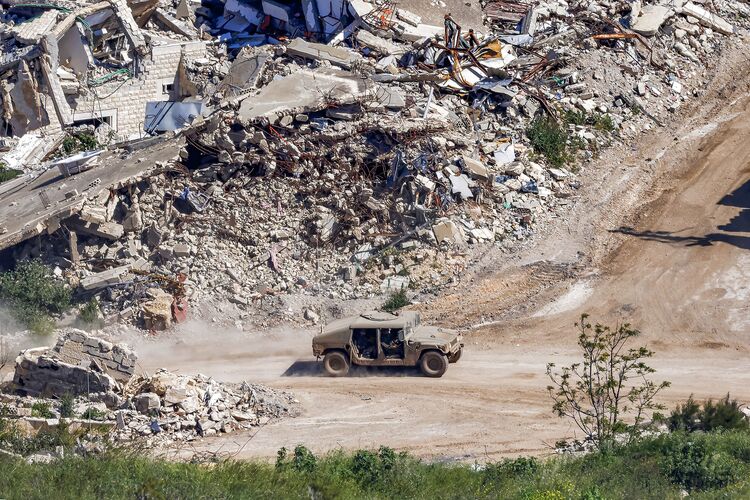
Air strikes have leveled much of a southern Beirut suburb, known as Dahiya, where Hezbollah long had its headquarters. The Israelis, who repeatedly urged civilians to evacuate Dahiya, accuse Hezbollah of setting up underground missile foundries and other facilities there.
Top Israeli commanders say their most pressing objective is to prevent Hezbollah from carrying out attacks, including armed incursions, against civilian communities in northern Israel. Such attacks in 2023 and 2024 prompted the evacuation of tens of thousands of residents. Israel aims to prevent a repetition of that.
Israel has effectively depopulated southern Lebanon with evacuation warnings it says are meant to avoid civilian casualties from its incursions. It says no one will be allowed back as long as Hezbollah remains a threat. The Israelis say they intend to raze what they describe as “terrorist infrastructure” in frontline Lebanese villages, raising the prospect that Israel will destroy homes in parts of the buffer zone abutting the border and prevent them from being rebuilt.
On April 14, the US hosted the first direct talks between Israel and Lebanon in decades. The two agreed to a ceasefire, though Hezbollah was not party to it. According to the US, they agreed to work toward a normalization of ties; the establishment of “genuine security” along their border, recognizing that non-state militias “must be curtailed”; and the official demarcation of their border, where contested points have been exploited by Hezbollah.
The countries’ envoys have met repeatedly in Washington, extending their ceasefire. But despite conducting their first face-to-face peace negotiations in decades, an agreement on concrete actions has yet to materialize. Lebanon has urged Israel to cease its offensive in and withdraw its troops from the country. Israel says Hezbollah must first be disarmed.
What is Hezbollah’s position inside Lebanon?
Hezbollah is still a powerful force in Lebanon, as shown by the government’s failure to follow through on its plan to disarm it. The weakness of Lebanon’s army left the government little choice after Hezbollah threatened civil war.
The group isn’t just a militia, it’s also a political party. Its alliance with the Shiite Amal Movement, headed by Parliament Speaker Nabih Berri, ensures that together they represent most of the country’s Shiites. From 2018 until 2022, together with allies, Hezbollah held a majority in Lebanon’s parliament. The group’s large social-services network helps shore up support within the Shiite community.
Yet the landscape is changing. The government banned the groups’ military and security wing, and the Justice Ministry even proposed issuing an arrest order for Hezbollah’s leader Naim Qassem. In late March, the government went so far as to strip the Iranian ambassador of his credentials. President Aoun told CNN Lebanon in early June it was unacceptable that Iran was using Lebanon as a “bargaining chip” in its negotiations with the US. Addressing Iran, he said, “You are not trying to help us.”
It’s difficult to gauge support for Hezbollah among Lebanese Shiites these days. Publicly, many voice their undying loyalty to the group, while privately some express frustration with the repeated bombings and displacement that result from Hezbollah’s attacks on Israel.