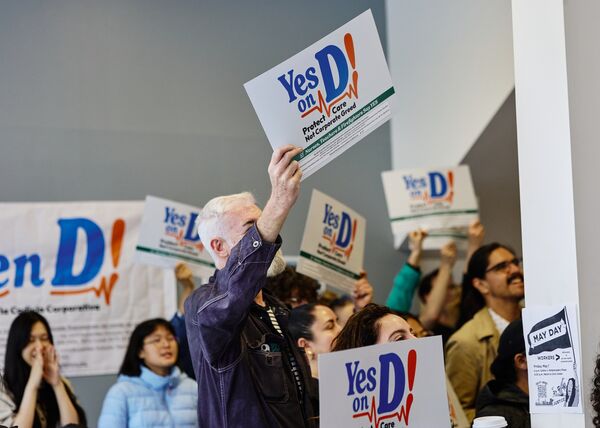
San Francisco voters rejected a union-backed ballot measure to raise taxes on large corporations doing business in the city, a win for billionaires who argued that the levy would harm the city’s economic recovery.
The Overpaid CEO Act , known as Proposition D, would have generated over $250 million a year, according to a city estimate , by increasing taxes on any large business where the highest-paid executive earns 100 times or more than the median employee. Public-sector unions backing the measure said the money was needed to offset President Donald Trump’s spending cuts on healthcare.
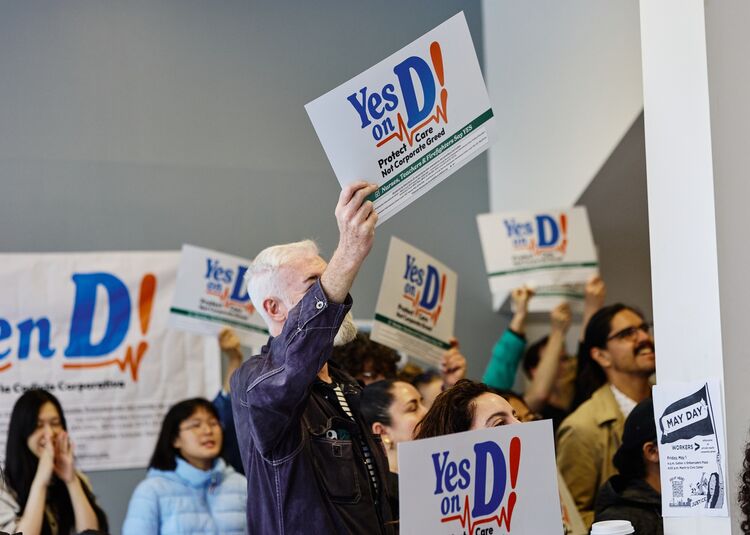
The measure became a tug-of-war between competing visions for San Francisco, with one camp led by moderate Democrats including Mayor Daniel Lurie and his billionaire backers, and another supported by progressive groups and public-sector unions seeking to tap money generated by the city’s tech boom.
As of Tuesday morning, almost 54% of voters had rejected the tax increase, with the San Francisco Chronicle declaring the measure had no path to victory even as ballots remained to be counted after the June 2 vote.
Billionaires including Chris Larsen, the co-founder of the cryptocurrency-payments company Ripple and a major Democratic donor, bankrolled the campaign against the measure. He was joined by donors including Google co-founder Sergey Brin, the world’s third-richest man, and venture capitalist Mike Moritz. Companies including Williams-Sonoma Inc., Visa Inc. and Meta Platforms Inc. also chipped in hundreds of thousands to oppose the measure.
Read more: San Francisco Billionaire Punches Back Against ‘Overpaid’ CEO Tax
Larsen has previously argued that San Francisco’s corporate interests need to wage a “permanent political fight” against the city’s unions to push more business-friendly policies in the city. He called for a different approach after Proposition D’s defeat.

“San Franciscans want real solutions to the affordability crisis facing our city, and they want those solutions built through partnership, not conflict,” Larsen said in a statement. “I’m raising my hand to help find common ground.”
Scott Mann, a spokesperson for the group supporting the tax, said the outcome represented a “sad day for San Francisco when Mayor Lurie partnered with billionaires and corporations who received massive tax cuts from the Trump administration.” He warned of looming budget cuts that “will fall hardest on the people who can least afford it.”
A separate measure put forward by San Francisco’s Chamber of Commerce to lower business taxes also failed. Lurie opposed that measure as well as Proposition D.
“San Franciscans feel the momentum and they want us to keep going,” Lurie said in a statement. “Voters recognize that our recovery depends on creating opportunity through jobs, thriving small businesses and attracting investment — not making it harder for employers to grow here.”