By Martin Ivens | Updated on Jun 09, 2026 at 05:00 AM
According to her housekeeper’s testimony, the New York hotel magnate Leona Helmsley’s policy on tax in the 1980s was “only the little people pay.” The courts found the so-called “Queen of Mean” guilty of federal tax evasion and the authorities ordered her sentence to begin on April 15 — for filing purposes, US Tax Day.
Like Helmsley, the new breed of populist leader riding high in the opinion polls believes the usual rules don’t apply to them. Unlike establishment politicians, they see themselves as brave outsiders who “tell it as it is.” Whether their politics lean hard left or hard right, being a populist means never having to say you’re sorry either.
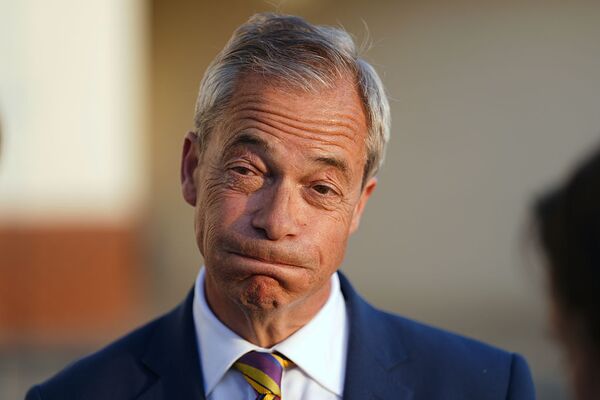
In this regard President Donald Trump, a New York real-estate investor who refused to release his tax returns after being elected president, has a soulmate in Nigel Farage, head of the anti-immigration Reform UK party in front in the polls. Consistently rated as the “party leader you’d most like to have a drink with,” Farage has been showing his less amiable face of late. Following a tragic police blunder over the murder of a White student by a dagger-wielding Sikh in Southampton, he called for the public to respond with “pure cold rage.”
Farage warned of violent protests to come — a riot had already taken place outside a local police station before he spoke — unless the British government stepped in to end what he claims is the “divisive practice of two-tier policing” that favors non-Whites. This was more provocation than prophecy. A heartfelt plea from the young man’s family to not use his death as a political football hasn’t stopped Farage from doing exactly that.
The Reform leader welcomes the controversy: His “hot” messaging plays well with his followers, three quarters of whom believe immigrants undermine the UK’s national culture. According to the veteran pollster John Curtice, the party attracts “a level of emotional attachment that neither Labour nor the Conservatives have managed to inspire in voters for decades.”
That attachment means Reform voters tend to overlook the leader’s foibles. The Guardian newspaper recently revealed that before he stood as a member of Parliament in the 2024 election, Farage accepted a £5 million ($6.7 million) “ personal gift ” from Christopher Harborne, a crypto-currency billionaire based in Thailand and Reform’s largest donor. When pressed on television on why he failed to declare the donation with the parliamentary authorities, Farage denounced the story as “illegally obtained” and angrily declared his interview “a waste of space.”
Perhaps not coincidentally, Farage has pledged a “Big Bang Two” for the British finance industry that will turn the country into a crypto-hub if he wins office. Capital-gains tax on digital coins will be slashed from 24% to 10%. Farage has skin in this game: He has invested £215,000 in a crypto-currency startup, Stack BTC. Trump has pioneered similar policies in the US, even if his family investment dwarfs that of Farage.
Harborne’s donation is being investigated by the parliamentary standards commissioner. If Farage has broken the rules, he could be banned from the House of Commons for more than 10 days, which could trigger a recall petition resulting in a by-election. If so, Farage will likely win the contest. His outraged followers would flock to voting booths to thwart another establishment “stitch-up.” Although “grifter” is a slur that’s often cast at Farage, Reform’s leader knows the world of populist politics is defined by imperviousness to criticism.
The populist tendency to stand ground — even when that ground is shaky — is evident as well at the other end of the spectrum. Farage’s left-wing opposite number Zack Polanski, head of the insurgent Greens, is also unhappy that the mainstream media has been investigating his colorful history.
The former hypnotherapist, who once claimed he could enlarge a woman’s breasts through powers of suggestion, has admitted he was wrong to misrepresent himself as a spokesman for the British Red Cross or that he’d worked for the Ministry of Justice . He is evasive on whether he paid council tax when living on a houseboat while registered at a neighboring London address.
This impression that narratives are created for instant consumption, rather than grounded in facts, should be damaging. But a new generation of party bosses understands that their most motivated support needs constant feeding: The hardline leftists among the Green support may forgive Polanski’s cavalier way with the truth as long as he keeps condemning capitalism and Israel.
North of the border, the independence movement is the ultimate populist cause. Whatever its leaders do — or fail to do — the Scottish National Party attracts a durable core vote, big enough to form a minority government though not to secure a majority to break from the UK. Public services have languished under SNP rule, despite a lavish financial settlement from Westminster, but supporters don’t seem to care. It is Braveheart freedom or bust.
One of the SNP’s early leaders in the 1940s was imprisoned for refusing to fight the Nazis and the current crop has its own idiosyncrasies. Peter Murrell, the party’s former chief executive, is awaiting sentencing having been convicted of embezzling £400,000 in funds donated by supporters. Three fellow executive members resigned in protest at discrepancies in the accounts years ago. Murrell was married to former first minister and SNP head Nicola Sturgeon, the dominant figure in Scottish politics over the last decade.
Sturgeon has said that she had no reason to suspect the provenance of any expensive items — including a Jaguar car, watches, gadgets and high-tech coffee machines — that her husband kept buying, as the two of them were on big salaries and didn’t have children. A £125,000 motorhome was parked at her mother-in-law’s.
When asked in a recent BBC interview whether she felt she bore any responsibility given her job at the time, Sturgeon said: “No... [Murrell] perpetrated a crime on the SNP. By definition, that included me as the party leader.” She has consistently denied any knowledge of his wrongdoing (the couple announced their divorce last year), telling the BBC, “I’m not going to say sorry for a crime I did not commit.”
Trump once suggested that he could “stand in the middle of Fifth Avenue and shoot somebody and I wouldn’t lose any voters.” Until now, his UK populist counterparts have enjoyed a loyal backing, too. Yet the president’s ability to brazen things out has come unstuck in his need to swiftly exit an Iran conflict without victory before the US midterms. Sometimes, even the most diehard supporters find reason to question their faith.