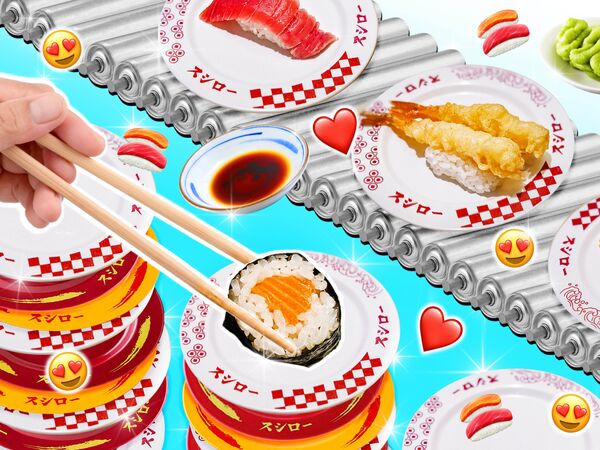
At a popular sushi chain in China, a table of young diners has just finished eating, then stacked — and stacked and stacked — their empty dishes. This “Sushiro tower,” captured in a seven-second video clip , teeters more than 60 plates high, drawing some 2 million likes on Douyin, China’s version of TikTok. Other post-meal plate piles have climbed higher still, pushing 80 layers or more, as consumers race to show off how many plates of nigiri, maki and other bite-size tastes they’ve inhaled on a single night out.
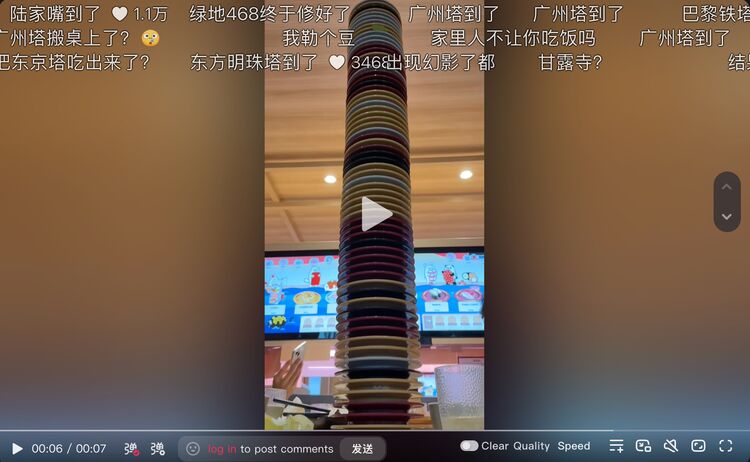
The setting is Sushiro , a conveyor-belt sushi restaurant long synonymous in its home market of Japan with affordable, casual eats. Now, thanks in part to viral moments like this one captured and shared on Xiaohongshu, Douyin and other social media sites, young Chinese consumers are flocking to the chain’s growing number of outposts in mainland China and helping drive the parent company’s shares to its own new heights.
Sushiro launched its inaugural China outlet in Guangzhou in 2021, but the chain really took off in the country late last year when it opened in Shanghai. About 700 groups of diners waited outside to get in, some of them standing in line for as long as 14 hours. The hype hasn’t died down in the months since: Weekend queues of 200 to 500 tables are commonplace in Guangzhou, Shenzhen and other large cities, according to local media reports . In the busiest neighborhoods, young diners wait as long as five hours for a table; some even pay scalpers or resellers on secondhand apps around 30 yuan ($4.43) to hold their place in line.
Although the majority of Sushiro locations are in Japan, China has quickly become the chain’s second-biggest market by store count. Last fiscal year, Sushiro operated 234 overseas stores , most of which are in its Greater China segment; it plans to have more than 320 overseas locations by the second half of this fiscal year . Later in 2026, the company will open its first US location , in New York’s buzzing Times Square.
The online frenzy is helping turn China into a growth engine for Sushiro’s parent, Food & Life Cos. “This positive response has spread through social media to Beijing, Guangzhou and Chengdu, and we believe Sushiro’s ability to attract customers across mainland China is accelerating,” a spokesperson for Food & Life said in an emailed statement. In terms of operating profit, it hit nearly 70% of its original full-year forecast in just the first half of the fiscal year, thanks in large part to booming profit growth in its overseas business. Shares are up roughly 23% since the start of 2026, far exceeding the broader Topix Index’s gain.
Not everyone has managed to pull off an expansion in China so successfully. Sushiro’s domestic rival, conveyor-belt chain Kura Sushi Inc., moved to dissolve its Shanghai unit last year, which operated three stores in the city, following a review of its long-term business plan.
Part of Sushiro’s appeal is its low prices, especially at a time when Chinese consumers are feeling cash-strapped as the country grapples with economic uncertainty after years of deflation . Items on its China menu are priced from 8 yuan to 28 yuan, or just over $1 at the low end, giving diners a way to consume Japanese-style sushi at a relatively low price point while still chasing novelty foods, seasonal dishes and limited-time offerings.
“Among similar sushi chains, it’s relatively affordable yet still very good,” says Danson Deng, a 24-year-old Shenzhen resident who visits Sushiro about once a week and usually spends around 200 yuan eating as many as 25 dishes in a sitting. His favorite item is a seasonal foie gras and beef sushi priced at just 8 yuan — a deal he considers a steal. (Food & Life, which says it’s able to keep prices for high-quality ingredients low thanks to global procurement, declined to comment further on its supply chain.)
The company is also adding interactive features to keep customers engaged. Its Digital Sushiro Vision system, known as “Digiro,” gives diners a chance to play a lottery-style game for every 60 yuan spent, with the chance to win figurines of the restaurant’s mascots, a series of cute, sushi-themed characters, their tiny arms and legs hugging colorful toppings like salmon roe or egg.
The growth boom hasn’t been all fun and games, though. Earlier this year, Chinese regulators fined a Sushiro outlet in Hangzhou for hygiene issues, including using unclean dishware. In March a consumer reportedly found parasite eggs in a tuna dish served at a Sushiro restaurant in Beijing, prompting a formal investigation by the local branch of China’s State Administration for Market Regulation. The company said in a statement at the time that the regulatory authority’s results showed no parasites were detected and maintained that the product met China’s food safety requirements.
Deng, the Shenzhen fan of the chain, says he remains a loyal Sushiro patron despite the recent food probes. There are always reports online of food issues at grocery stores and restaurant chains, he says, and “people have grown somewhat immune.” Besides, he adds, “Beijing is so far away from me.”
Read next:
A Restaurant That’s Barely Raised Prices Since 1973