General Motors Co. is pushing into stationary electricity storage through a partnership with startup Peak Energy Technologies, tapping into both a growing market fueled by demand from artificial intelligence and investor hype that recently boosted rival Ford Motor Co.’s shares.
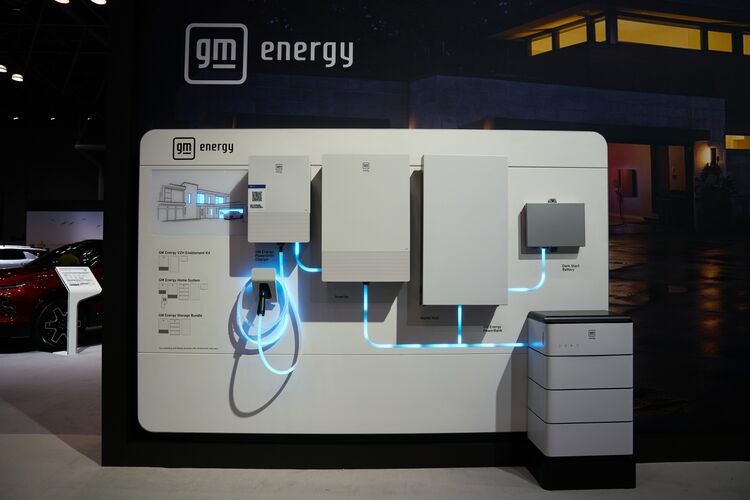
GM and Peak Energy plan to develop batteries that can store energy on the grid during off-peak hours, the automaker told reporters Tuesday at an event in San Francisco. GM is also taking steps to allow more of its EVs that are in customer hands today to store energy for the grid when plugged in at home, a move to that could help utilities handle power needs from AI data centers.
Both GM and Ford have collectively spent tens of billions of dollars developing EVs only to find American consumers were slow to adopt them. Now, like Ford, GM is trying to make lemonade from lemons by pivoting toward the rising demand for power storage from AI data centers that are taxing the nation’s power grids.
“In the past, major technology shifts were limited by slow processors or internet speeds. Today, the real bottleneck is energy,” GM Chief Product Officer Sterling Anderson said in a blog post. “We are developing batteries for large-scale, energy storage systems for utilities and major power users, while leveraging our connected electric vehicles to feed power back into the local, residential grids.”
GM’s announcement comes after Ford’s stock saw its biggest monthly gain in 17 years, a jump that gathered steam after a Wall Street analyst cast the automaker’s new energy-storage business as a potential beneficiary from the AI boom.
Ford is investing $2 billion into that business, including converting an EV battery factory to produce large energy cells using technology licensed from China’s CATL. US demand for grid batteries is expected to double by 2030 to more than 100 gigawatt-hours, according to Bloomberg NEF.
GM’s investment in energy storage is smaller but has potential to grow. The carmaker’s GM Ventures arm is taking an equity stake in Peak Energy for an undisclosed sum.
The two companies will work together on sodium-ion batteries, which work better for stationary storage cells than the lithium-ion technology used in many EVs. They can discharge faster, providing short, intense bursts of power. Their main raw material input — sodium — is abundant and cheap. The batteries also don’t need cobalt, much of which comes from mines accused of using child labor. And there’s less fire risk.
Peak Energy is three years old and will report just $10 million in revenue this year before growing to $100 million in 2027, boosted by a $1.1 billion backlog, said Landon Mossburg, the company’s chief executive officer.
As the startup grows, GM and Peak could produce sodium-ion batteries at an existing GM facility or through a joint manufacturing plant, said Kurt Kelty, GM’s Vice President of Battery. The automaker has delayed construction of a battery plant in Indiana and could use that or another existing facility, he said.
“We’re doing this different than what Ford is doing,” Kelty said. “They are repurposing an existing facility. We’re leveraging our expertise to come up with the best cell chemistry for this application.”
GM is also partnering with Redwood Materials, the battery recycling company started by Tesla co-founder JB Straubel, to repurpose old EV batteries for grid and commercial storage use.
GM and its battery partner, LG Energy Solution of South Korea, said in March they would shift battery production at a Tennessee plant to make stationary storage for power grids and commercial use. GM and LG co-own the plant under their Ultium Cells LLC joint venture.
Ford CEO Jim Farley said last month that the automaker is seeing strong demand for its energy storage batteries that will go into production late next year.
GM is also pushing to get more power utilities to allow electricity to flow back and forth from its EVs to the grid. Vehicles sit idle 95% of the time and could be used as storage when they aren’t driving and charge at night during off-peak hours.
This so-called bi-directional charging will take time to grow. Customers have to pay about $5,000 for the hardware they would need in their garage. Some utilities offer incentives that cover much of that cost, but GM will still have to sell each individual owner on participating.
GM’s moves illustrate how automakers are trying to salvage big investments on EVs that proved to be a tough sell to Americans, even before Republicans removed a $7,500 tax credits for EV buyers.
GM had planned to install capacity to build as many as 1 million EVs in 2025, but only sold 170,000 in the US last year. Although it trailed only Tesla Inc. in deliveries, the limited volume means GM’s EV business still loses money after bringing a dozen different EV models to the market.
GM has since announced plans to retool an electric pickup truck plant in suburban Detroit to make gasoline-powered SUVs like the Cadillac Escalade instead.