Get up to speed with key market intelligence, news and insight before trading starts each day in this fast-growing economy with the Markets Daily India newsletter. Sign up here .
Indian lenders have sharply raised rates on foreign-currency deposits to lure the nation’s overseas residents, offering an early test of the central bank’s recent measures to bring in capital flows to support the rupee.
Yes Bank Ltd. and AU Small Finance Bank are offering a rate of 7.1% on five-year deposits, while State Bank of India, HDFC Bank Ltd. and Central Bank of India are giving as much as 6% on comparable tenures to non-residents. By offering as much as 7.1%, Indian lenders are paying a premium over comparable dollar assets available in developed markets, where five-year US Treasury notes yield about 4.3%.
The Reserve Bank of India last week unveiled measures allowing lenders more room to offer attractive rates on overseas deposits while containing funding costs — part of wider efforts by policymakers to attract foreign capital and strengthen the rupee. The currency has slipped to a series of record lows, despite multiple attempts to support it, as high oil prices hurt the nation’s balance of payments.
The measures also provide relief to lenders facing an intensifying competition for deposits as households channel more savings into mutual funds and other investment products.
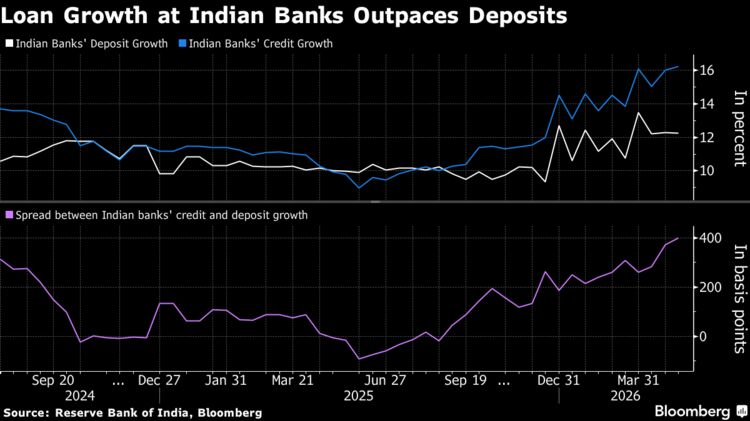
“Larger, well-established banks already benefit from a sizable NRI deposit base, and therefore, face less pressure to raise rates aggressively,” said Madhavi Arora, an economist at Emkay Global Financial Services. “In contrast, smaller banks need to attract and build a new NRI customer base, requiring them to offer a higher yield premium to remain competitive.”
Read More: India Weighs Additional Steps to Attract Foreign Capital Inflows
The initiative also highlights a broader shift in India’s currency-defense strategy. Rather than relying primarily on foreign-exchange intervention or interest-rate increases, policymakers are attempting to attract fresh dollar inflows through a mix of incentives for banks, overseas borrowings and foreign-currency deposits.
The strategy revives a play book last deployed during the 2013 taper tantrum, when the RBI introduced swap windows for similar deposits and banks’ overseas borrowings after the rupee plunged to record lows. That ultimately attracted $34 billion and helped stabilize India’s external position during one of the most turbulent periods for emerging markets.