Chancellor Friedrich Merz’s coalition will attempt to overcome deep differences over a sweeping reform agenda in talks Wednesday as parties turn to a plan for a broad tax cut alongside potential hikes for higher earners.
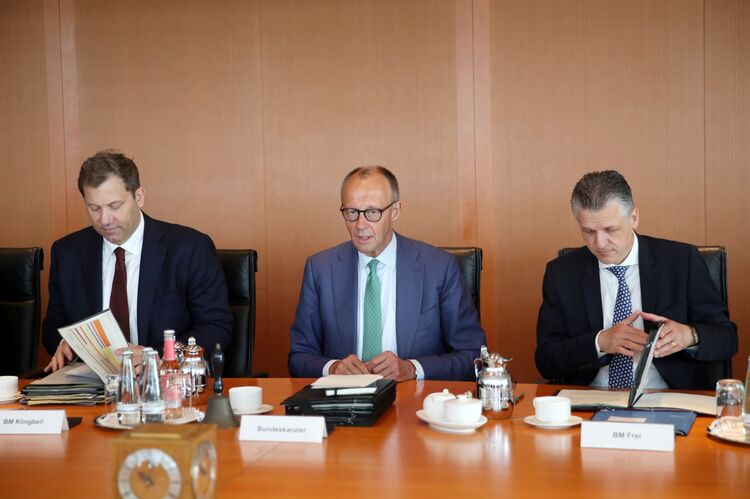
Merz’s Christian Democratic-led bloc and the Social Democrats meet with representatives of employers and labor unions in Berlin as the coalition bears down on a self-imposed deadline to unveil a program of changes to Germany’s health, tax and pension systems by the parliamentary summer recess, which starts July 11.
“My hand is extended,” Social Democratic co-leader Lars Klingbeil, Merz’s finance minister and vice chancellor, said on Tuesday. “This is an opportunity, and I’m in favor of us all trying to seize it.”
Klingbeil will soon unveil two proposals for slashing income-tax rates for most people while raising the levy for high earners, according to people familiar with the deliberations. But the two sides remain far apart, according to another official close to the talks, as the conservatives largely resist tax increases.
Merz’s government has seen its backing among voters plummet as it struggles to bridge differences and put forward a plan to restore economic growth after years of malaise. The coalition partners have vowed to break a deadlock and fend off a surge in support for the far right by presenting a reform agenda by summer break.
Read More: Merz Coalition Draws Up Road Map for German Reforms by July
Wednesday’s meeting is aimed at securing the backing of Germany’s labor and business interests to broaden consensus for a program that involves service cuts. Should those groups campaign against the government’s plan, the fallout could mark a final blow for a coalition that’s struggled to gain traction with the public since entered office over a year ago, one official familiar with the latest exchanges said.
The meeting, which participants have said will yield no concrete results, begins at 7 p.m. in the Federal Chancellery in the German capital and run into the evening. Leaders don’t plan to make a statement.
Disaster
The rival parties are keen to avoid a breakdown that occurred when they met in early April at a lakeside villa in Berlin, which was roundly viewed as a disaster, including a moment when Merz lashed out at Klingbeil, according to participants.
The parties are aiming to finalize the details of the plan at a meeting slated for the beginning of next month. Jens Spahn, the Christian Democratic parliamentary caucus leader, told reporters Tuesday that he’s blocked off the first 10 days of July.
The ambition is to announce a package that entails tax, elderly care and a framework for overhauling the public pension system — widely agreed to be the most difficult element to tackle — on July 1, according to officials who spoke on condition of anonymity as talks take place behind closed doors. Cabinet approval and parliamentary debate would follow.
The income-tax overhaul is likely to be the central issue by the deadline, since the measures will offer most earners relief. Labor Minister Bärbel Bas, the SPD co-leader alongside Klingbeil, said Sunday that leaders should come up with a plan that entails tax cuts in the range of €500 ($579) a year for a large swathe of Germans.
The SPD wants a tax overhaul that avoids creating a fiscal gap. Klingbeil’s proposal will entail tax hikes for the highest earners. The conservatives have largely rejected increases — Merz ruled them out last month. But some conservatives have signaled flexibility, particularly if a post-reunification solidarity tax is eliminated, according to people familiar with the talks.
Looming over the summer timeline is a Sept. 6 election in the eastern state of Saxony-Anhalt, where the far-right Alternative for Germany has gained enough support to potentially win an outright majority. Two other state votes — in Berlin and the Baltic coast region of Mecklenburg-Western Pomerania — follow on Sept. 20.
A failure to hammer together a reform project by then risks boosting support for the AfD. Coalition negotiators could also postpone elements of the plan if they sense that political jostling would work against them, according to a person familiar with the thinking of coalition partners.