This is an interactive article, which is supposed to be read in a browser.
The rumors started in January. Leaked plans suggested Immigration and Customs Enforcement was looking to turn warehouses across the US into massive immigration detention centers. One of the largest was planned for Tremont, Pennsylvania, a tiny rural township in Schuylkill County (pronounced “SKOO-kil”) about a hundred miles northwest of Philadelphia. Residents peppered officials with questions during county commissioners meetings. What information did they have? How did they plan to respond?
Larry Padora, a Republican in the deep-red county and leader of the three-person commission, wanted to kill the rumors at a late January meeting. He paused the lively public comment period to give a firm statement. There was no evidence ICE was coming to town, he said. “No deeds recorded, no anything that this facility is even being purchased.” He was referring to a former distribution center for the discounter Big Lots. It had been identified in the press as a potential site. The commissioners had checked the tax assessor’s office and asked the local economic development organization. They spoke to the offices of Governor Josh Shapiro, US Representative Dan Meuser and US Senators Dave McCormick and John Fetterman. None had heard anything from ICE.
As Padora was unequivocally denying the reports, however, the Department of Homeland Security, which oversees ICE, had been quietly and quickly working to buy the facility in Tremont — a township of 284 that’s right next to a borough of roughly 1,700, also named Tremont. A deed had been notarized for almost two weeks; it would take effect the day after the hearing. The rumors were true. “Nobody had confirmation of this beforehand in any way, shape or form,” Padora said at the first county commission hearing after the deed had been filed.

The agency’s actions seemed to catch Pennsylvania officials at every level on the back foot. They say DHS bought the massive, empty warehouse without informing them, without inviting public comment and without giving any advance notice. The officials appeared shocked by the lack of communication from the federal government on such a large project and the speed at which it was moving.
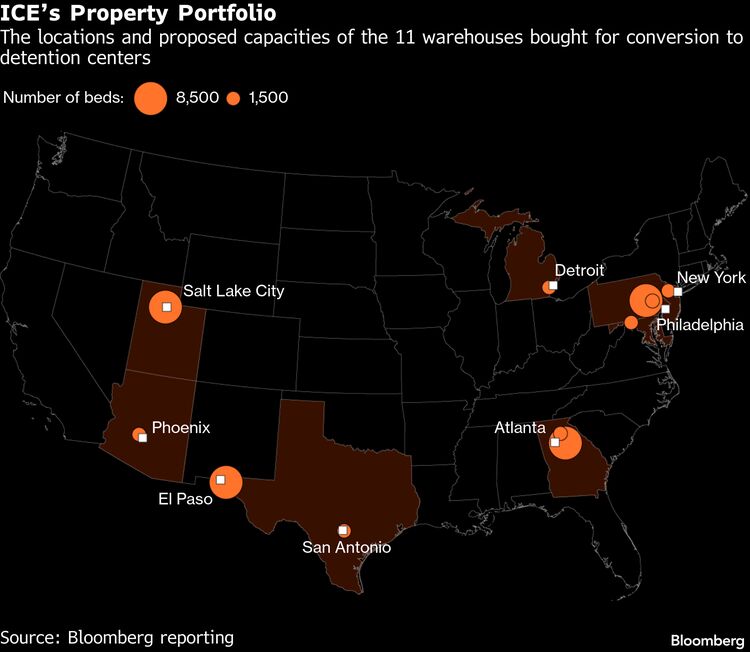
Flush with tens of billions of dollars in funding and a 2029 deadline to spend it, DHS has been moving at breakneck speed to remake America’s immigration detention infrastructure. Crucial to this effort is a $38.3 billion plan for ICE to shrink its detention footprint to 34 government-owned sites, from more than 200 private prisons and state, county and local jails, all of which are essentially leased. The agency’s rationale is that this will make for more efficient operations and faster deportations and also increase the number of beds available. Since the beginning of the year, DHS has spent at least $1.1 billion on 11 warehouses across the country. It wants to open them by fall.
Much more spending is inevitable. DHS plans to buy an additional 13 warehouses (though it has paused further purchases for now) and 10 existing jails. Any and all warehouses will require extensive conversion — the empty shells will have to be outfitted with toilets, showers, beds, and dining and recreation areas. Then there’s the matter of cells. A preliminary plan, distributed earlier this year, showed the living quarters so tightly packed that immigrant advocates and local jurisdictions immediately expressed alarm. DHS hasn’t commented on that early plan or produced a current one for public consumption.
Despite a growing list of concerns from officials and community members who recently learned they’re about to play host to detention facilities, DHS has released few public details of the plans. The only concrete outline of the agency’s vision, beyond the purchases, is a four-page document (three if you don’t count a page that’s just a picture) that was released by the state of New Hampshire, which received it from DHS after word got out that ICE was eyeing a facility in the state.
Facets of the agency’s multibillion-dollar plan have come under scrutiny . According to research from commercial real estate firm CoStar, the government is paying 11% to 13% more than other buyers of similar facilities. DHS avoided assessing the environmental impact of converting these sites until pressured to do so. Some of the facilities sit near sensitive locations including schools, homes or even chemical storage facilities . Many of the locales don’t appear to have the infrastructure , emergency services or labor force to support what’s being proposed. That includes Schuylkill County. In a place where roughly 70% of voters picked Donald Trump in the 2024 election, a bipartisan, grassroots backlash has emerged.
DHS appears to be spending money without thinking its plans through, says Michelle Brané, the agency’s immigration detention ombudsman under President Joe Biden. If the goal was cost effectiveness, she says, “they wouldn’t be doing this.” There are also significant risks that come with locking up this many people in converted warehouses: ruinous environmental consequences, human suffering and death. “They should know this,” Brané says.
DHS didn’t directly respond to a detailed request for comment from Bloomberg Businessweek . Instead an agency spokesperson recycled the statement it has given numerous outlets about the warehouse effort, saying it’s “reviewing agency policies and proposals” as part of its transition efforts. The spokesperson pointed to DHS Secretary Markwayne Mullin’s testimony during his confirmation hearing. “We want to work with community leaders,” Mullin, who replaced Kristi Noem, told Congress in March. “We want to be good partners.”
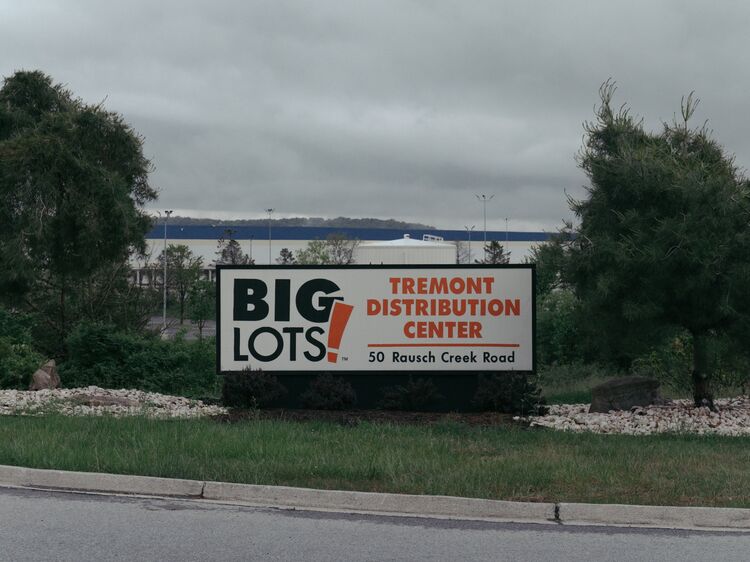
In Tremont Township, where DHS purchased the old Big Lots distribution center for $119.5 million, the experience has been a case study in the agency’s decision-making and communication. DHS wants to detain as many as 8,500 people in the facility and employ 2,000 to 2,500 workers on-site. That would make it the second-largest community in the county, dwarfing the borough and township population, and a threat to the local water and sewer system, according to local authorities. The building is steps from the area’s sole daycare. Yet the only communication about how this will be addressed has been through sporadic conference calls with Padora and other local officials, who’ve tried to provide updates at county commission meetings. Those updates have recently trickled to a stop.
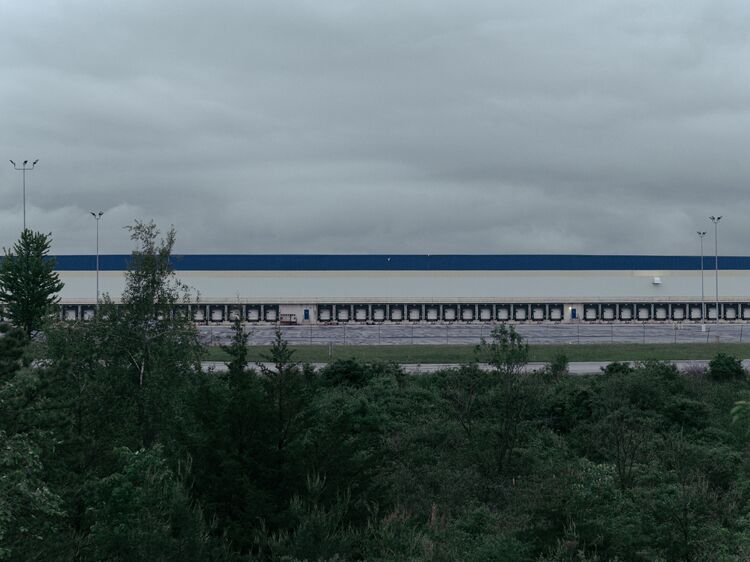
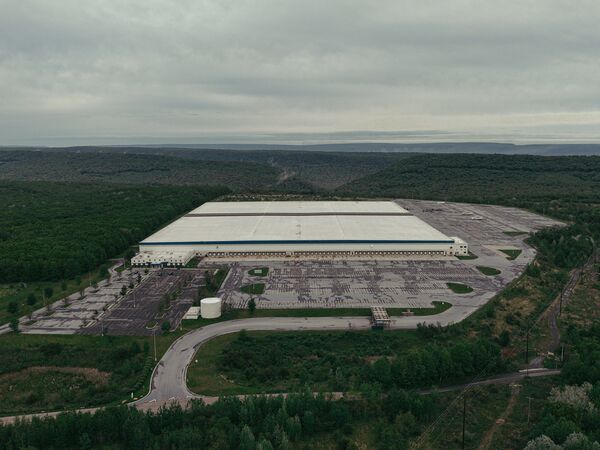
The former Big Lots distribution center sits at the top of a mountain. It’s a massive white building set back from a parking lot and lined with 112 truck loading docks and two drive-in doors. There are no windows. It’s a single-story rectangular box with 1.2 million square feet of floor space, the equivalent of roughly 8 Costco stores or 22 football fields. The interior configuration — again, think Costco — was well suited for Big Lots to get its mishmash of products out to its stores quickly. In 2002, a year after it opened, a distribution-industry trade publication touted the facility as state-of-the-art, noting it was able to ship out 250,000 cases of goods a week.
Big Lots began to struggle, and in 2020 the company raised cash by selling the warehouse to a real estate investment firm. (Big Lots then leased back the facility.) That firm was acquired a year later by Blue Owl Capital Inc. In late 2024, Big Lots filed for bankruptcy . Months later it closed the warehouse and laid off all 505 employees.
Aesthetics and livability weren’t chief among the concerns for Big Lots when it built the facility. Still, it wasn’t an easy project. The company had to clear 26 feet of mountaintop where the warehouse sits, carefully coordinating the explosive blasts to avoid disturbing a series of disused mines hundreds of feet below and an aircraft fuel line that divides the property. It timed construction to avoid the brutal winter conditions that affect the mountain. Years of planning and preparation, conversations with local and state officials, and engagement with the local community all went into getting the facility open.
The federal government originally said it would need four months to convert the building into a detention center. Pallets and racks once lined the space up to its 40-foot ceilings. ICE wants to install rigid walls and doors, according to internal agency plans seen by Businessweek . Immigration detention facilities need laundry and medical services areas, space for food prep, and dining and housing. Big Lots didn’t need hundreds of toilets for discounted furniture. Home goods, and the employees tasked with sorting and storing them, didn’t need to shower daily on-site, exercise outdoors or be fed three square meals.
In its statement to Businessweek , the agency said it evaluated the facilities to “help minimize environmental impacts, including potential impacts to protected species, sensitive natural resources, and valued cultural resources.” ICE expects people to be in its mega-facilities for as long as 60 days, though recent data shows people are routinely detained for longer.
Within hours of Trump’s inauguration in January 2025, DHS began taking steps to achieve a goal of deporting 1 million people a year. Immediately it became clear that reaching that goal would require mass arrests. Despite saying it was focused on criminals, often referred to as the “worst of the worst” by agency officials, the government would need to sweep up law-abiding residents , children and people attending their immigration hearings . DHS still fell short the first year. But the arrests it made did lead to record levels of detention, in part because of the time and resources it can take to deport a single person.
There are roughly 66,000 people in ICE custody, down from a record 73,000 in January. (During the Biden administration, the highest number of people detained by ICE at any given time was about 39,000.) To address the newly created need for detention space, the Trump administration quickly built a large tent camp at the Fort Bliss Army base in El Paso, Texas. For now the immigration detention center at Fort Bliss is the largest in the US, with room for 5,000 beds. It cost $1.26 billion and has so far been a disaster. In less than a year of operations, the camp has never come close to its 5,000-person capacity, it has dealt with a measles outbreak and accusations from detainees of inhumane conditions, and at least three incarcerated people have died . Recently the federal government replaced the contractor originally tasked with overseeing the site, a tiny Virginia company called Acquisition Logistics.
If filled to capacity, the four biggest proposed warehouse jails (including Tremont) would each be among the largest detention facilities of any kind in the US. Yet DHS has historically struggled to operate jails holding more than 2,000 people. “The smaller facilities run better,” says Claire Trickler-McNulty, an assistant director at ICE during the first Trump administration and under Biden. Big facilities are hard to staff adequately, especially in rural areas. The logistics for food and medical care are hard to manage.
A few officials have had success persuading DHS to drop plans in their jurisdictions. New Hampshire Governor Kelly Ayotte got then-DHS Secretary Noem to scrap plans for a warehouse in the state after a February meeting. Mississippi Senator Roger Wicker had similar luck . Sellers have also pulled out over community opposition . Facility owners in Missouri, Oklahoma, Virginia and Utah got cold feet, though in Salt Lake City the federal government was able to purchase a different warehouse . In seven other jurisdictions the plans to buy sites appear to have stalled.
Still, DHS owns 11 empty warehouses. It’s awarded contracts for converting and running just two of them, in Maryland and Arizona. Those contracts, which together could be worth up to $1.4 billion, have been bogged down by local concerns about lack of infrastructure or emergency services and proximity to schools and homes, in addition to humanitarian opposition. There are also accusations of failures to communicate with local officials and to conduct environmental reviews (in some cases because DHS has declared a review isn’t necessary). On big projects the federal government typically attempts to mitigate such concerns beforehand. Not this time. “They got this insane amount of money, and Congress didn’t make them put out a public plan,” Trickler-McNulty says. “They haven’t said why this is a good idea.”
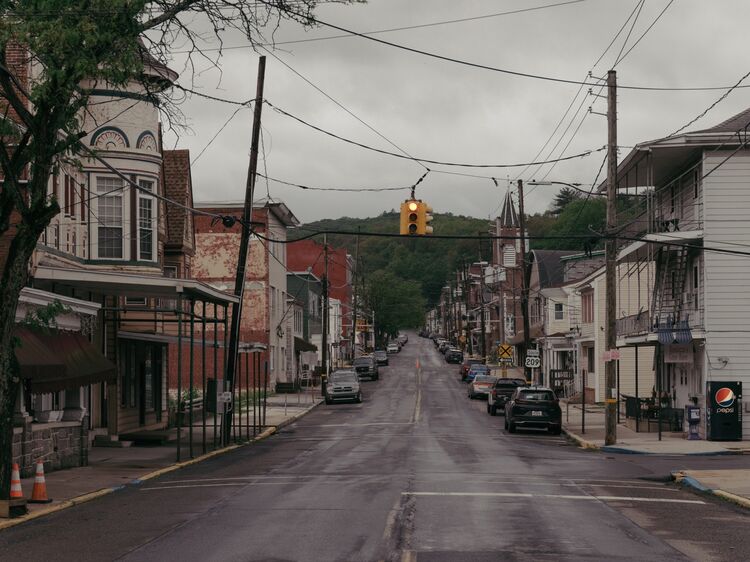
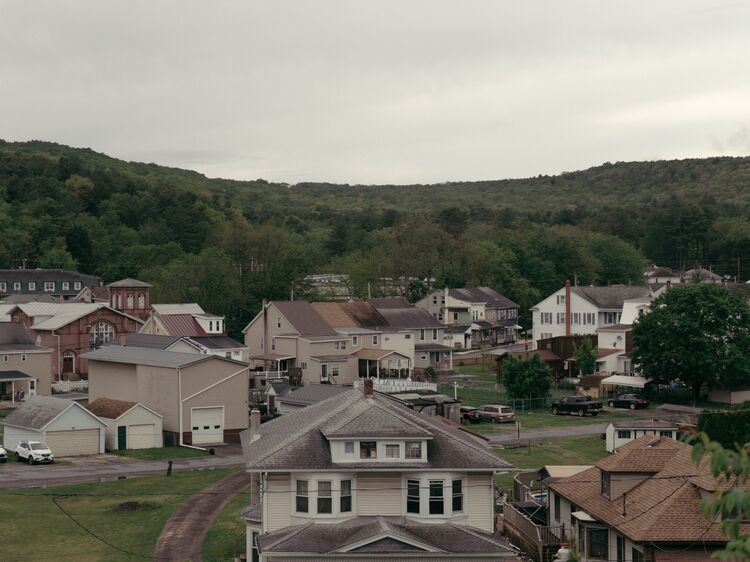
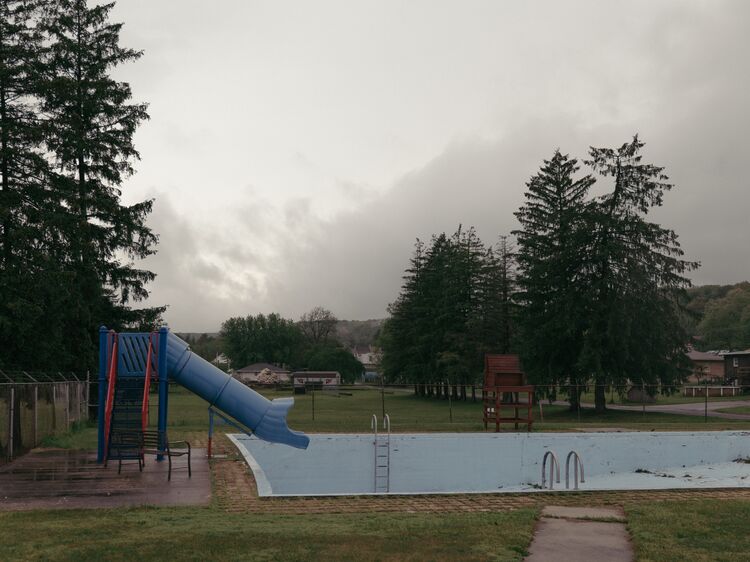
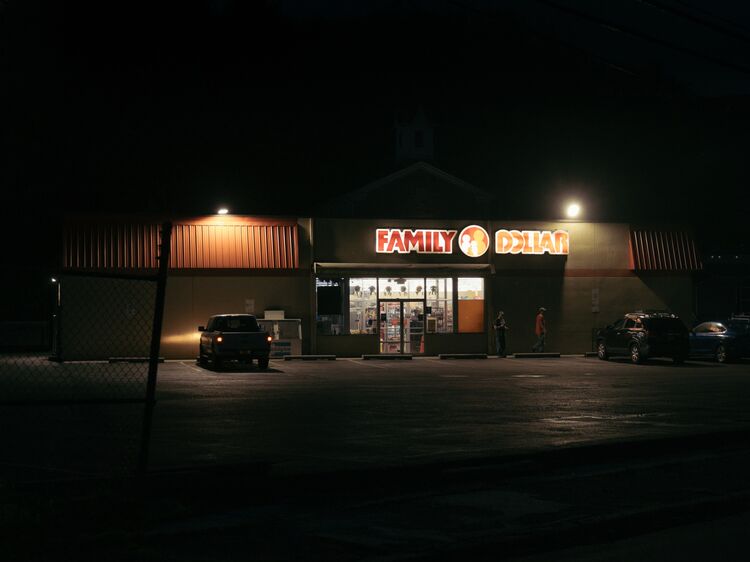
Tremont Borough’s Main Street, a half-mile-long commercial and residential corridor, has a pizza place, bar, post office and bank. There’s a single, three-way stoplight near the main retail attraction, a Family Dollar store. As far as amenities go, there’s a small plot of grass that serves as a veterans park and memorial. The borough’s pool, in dire need of repairs, has been closed since the end of the 2022 season. Residents have formed a committee to try to get it reopened, though local officials say it would cost $200 per resident to keep it operating. In response to a notice on Facebook that the pool would again not be opening in 2024, one person said: “not much left for Tremont to offer that attracts taxpayers.”
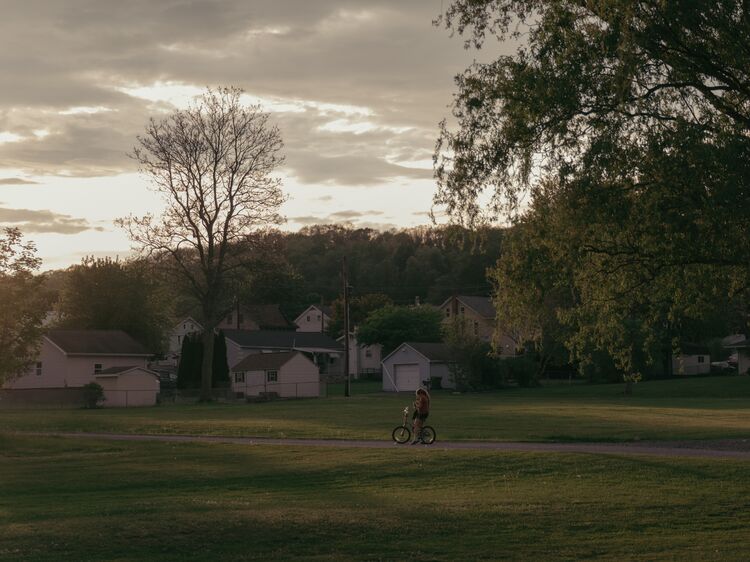
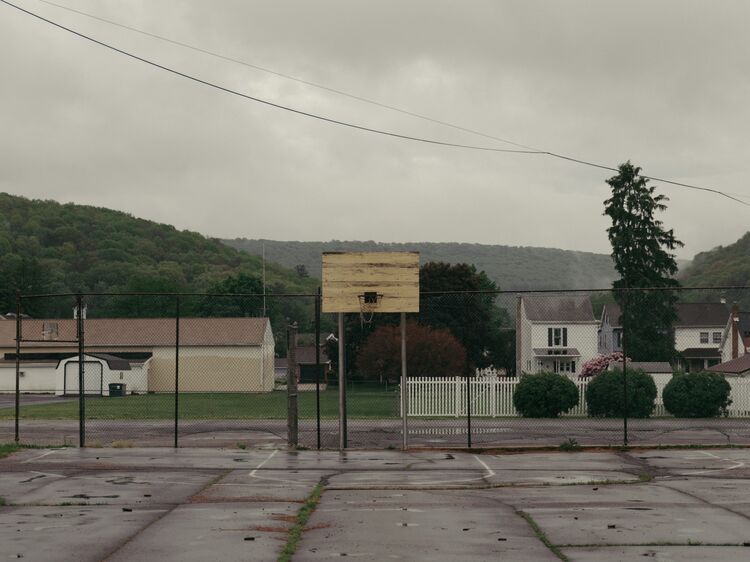
Tremont Township, the larger and less populous surrounding area, is more rural. It’s a smattering of homes, a local government building, a gas station with a Burger King, off-roading areas and auto repair shops. The Big Lots warehouse was one of the county’s biggest employers when it was open. Otherwise not many people work in the township or the borough; the average commute time to work for residents is nearly 30 minutes, according to Census Bureau data.
There’s a range of feelings about the proposed detention facility. Joe and Lara Wiscount, retired teachers in their 50s who are liberal members of a local Democratic club, are opposed to the facility on every level. They’ve pressured Padora and other local officials to resist the federal government and made themselves available to the media. Tremont Borough’s mayor, Justin Moeller, a Republican, says he’s powerless to stop the facility and his only concerns are about water and sewage. If there’s no impact to those systems, he says, “then it is out of the borough’s hands.” Anyway, he “100%” supports the administration’s immigration agenda. By his estimation, a lot of residents are excited about the prospect of the facility. Joe Wiscount disagrees. He attended a spring protest where there were, he says, 60 to 80 people marching against the facility and 5 or 6 counterprotesters.
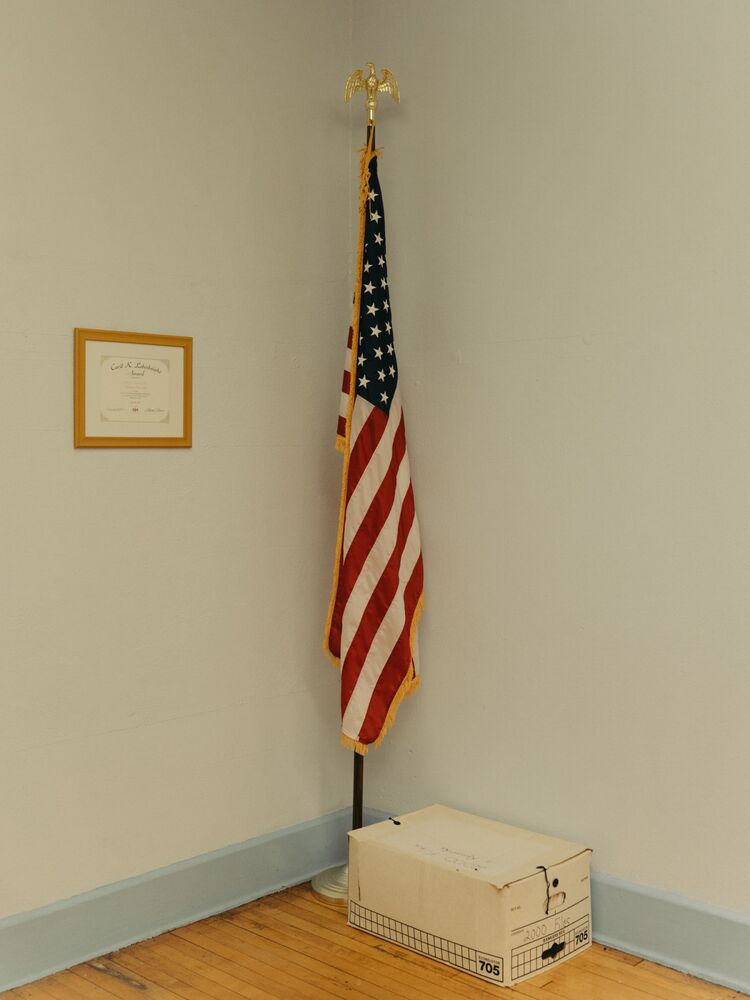
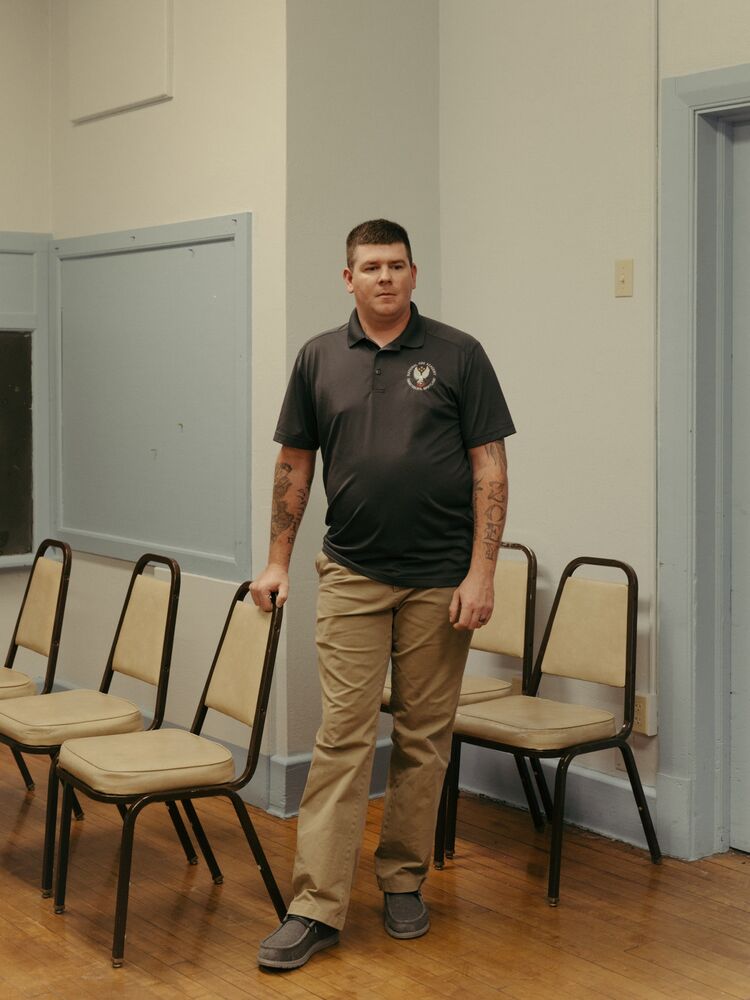
The township and the borough have a combined population of fewer than 2,000, roughly a quarter of whom are older than 65. The facility will need a staff of 2,000 to 2,500. At the very least the government could produce an independent economic impact study, says Brianna DelValle, who lives in Schuylkill County and has helped lead some of the local opposition through an organization called No Skook Detention . “If we can actually confront the real impacts, the financial impacts of this, it will help us plan,” she says.

Many residents say they fear it will be another idea with terrible consequences for them. Already the area participates in a waste-recycling process that can begin with a toilet flush in eastern Brooklyn. The waste is treated by New York City’s sewer system and turned into a sludge made of feces, food and paper fibers. The biosludge — equivalent in weight, over the course of a year, to the Washington Monument — is sent by trucks to a facility in an adjacent township. It’s turned into fertilizer on-site. This transformation produces a smell that hangs in the air in town, even on cold days. In the summer, residents say, it can be unbearable. People get headaches, children can’t play outside, and windows remain shut. Laine Mack Jr., 62, a lifelong borough resident, calls the facility the “s--- plant up the road.”
Residents have been living with the smell for years. On the other side of town, a second facility deals in sludge too. Sometimes material sloshes out of transport trucks onto the street, says Joe Wiscount. The smell forces him and his wife to make calculations about their outdoor time. There’s actually a third fertilizer facility a bit farther away from town.
Those projects were sold as economic development opportunities, but the two nearby biosolids facilities employ roughly 20 people, combined. One of the facilities pays a $2 municipal fee per ton of wet sludge it receives, according to documents filed with the Pennsylvania Department of Environmental Protection. One facility sits outside the township, and the other reports activities in three local townships, including Tremont. The smell doesn’t recognize those political boundaries.
Residents haven’t heard directly from the federal government about the warehouse jail. What’s clear is the facility won’t pay taxes — the feds’ purchase of the site will cost the school district and the local and county government almost $1 million in revenue annually, compared with what Big Lots and the subsequent owners paid. Neither the township nor the borough has a full-time police officer. The fire department is volunteer. The emergency medical services system is already stretched thin. The closest emergency room is a 30-minute drive. In its existing facilities, ICE relies on local sources for all these services regularly. In the first five months of operations at Fort Bliss, staff called 911 nearly once a day .
Padora, the Schuylkill County Commissioners leader, is the main conduit between the local community and DHS. And that line of communication has not been robust. On the first conference call he had with federal officials, he says, there were two dozen people in a Zoom meeting, many from the federal government without their cameras on. These faceless federal officials didn’t have answers to many of the county’s basic logistical questions. On subsequent calls the federal government suggested that it would hire locally to the extent possible and that it would consider making an annual payment in lieu of taxes to help offset the lost tax revenue. Padora has sought to get these assurances in writing.
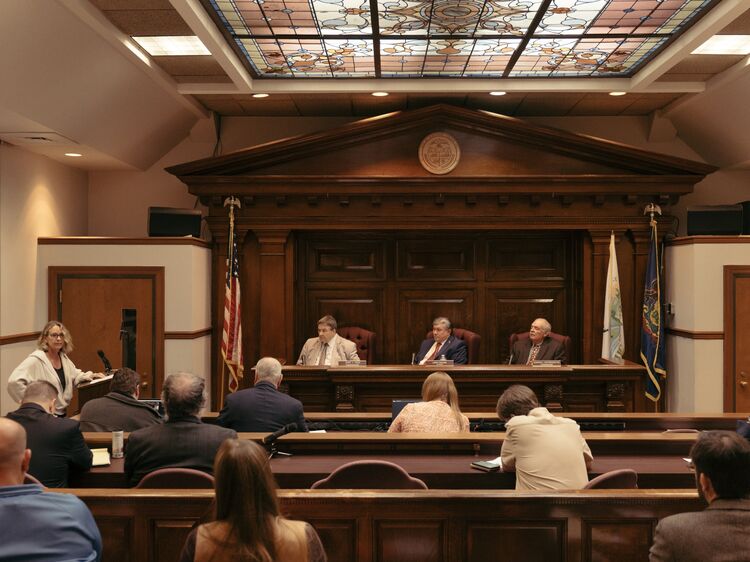
Those informal concessions don’t address the biggest hurdle to the proposal — the water. There simply isn’t enough of it in the area to support what ICE is proposing. Even if Tremont stopped using water altogether, there wouldn’t be enough. In 2024 and 2025 the area experienced its worst drought in decades, and the water problems were exacerbated in 2024 when the borough used roughly 60% of its reserves to fight a massive fire . Recently, to supplement the supply, the regional water authority has hauled water in with trucks and obtained permission to tap into a reservoir that the region stopped using in the 1990s because of water quality concerns. That new source can safely give Tremont an additional 70,000 gallons a day.
At capacity the ICE facility would need almost 1 million gallons of water a day, according to the state Department of Environmental Protection. That’s 130 times what Big Lots used. If ICE were forced to rely on the Big Lots amount, it could safely detain 63 people — as long as staff didn’t use the bathroom, wash their hands or drink any water. The Tremont system’s maximum capacity is 400,000 gallons per day, but it’s capped at a figure below that by a multistate water regulator. On an average day in 2025 the region used 208,000 gallons of water. There’s no other water in Tremont.
DHS told Padora, in limited conversations with him, that it was considering trucking in water to the facility. Delivering a million gallons of water a day to a facility at the top of a mountain strains credulity, says David Hess, who headed the Pennsylvania DEP in the early 2000s. Such a plan would require roughly 166 trucks per day, every day. “They’d be trucking water in around the clock,” Hess says. Even the largest water storage tanks on the market would have to be refilled every few days — a “logistical nightmare,” he says.
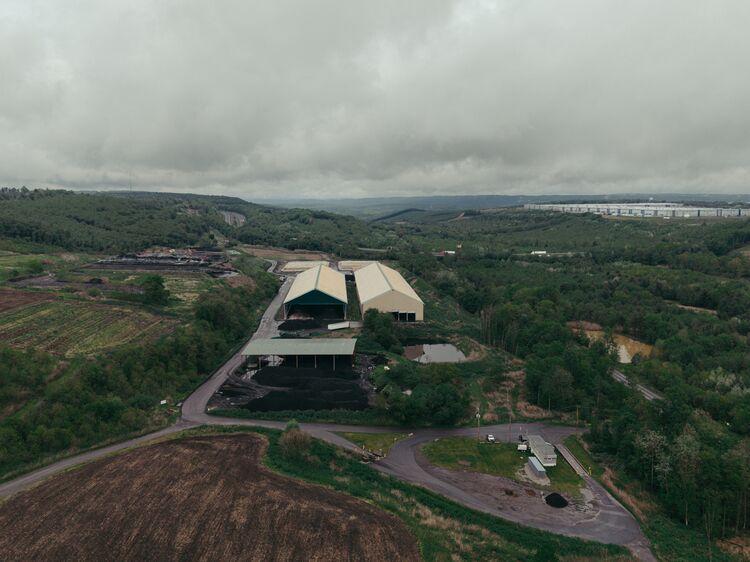
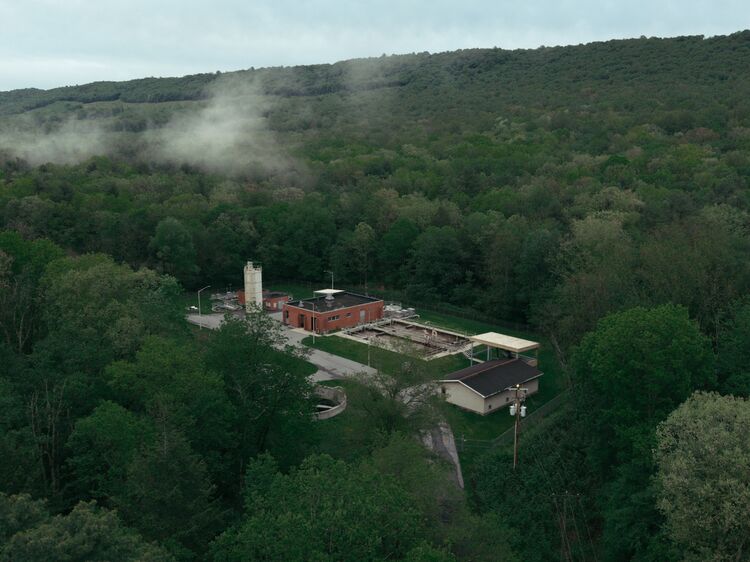
And as water comes in, it will need to be taken out. The proposed detention center could produce 450,000 to 1 million gallons of sewage daily. The regional water authority, authorized to handle 500,000 gallons, is already at 80% capacity. Anything above that is at risk of being discharged, untreated, into the nearby Swatara Creek, a tributary of the Susquehanna River. The people in surrounding counties drink the water.
At the immigration tent camp in the Florida Everglades, dubbed “Alligator Alcatraz,” it cost $92 million to haul out less than a year’s worth of wastewater. That was for roughly 500 detainees. (Florida is expected to close the facility , in part because of the huge costs to run it.) Implementing a strategy like that at Tremont would double the number of trucks coming in and out of the facility. “Water and sewer isn’t rocket science. It’s basic stuff,” Hess says. “The fact that they failed to look at this basic stuff — what else are they missing?”
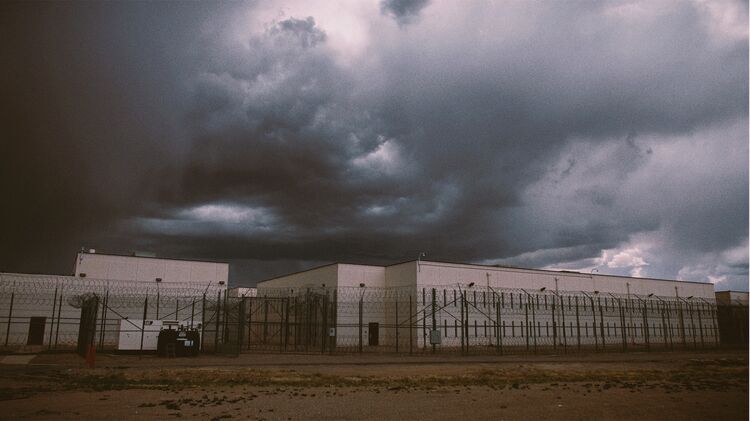
What DHS is or isn’t missing is the subject of federal suits in at least five of the jurisdictions in which it has bought facilities. Maryland sued the agency in late February over a proposed 1,500-bed warehouse jail in the state’s panhandle. The lawsuit accused DHS of violating federal law by failing to consider the environmental impact of the project. Instead of conducting a traditional environmental review, the agency acknowledged in the lawsuit, it did a limited review and found the project “is not expected to result in any significant adverse environmental impacts.” That determination, the agency argued, eliminated the need for a monthslong impact study. It conducted the review in one day, the same day it completed the purchase of the property. The federal judge overseeing the case didn’t find the government’s argument convincing. He halted construction pending a full environmental review. In June the agency released a public comment form to kick off its environmental assessment. The suit is ongoing.
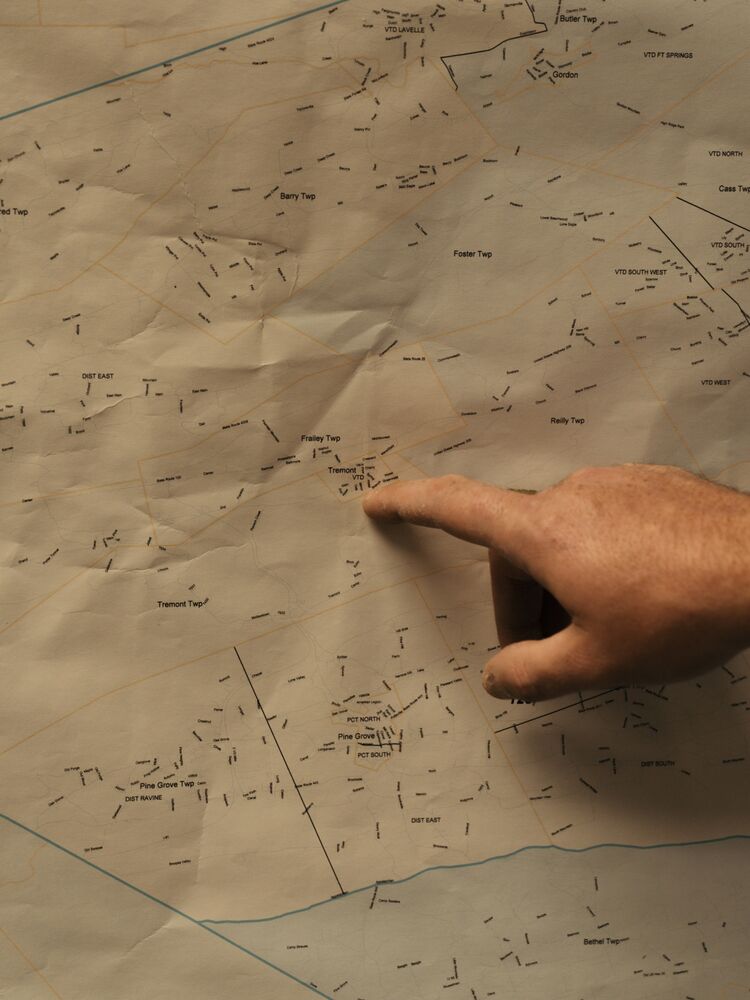
New Jersey followed Maryland’s lead in March, suing over a similar facility. It led with the lack of environmental review, and also accused DHS of violating federal immigration law and a law that requires the federal government to account for “all national, regional, state and local viewpoints” for development programs and projects. Days later, Michigan made a similar claim. DHS filed its limited review of the Michigan site, with findings similar to those for Maryland, more than a month after purchasing the site and hours after Michigan filed suit. In response, DHS has said Michigan does not have standing to bring the lawsuit and that the agency needs detention space in the Detroit area. The New Jersey proceedings were paused after DHS agreed to begin assessing the environmental impact. Arizona raised a challenge as soon as work started on a warehouse site there; the state alleges that DHS didn’t conduct any review at all. Social Circle, Georgia, a small town 50 miles east of Atlanta, filed the most recent suit, in mid-May. The agency has yet to respond.
Officials in other jurisdictions where DHS has bought warehouses have attempted to slow the government by using local powers. Salt Lake City officials have taken steps to limit water usage by nonresidential facilities because of drought conditions in the region and the potential for the proposed warehouse jail to sap water resources. San Antonio changed its zoning rules in an attempt to derail the warehouse conversion there at a site that faces an elementary school and apartment complex. El Paso’s water authorities have also raised questions about the potential strains on infrastructure from a proposed facility.
Pennsylvania is mounting an aggressive defense of its own. The Department of Environmental Protection simply shut off the water to the site (as well as to another, smaller proposed facility in the state). A series of March orders cut off access to water and sewage until DHS seeks permits and regulatory approvals for the project. It also asked the federal government to produce its plans for water and sewage management at the site within 20 days.
On March 17, six weeks after DHS became the owner of the Tremont facility, Pennsylvania state officials received their first communication from the federal government about the project. ICE Assistant Director Keith Ingalsbe acknowledged the state’s environmental orders in a letter that requested an extension for submitting the water and sewage plans. “ICE will not be able to meet the 20-day deadline for delivering these plans to DEP because it has not finalized them yet,” the letter read. The agency sought a meeting with state officials to discuss a path forward and asked the regulator to at least let it use water at the levels Big Lots was using before it vacated. DEP refused both requests .
At DHS there’s been internal scrutiny of the almost $40 billion effort. DHS’s Office of Inspector General has announced it’s doing an audit of ICE’s push for more detention space that seeks to figure out whether the purchases meet ICE’s “operational need in a cost-effective manner.” This came after a separate internal review of the program soon after Mullin took over.
ICE has repeatedly pointed to “numerous solutions” that would keep it from “creating an adverse impact to the water authority infrastructure” in the places it plans to turn warehouses into detention facilities. It hasn’t made any of those solutions public. In Pennsylvania it hasn’t produced any water and sewage plans. It hasn’t produced an environmental impact report. Yet it’s pressing forward. It’s appealing the Pennsylvania environmental orders, arguing in part that they suggest “an antipathy towards ICE,” according to the documents. The appeal process could take months.
DHS also brushed aside the environmental concerns in its statement to Businessweek , saying those opposed to the project are “feigning concern” to “obstruct” the president’s immigration agenda.
None of the 11 warehouses bought by DHS are close to ready for occupancy. People with knowledge of the process say the next two to move forward are likely to be those in San Antonio and El Paso, where no legal action has been taken. Mullin has not said when DHS will resume buying warehouses. On June 9, Congress passed an additional $70 billion in funding for immigration enforcement through 2029. On top of that, Congress is debating an annual budget appropriation that could give ICE even more money.
In the meantime, government officials and residents in Tremont are waiting. Padora used many of the March commission meetings to provide residents with updates from his conversations with state officials and with DHS. More recently he’s conceded that things are in a “holding pattern.” Locally there’s resignation that if the federal government wants to jam this through, it will. “This is just another injustice forced upon this part of the county for no good reason,” says DelValle of No Skook Detention. Before that, residents are hoping they’ll at least get a timeline, a written plan and some say in the process. Or simply some notice. — With Sophie Alexander