Ken Griffin is expanding his bet on Miami.
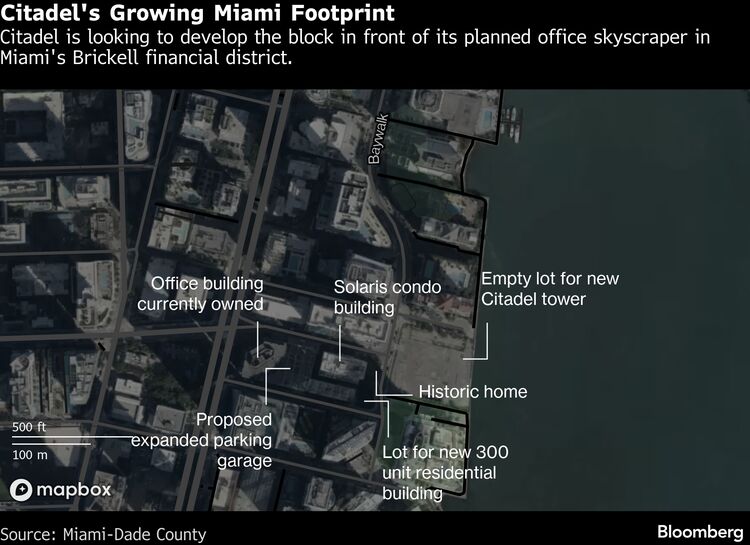
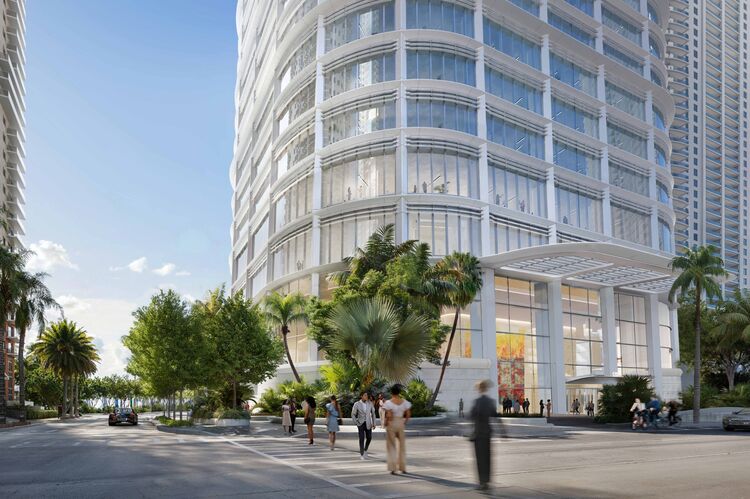
Fresh off a clash with New York City Mayor Zohran Mamdani, Griffin has updated his plans for a multi-billion dollar commercial tower and development along Biscayne Bay. The billionaire Citadel founder revealed a proposal to construct a 300-unit apartment building and a 1,420-space parking garage alongside another office building Griffin owns.
The May 13 filing with Miami-Dade County also shows that a hotel that was to be built in a towering skyscraper has been stripped out to allow for more office space. Griffin is still considering the development of a hotel across the street from his future headquarters, according to people with direct knowledge of the matter.
Griffin has also bought up all of the units of a 22-story condo building across the street and will soon begin demolition to pave way for more development, according to a person with direct knowledge of the plans.
Griffin, who’s worth $48.3 billion according to the Bloomberg Billionaires Index, has amassed about five acres of land spanning two blocks in Miami’s Brickell financial district. He’s spent years buying out individual owners at the Solaris to acquire the entire building as part of his vision for putting Citadel’s mark on the city.
Expanding the office space was linked to the spat with Mamdani, but the other changes had long been under consideration, said a person with knowledge of the plans.
“We are focusing this part of our development at 1201 Brickell solely on commercial office space,” a Citadel spokesperson said. “Miami is open for business, and the unparalleled quality of our development will drive the tenancy of leading global firms, including Citadel and Citadel Securities.”
The updated plans were filed several weeks after Mamdani made Griffin the face of a plan to tax second homes of the wealthy. Mamdani posted a video about the tax proposal outside the financier’s $238 million penthouse on Billionaire’s Row in Manhattan, calling him out by name while saying that the tax was designed for those “who store their wealth in New York City real estate” while living elsewhere.
Griffin reacted by vowing to revise the Miami headquarters plans to make it more ambitious.
“What the mayor of New York has made clear to my partners, and principally my New York partners, is that we need to double down on our bet in Miami,” Griffin said in early May.
The dust-up also raised questions about Citadel’s plans to build a large office tower in Manhattan. Citadel’s chief operating officer, Gerald Beeson, circulated an internal memo calling the move by Mamdani “shameful” and suggesting the project — estimated to cost $6 billion — is at risk.
Read more: Citadel Raises Halting NYC Expansion in Rebuke of Mamdani
Griffin, who founded market maker Citadel Securities and oversees one of the world’s largest hedge fund firms, received backing from New York’s elite, including CEOs, and met with New York Governor Kathy Hochul.
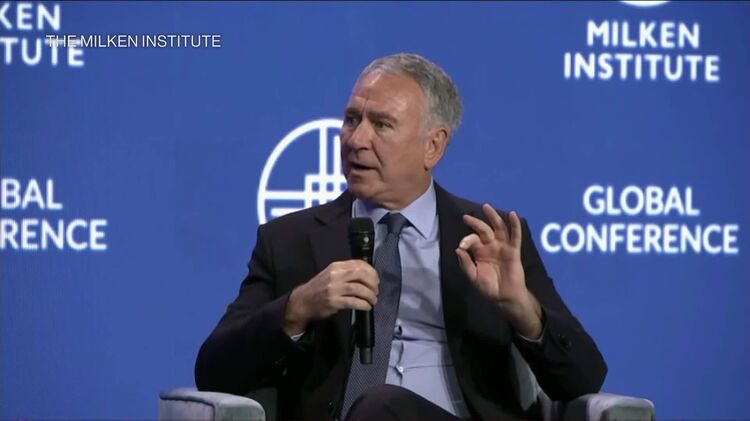
At the Milken Conference in Beverly Hills he said the issue was pushing him to embrace Miami in an even bigger way.
Griffin has emerged as the most powerful Miami booster since moving himself and the company in 2022 after clashing with Democratic lawmakers in Illinois over politics and crime.
He’s since given hundreds of millions of dollars to hospitals, schools and urban development projects in Florida. His name is embossed on the Underline, a 10-mile path beneath the Metrorail, and he’s backed soccer pitches and scholarships. He also employs about 500 people locally and actively works to attract more businesses to the region.
Shortly after arriving in Miami, Griffin spent a combined $700 million on three properties including one of the few remaining waterfront parcels in Brickell, the city’s central business district and announced plans for the new office tower. He’s also spent hundreds of millions of dollars for his personal real estate portfolio in Coconut Grove, Star Island and Palm Beach.
With the condo buyout, the only property in the way of Griffin dominating the whole block is a historic structure on the corner that was built in 1905 — the site of Miami’s first physicians office. Today, it’s owned by the city of Miami, and houses the Dade Heritage Trust, an architectural preservation organization, that will be flanked by Griffin’s complex.