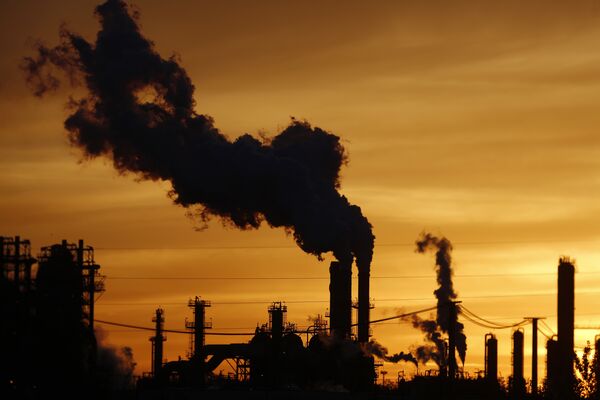
The third most important contributor to global warming isn’t included in official tallies of greenhouse gases or mentioned in plans to cut them. And it’s time the world did something about it, according to a research analysis published Thursday in the journal Science .
So-called indirect greenhouse gases are generated by combustion of fossil fuels or they waft skyward from industrial chemicals. They include carbon monoxide, nitrogen oxides and non-methane volatile organic compounds (VOCs).
These gases don’t themselves trap heat — but once airborne, they join chemical reactions that form heat-trapping gases, such as tropospheric or ground-level ozone, a toxic gas in the lower atmosphere. Together with heat-absorbing black carbon , they are responsible for about 15% of global warming to date, or nearly 0.3C, the analysis finds.
The direct greenhouse gases most responsible for climate change are carbon dioxide, methane and nitrous oxide.
Read More: Middle East War Spurs Emissions From Oil and Gas Sites, Satellites Show
Scientists have understood the chemistry of indirect greenhouse gases for a long time, but only recently did they work out the warming contribution from each compound. Carbon monoxide and the volatile organics are responsible for trapping more heat indirectly — 0.25C — than the proper greenhouse gas nitrous oxide does directly, 0.1C. (The 0.25C figure is the warming impact, but not all of the chemicals lead only to warming; nitrogen oxides, for example, can have a cooling effect.)
“I talk to a lot of industry leaders that are like, ‘Well, these aren’t greenhouse gases.’ Or even tropospheric ozone: ‘This isn’t a greenhouse gas,’” said Ilissa Ocko, the article’s lead author and a senior climate scientist at the nonprofit Spark Climate Solutions. “Even though it’s obviously a greenhouse gas, scientifically, it is not in the ‘basket.’”
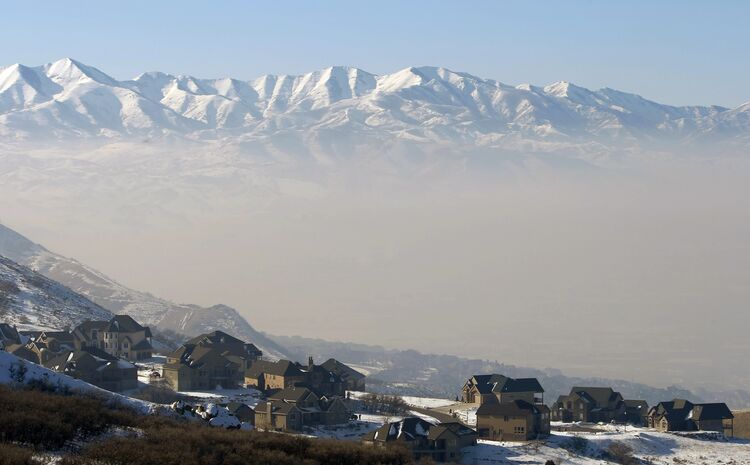
Dozens of countries defined six greenhouse gases of concern when they signed a climate agreement in Kyoto, Japan, in 1997. Carbon dioxide, methane and nitrous oxide are only the most familiar pollutants that scientists had determined were warming the planet. A seventh gas was added several years later.
Since then, negotiations, pacts, laws, regulations and policies all targeted the “Kyoto basket of gases” to address climate change. The trouble is, these aren’t the only gases that cause warming, and the researchers who wrote the new analysis — several of whom worked in the Obama or Biden administrations — say it’s time to elevate the new pollutants to the mix.
As industries tap hydrogen as a source of power, leaked molecular hydrogen — the fourth substance that the authors look at — could also contribute to warming in decades to come.
The time is ripe to raise the issue, Ocko said, because recent years have seen efforts to cut greenhouse gases beyond carbon dioxide. Ways to reduce methane, nitrous oxide and hydrofluorocarbons (HFCs) have all drawn attention from policymakers and companies. And that’s primed the conversation.
“The indirect greenhouse gases have really flown under the radar,” she said. “Now’s the right time to call wider attention to this issue and see if we can make progress and really just tackle all major drivers of climate change.”
Indirect warming gases are already regulated in many parts of the world because of their toxic health effects. Knowing they have a climate impact too should have policy implications going forward, Ocko said. Governments may want to track them more closely in the open atmosphere, in addition to current monitoring that focuses on cities’ peak pollution days, when health threats are highest. The tropics, which see more sun, also have higher levels of these gases, and scientists interested in the global picture may need more information about them.
The results are meant to encourage decision-makers to consider new ways to reduce pollution.
“If we do something about it, we may uncover new opportunities to slow down warming in the near term,” Ocko said. “And that’s really exciting.”
The challenge is accurately measuring each compound and where it was emitted, said Vaishali Naik, senior physical scientist at the NOAA Geophysical Fluid Dynamics Laboratory, who wasn’t involved in the analysis.
Naik echoed the authors’ call for more research and better accounting to shape policymaking, “which will be challenging in the current geopolitical environment,” she said.