Butter-dipped soft serve hits all the viral notes: It’s tasty, shocking and an “affordable luxury.”
By Ilena Peng | Updated on Jun 11, 2026 at 03:00 PM
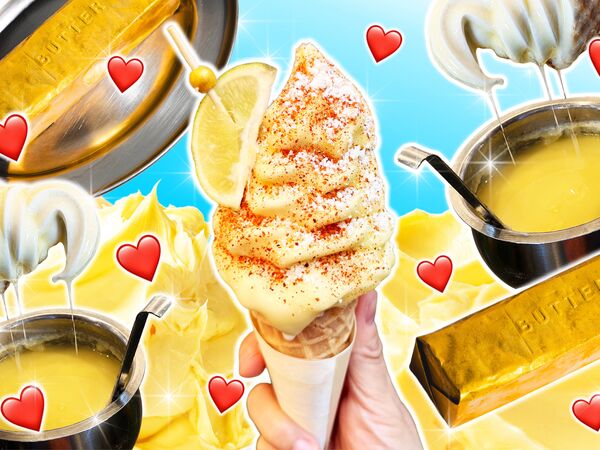
A New York City pastry chef swirls vanilla-bean ice cream into a waffle cone, then dips the creamy soft serve into a vat of golden liquid to form a crispy shell. It’s not chocolate or butterscotch or peanut butter that’s coating this frozen dessert; it’s a thin, hardened layer of savory French butter, sprinkled with sea salt. And diners, no longer so fat-fearing these days, are eating it up.
Dominique Ansel, the famed baker behind the cronut, a croissant-doughnut hybrid that took Manhattan by storm in 2013, began serving the butter-dipped cone at Papa d’Amour in Greenwich Village late last summer. The treat was intended for a limited run but did so well that it quickly earned a permanent place on the menu. Now the shop sometimes sells more than a thousand cones a week dipped in layers of Isigny Ste. Mère French butter from Normandy — the same butter that Ansel uses in the Japanese-French bakery’s pastries — and has generated an army of high-end copycats across the country. (Not to be outdone, Papa d’Amour is introducing a sweet corn elotes version, sprinkled with Cotija cheese and Tajín, starting on June 12.)
“I use tons of butter every single day, I eat butter at home, I live for butter,” Ansel says when asked how he came up with the idea in the first place. “I think it’s very surprising, pleasantly surprising, for nearly everyone that bites into it, because it’s a thin shell, like paper, that kind of melts in your mouth.”
Not too long ago, it would have been hard to imagine Americans lining up for butter-dipped soft serve. For decades after World War II, US consumers widely eschewed butter in favor of margarine, and 1990s-era households stuck in the SnackWell’s era were mostly chasing low-fat trends. Even today, butter’s high-calorie density and saturated fat still get it a bad rap in some circles. But diets are constantly evolving, and butter is (mostly) back.
The dairy industry sometimes points to a June 2014 Time magazine cover, “Eat Butter,” as a turning point for the product’s reputation, with a more recent push to eat foods with short ingredient lists, including more animal products, adding to butter’s tailwind. On Health and Human Services Secretary Robert F. Kennedy Jr.’s revised food pyramid , butter sits above bananas, nuts, whole-grain bread and other dietary staples. American farmers have been getting their cows to produce fattier milk to help meet the booming demand. (They’re produced so much, in fact, that butter prices in the US hit a five-year low earlier this year.)
Eating a butter-dipped ice cream cone is also good content for TikTok and Instagram. It’s a display of decadence, combining the nostalgia of a childhood treat · with a grown-up savory twist. It matches the relatively affordable price point of the new “sweet treat economy,” and it’s just shocking enough on video for consumers to see it and think, “I’ve got to try that myself.”
“It’s an affordable luxury,” Ansel says of the $9.50 cone . Celebrity chef and content creator Eitan Bernath, who tried to reconstruct the viral butter cone for his 2.3 million followers (it wasn’t easy), says it fits into a category of content that’s primed for virality: “Things that have a bit of a shock factor, but then are actually some degree of delicious.”
At North Park Creamery in San Diego, the family-owned cone shop rolled out its own version of the dipped butter soft serve in March — not a seasonally hot period for ice cream — and it was doing pretty well. Then a local food influencer filmed a video of herself eating it. The day after she posted was “our busiest day ever, by a wide margin, by like 30%, and that’s busier than mid-July, right when everybody wants ice cream,” says shop proprietor Erik Evans. The next day was even better. Today, butter is the store’s No. 2 most popular dip, behind Ghirardelli chocolate, accounting for more than a quarter of the cones it sells each week, he says.
The menu item definitely benefits from this “swavory element that’s kind of hot right now, that sweet-savory kind of blend — and it looks really cool,” Evans says. But he doesn’t view it as “just a flash in the pan,” adding that people are returning to try the cone more than once. “We’re seeing it being a kind of sustained boost to our business.”
Other ice cream companies have taken different approaches to the butter dessert craze. Milk Bar announced a three-month collaboration pairing Thomas’ English Muffin with a butter-flavored soft serve at its New York, Los Angeles and Washington, DC, locations in April. The company is expecting to sell about 8,000 of the pairings before the limited run ends on June 15, says Shannon Salzano, the company’s vice president of creative and brand partnerships.
Chin Chin Ice Cream in London introduced a slice of banana bread toast with a pat of honey butter ice cream on top last May. “It did really well, but everyone kept asking for more and more butter,” says co-founder Ahrash Akbari-Kalhur. And so in September the company created a honey butter ice cream bar that’s wrapped and shaped like a stick of butter. Butter is “quite zeitgeisty at the moment,” Akbari-Kalhur says.
Stew Leonard’s, a Connecticut-based grocery store chain that rolled out a butter-dipped cone last fall, says demand is still there but has fallen off some in the months since. (Its newer strawberry-maxxed offering is the latest sweet treat to go viral.) But even though the grocer will lean into trends so customers can try the hot new thing without traveling far, it still sells far more of the classics. “We never take our eyes off the most popular” items, says Chase Leonard, the company’s director of creative and brand strategy, “and at the end of the day, nothing has beat out the vanilla ice cream cone.”