
For most of the past two decades, the Union Dicon Salt factory in Nigeria’s capital has been idle. Losses are piling up and its largest shareholder has seemingly vanished.
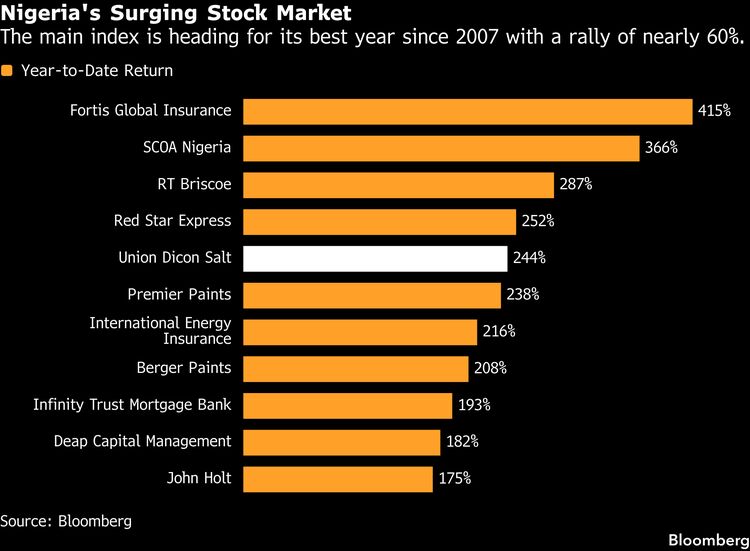
Essentially, the company is moribund. Yet, in the stock market, its value has done nothing but rise this year. For reasons even Union Dicon executives can’t explain, small-time speculators have been buying the shares in droves. It’s up almost 250% this year, putting it among the 10 best stocks in Nigeria this year.

The rally is part of a stock frenzy that’s sweeping the country, driven in part by day traders looking for the chance to strike it rich. Even though the Nigerian exchange is tiny by global standards (the median market value of publicly traded companies is just $35 million), its rise underscores the power of brokerage apps pulling in new customers from far-flung corners of the world and giving them the chance to speculate on stocks pumped up by social-media hype.
Retail investors have become a formidable force in Nigeria. Individuals were behind a third of all trades on the Nigerian Exchange at the end of 2025, according to the latest available stock exchange data. That’s up from a fifth the previous year. Five years ago, they figured far less.
Boniface Okezie, a 70-year-old owner of a delivery company, is one of those small-time traders. He’s hoping his punt on Union Dicon shares, or maybe another of his wagers, will be the one that makes him a fortune. While his portfolio contains some larger firms, he’s most excited about the small ones.

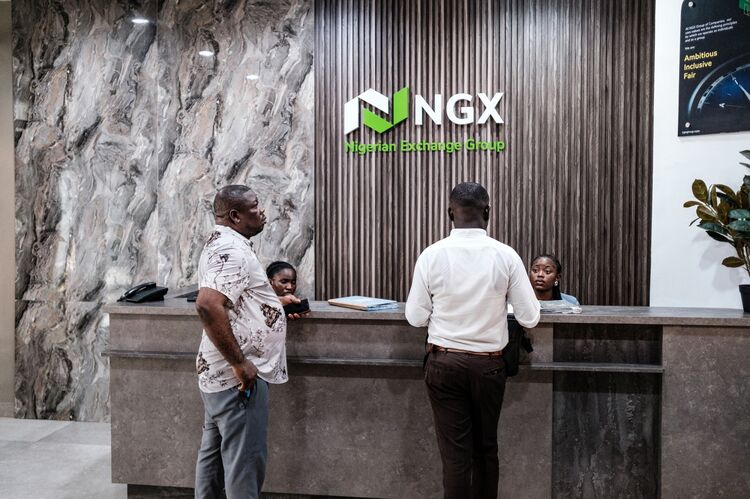
“Those penny stocks, even with small naira in your pocket you can buy them,” Okezie said one afternoon as he milled about the lobby of the Nigerian stock exchange. “The market is a risk, so we are risk takers,” he said. “It’s something we are addicted to.”
To Union Dicon executive Alfred James, the rally is an absurdity. There was a little re-start of the ramshackle factory last August but, James says, salt production has essentially been zero since 2004. And, he adds, the company “has not paid dividends to anybody. I just think people are getting feelers as if something is happening.”
Those “feelers” have helped push the stock above 23 naira, the equivalent of about 2 US cents, from 7 naira back in January.
For the wider Nigerian market, there are plenty of good reasons behind the rally. Dangote Cement Plc has doubled this year as its owner, billionaire Aliko Dangote, presses ahead with plans for a secondary listing in London. Oil companies, like Seplat Energy Plc, are reaping windfall profits.
But blue-chip shares are too expensive for many mom-and-pop investors, so instead they’re turning to trading accounts that can be opened for as little as 5,000 naira, less than $5, and picking up hot stocks.
Read More: Where to Invest 100 Million Nigerian Naira
It’s a trend fraught with risk, especially in a country where nearly half the population lives in extreme poverty. Most individual traders tend to end up losing money because they are poor at stock selection and market timing, said Bige Kahraman , a professor at Oxford University’s Said Business School who has studied retail investing.
“It’s quite dangerous, especially when people probably have limited savings already,” she said. “Even during normal times, retail investors tend to lose money, but how much they lose can really get amplified during a market bubble.”
Many amateur Nigerian traders don’t know what they are buying and risk getting burned, according to David Adonri, chief executive officer of brokerage Highcap Securities Ltd.
“Some of the trades are done on the expectation that the price will increase further because it increased yesterday,” he said.
The head of Nigeria’s financial regulator said last year that the preference for speculation was a major hurdle for the country’s growth. More than a quarter of Nigeria’s nearly 240 million people are regularly gambling, compared with less than 5% that invest in capital markets, Securities and Exchange Commission Director-General Emomotimi Agama said at the time.
Regulators have taken some steps to rein in the frenzy, but the rally largely remains unchecked. In February, the exchange suspended trading in Zichis Agro-Allied Industries Plc after shares rose 600% within weeks of listing. The suspension was later lifted and Zichis is now up more than 2,500% since its market debut.
A spokesperson for the company did not reply to a request for comment. The firm has previously told shareholders to only rely on official disclosures.
Read More: A 200% Rally Gains Ground as Nigerian Reforms Lure Investors
But with stocks going up and up, many individuals are undeterred. Business consultant Chinedu Dike, for instance, says he’s used brokers in the past, but now relies on media reports and his own judgment to invest.
And having made a 500% return on Deap Capital shares in just a year, Dike, 45, isn’t about to lay off penny stocks either, because “if a stock is already low, in the one-naira region, how far deeper can it fall?”

It helps that Dike and other do-it-yourself investors are courted by a slew of online trading platforms that promise fast and cheap trading. On one of the most popular apps, called Bamboo, almost quarter of the customers are under the age of 25 and they tend to commit a median investment of about 13,000 naira each time, or roughly $10.
“We’re acquiring young people and that’s exciting for us,” said Richmond Bassey, who founded the brokerage.
Among Bamboo users is Ifeanyichukwu Omoregie, a 24-year old content producer at a Lagos radio station. She embraced investing just over a year ago, she says, buying Dangote Sugar Refinery Plc stock at 25 naira per share. Since then, she’s gradually added more money, favoring companies whose products she uses.

“I said if I can start with 5,000 naira, then if I lose it, it won’t be a lot of pain,” Omoregie said.
So far it’s working out well. Her Dangote Sugar shares have tripled since she bought them. She likes to frequently check her investments, because “when you open up the app, you can see how much you made today on your stocks.”