Indonesia’s bonds and stocks resumed their selloff Thursday, underscoring expectations that the central bank will have to raise interest-rates again to limit capital outflows.
The benchmark 10-year yield surged 10 basis points to 7.45%, near its highest level since 2022, while the five-year yield ended three basis points higher. The rupiah weakened 0.2%, while the benchmark stock index closed 0.3% lower, paring intraday losses of as much as 2%.
Indonesian assets have slumped this year, with investor confidence shaken by President Prabowo Subianto’s interventionist agenda and fiscal spending at a time when the nation’s balance of payments has been strained by high oil prices. To support the rupiah, which has dropped to a series of lows, and lure foreign capital, Bank Indonesia has said it will let bond yields rise.
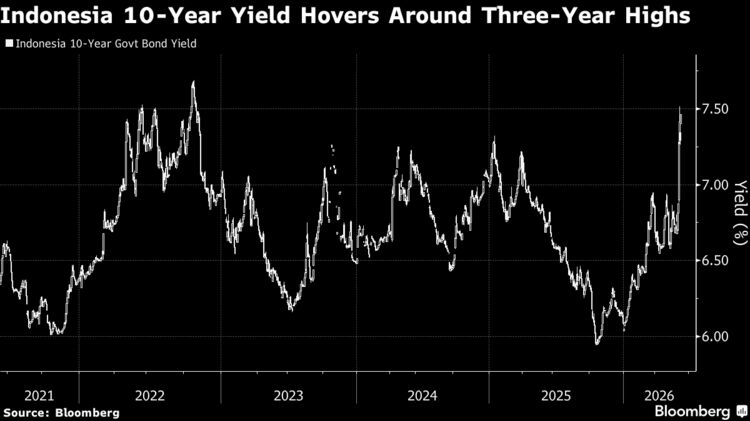
The selloff followed a brief reprieve on Wednesday after officials sought to reassure foreign investors. A gain in US Treasury yields on bets the Federal Reserve will need to raise interest rates to counter inflation also soured sentiment toward Indonesian bonds, according to Adra Wijasena, a fixed income senior analyst at PT Shinhan Sekuritas Indonesia in Jakarta.
“We still see room for bond yields to move higher until the rupiah pressures stabilize,” said Jessica Tasijawa, fixed income analyst at PT Mirae Asset Sekuritas Indonesia. “We see Bank Indonesia appearing to retain scope for an additional 25–50 basis points of rate hikes.”
On Thursday, energy and basic materials stocks were among the biggest drag on the benchmark stock index that’s tumbled more than 30% this year, the biggest decline among global primary indexes. The rupiah has weakened about 7% against the dollar to rank as Asia’s worst-performing currency.
While Bank Indonesia Governor Perry Warjiyo has said his primary focus is currency stability by boosting yields and drawing foreign fund flows, further rate hikes risk greater outflow from stocks. Analysts expect Bank Indonesia to raise rates again , adding to the 75 basis points tightening since May, when it meets next week.
Read: Prabowo Needs More Than Rate Hikes to Fix Market, Analysts Say
Indonesia’s economic outlook has become more complicated as rising tensions in the Middle East drive up oil prices, threatening to widen Indonesia’s trade deficit, stoke inflation and risk credit ratings.
“Confidence is one of those things that is easy to lose, but it takes a little bit longer to regain the market’s trust,” Thu Ha Chow, head of fixed income for Asia at Robeco, told Bloomberg Television. “We’re seeing the beginnings of a turnaround story for them right now, but not quite there yet.”
So far this year, foreign investors have pulled out a net $3.9 billion from local stocks and another $597 million from bonds.
The weakening rupiah also weighed on Indonesia’s bonds, Wijasena said, adding that market participants are still waiting for S&P Global Ratings’ assessment toward the nation’s sovereign rating.
| Read more on Indonesia: |
|---|