Two funds that hold Indonesian bonds are delaying redemptions to manage liquidity pressures stemming from the nation’s recent financial market turmoil.
Investors in the KIM Fixed Income Fund Plus and KIM Fixed Income Sharia Fund may now have to wait as long as seven trading days to receive redemption proceeds, compared with the normal three-day settlement period, a spokesperson for Korea Investment Management said on Friday.
The move comes as bond market liquidity deteriorates following a sharp selloff in Indonesian assets and heightened volatility in the rupiah. Indonesia’s financial markets have been under pressure for weeks as foreign investors pull money from the country’s stocks and bonds on concerns that policymakers may need to keep raising interest rates to stabilize the currency.
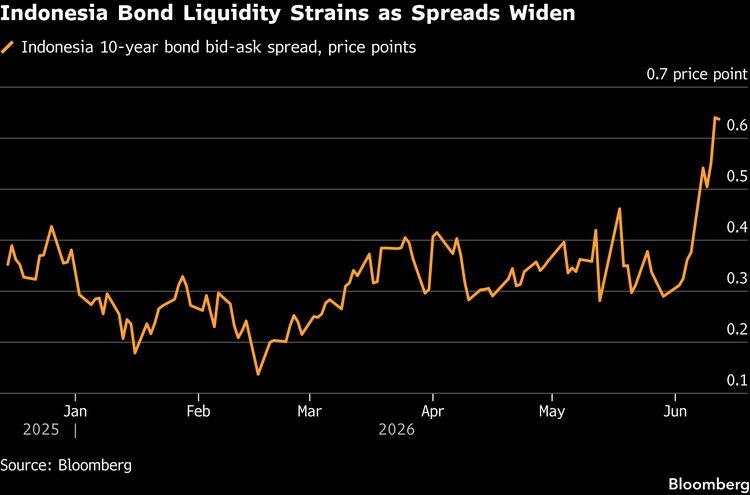
“Due to the temporary difficulties in selling bonds following a liquidity crunch in the Indonesian bond market, our local subsidiary has extended the redemption cycle,” a Korea Investment Management spokesperson said in a text message.
Indonesia’s central bank has been pulling back from purchases of government bonds, allowing yields to rise in a bid to attract foreign investors and support the rupiah. The liquidity squeeze intensified after Bank Indonesia unexpectedly raised rates at an emergency meeting this week, the first off-cycle increase in eight years.
| Read More on Indonesia’s Market Stress: |
|---|
| Indonesia Tightens Global Banks’ FX Trading to Boost Rupiah |
| Indonesia Says Foreign Funds Buy More Assets After Rate Hike |
| Danantara Sells Debut Dollar Bond, a Win for Prabowo After Rout |
The rate hike further tightened liquidity conditions in the bond market, Korea Investment Management said.
The market stress has also impacted a key metric for the two funds. The 5.7 trillion rupiah ($319 billion) KIM Fixed Income Fund Plus declined 1.5% this week through Thursday, and the 691.4 billion rupiah KIM Fixed Income Sharia Fund slid 0.7%, according to data compiled by Bloomberg. The losses mark the first weekly declines on record for both products.