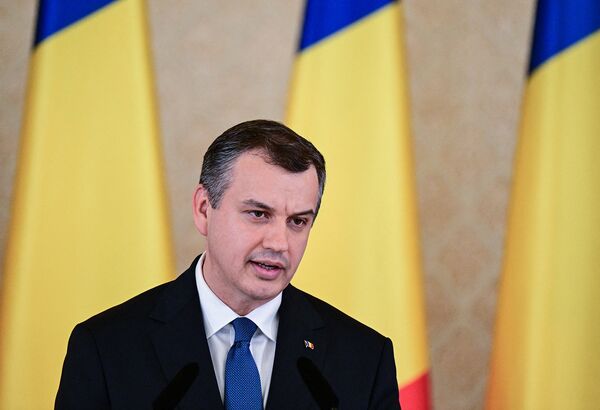
Romanian prime minister nominee Eugen Tomac failed to secure the endorsement of a second pro-European party, clouding his election prospects in the country’s fractious parliament.
Save Romania Union, a reformist group allied with President Nicusor Dan, declined to back Tomac’s bid to form a technocratic cabinet on Friday. It was the second rejection in two days from parties that constituted the former four-way coalition. The candidate faces a Sunday deadline to file a cabinet lineup and then seek a confidence vote in the legislature next week.
“Our conclusion is that a technocratic government would be ineffective because no one would truly be accountable for decisions, it would not end the crisis and would only deepen the chaos,” leader Dominic Fritz said on Friday after a meeting where his party voted overwhelmingly to reject Tomac’s plan.
With Tomac’s chances of securing a parliamentary majority fading, the president may be forced to go back to the drawing board and seek a new nominee. That may extend a political impasse that threatens to stall steps needed to unlock European Union funds and tackle one of the bloc’s widest budget deficits.
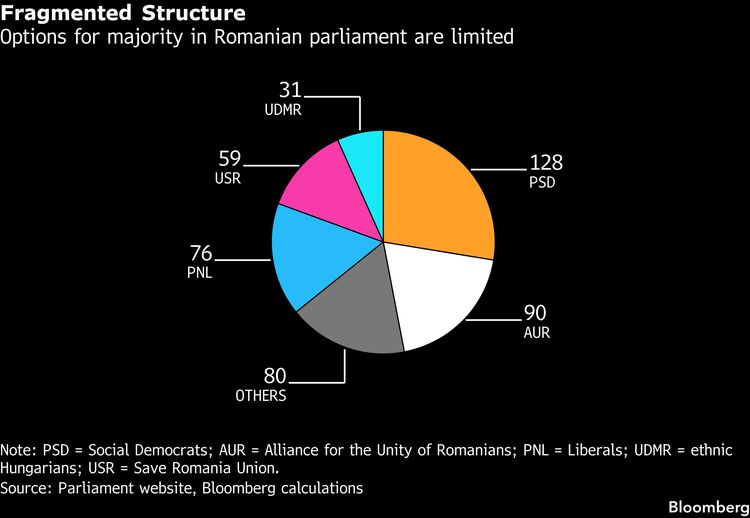
The previous government collapsed after the Social Democrats, the largest party in the Romanian parliament, pulled out over the unpopularity of tax hikes and spending cuts that had fueled far-right support.
The party joined the far-right opposition AUR party to topple former Prime Minister Ilie Bolojan in a no-confidence vote last month. Bolojan, who’s from the Liberal Party, now serves as caretaker until a new leader is elected.
Read more: Political Gridlock Saps Romania’s Fight Against Stagflation
The Social Democrats are now demanding tax cuts for low-income workers as well as on some medicines and staple foods as a condition for their political support.
Those steps may make it harder to meet policy goals to secure €8 billion ($9.3 billion) in EU recovery funds that expire at the end of August and which are key for providing fiscal room to cut the budget deficit to 6.2% of economic output this year.