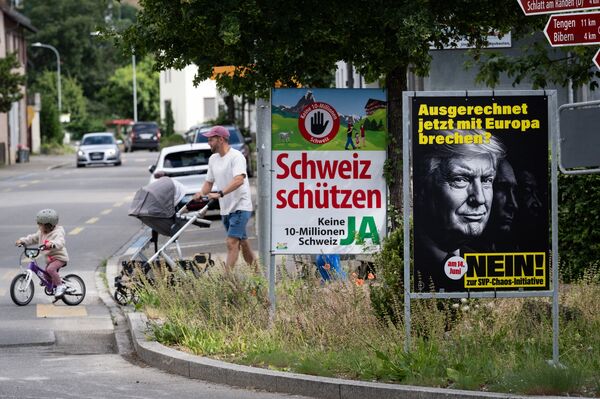
The growing prominence of far-right political parties in Europe is pressuring governments to introduce stricter controls on immigration. Switzerland is set to vote on a proposal that would take things to the next level: a 10 million cap on its population.
The initiative was put forward by the right-wing Swiss People’s Party and voters are due to have their say in a referendum on June 14. If a majority of them back the plan, the government will be forced to take measures to reduce immigration, which could ultimately lead to a blanket ban on new arrivals into the country. Switzerland’s population isn’t too far off the proposed limit, having reached 9.1 million last year.
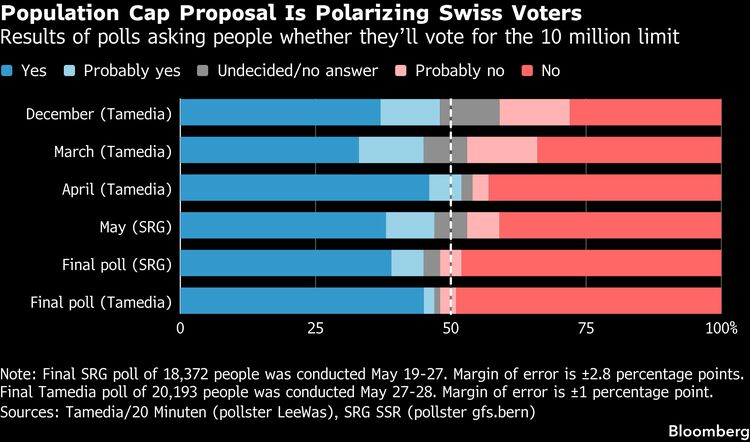
The idea of a cap is polarizing. Opinion surveys suggest that the vote could be close amid concerns over higher housing costs and pressure on public infrastructure. Opponents of the cap, which include the government and many business leaders, argue it could lead to a shortage of workers with critical skills, harm the competitiveness of Switzerland’s economy and damage relations with the European Union.
What prompted the call for a Swiss population cap?
The SVP came up with the idea in 2023, presenting it as a way to preserve the Swiss lifestyle and protect the environment from excessive human activity. The party won 28% of the vote in the last election, running on a campaign that presented citizenship as a privilege, not a right.
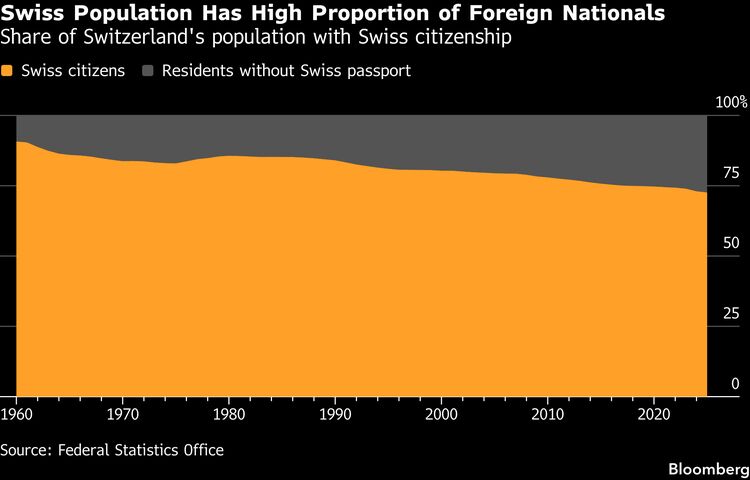
Its population cap idea has touched a nerve in a country that has long been sensitive about immigration. More than a quarter of residents don’t have Swiss citizenship — one of the highest proportions in Europe. Many locals complain of sky-high rents , traffic jams and overcrowding on trains and buses that harm their quality of life.
How fast is Switzerland’s population growing?
Switzerland’s population has expanded by about 10% over the past decade, outpacing that of the EU, which saw less than 2% growth in the same period, according to World Bank data. Migration has been the biggest contributor to the Swiss population increase. The so-called natural growth rate — the difference between births and deaths — only accounted for about one tenth of the growth.
The population increase was especially high in 2023 as national statistics factored in the arrival of refugees from Ukraine for the first time. In most years, migrants have come largely from the EU or countries with which Switzerland has a free-trade and association agreement.
Switzerland’s dynamic economy has made it a major draw for foreign workers. The country is home to global businesses including UBS Group AG, Nestle SA and Novartis AG. Its relatively low taxes, highly skilled population and lean approach to government have also attracted big foreign businesses including Google, IBM Corp. and Walt Disney Co.
Is the vote likely to pass?
In Switzerland’s system of direct democracy, citizens cast ballots as many as four times a year on issues ranging from inheritance tax to whether apes should get human rights . Support for a proposal tends to decline as the vote date draws nearer.
An April poll from newspaper group Tamedia/20 Minuten suggested that 52% of voters were either a “yes” on the population cap or leaning that way. By May, opposition to the proposal had risen above 50% for the first time.
What would enforcing the population cap involve?
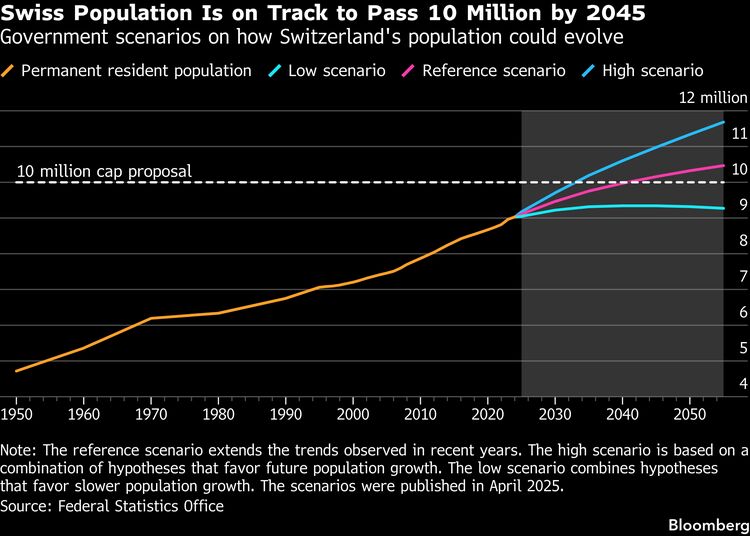
Supporters of the plan have proposed a multistep arrangement that would be triggered if Switzerland’s population surpasses 9.5 million before 2050. That’s quite likely to happen. Current government forecasts project the country will come close to the threshold by the end of the decade and cross it by 2035.
The first target would be asylum seekers and families of foreign residents who wish to join them in Switzerland. People admitted to the country on a temporary basis would no longer be entitled to a residence or settlement permit, citizenship or any other right of residence.
If the threshold of 10 million residents is crossed, the country would then withdraw from what the proposal describes as “population-driving” international treaties.
If the population doesn’t fall back below 10 million two years after that, Switzerland would, as a final step, quit the freedom-of-movement accord it has with the EU. This would have far-reaching consequences as it would trigger the cancellation of a range of other bilateral deals with the bloc and threaten Switzerland’s access to the EU’s single market. It would also call into question the residence rights of around 1.5 million EU citizens currently living and working in the country.
How does Switzerland’s business community view the proposal?
Some large Swiss companies, including Novartis, Roche Holding AG and Nestle, have expressed alarm .
Business lobby Economiesuisse warned of “substantial” damage from the proposal, pointing to an expected shortage of 430,000 workers by 2040 that it said couldn’t be filled without immigration. Manufacturing lobby Swissmem said the recruitment of skilled workers from the EU is “ essential ” for the export-dependent sector.
Some individual business leaders support the proposal, including Ems-Chemie Holding AG Chief Executive Officer Magdalena Martullo-Blocher and businessman Thomas Matter. Both are lawmakers for the SVP in the national parliament.
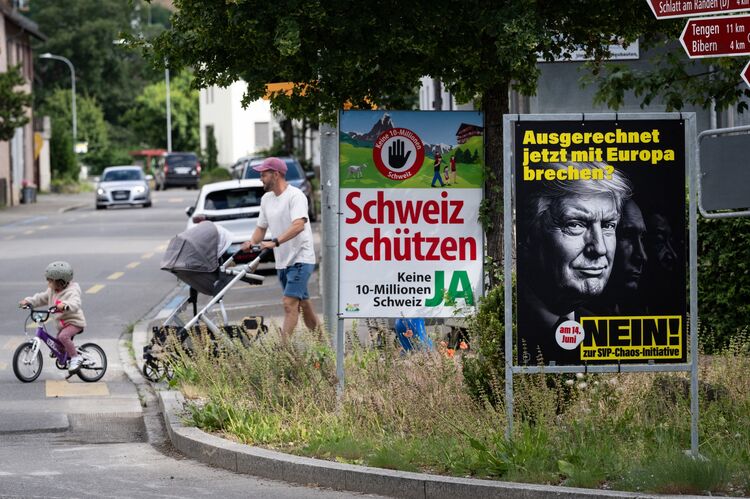
The government has warned of an economic fallout, citing labor shortages and trade disruption if EU bilateral agreements were to fall away. The initiative’s proponents argue that such issues would be offset by a decrease in housing rents and lower costs for infrastructure and public welfare.
If voters back the population cap, what happens next?
The rules of Swiss direct democracy mean the proposal would immediately become part of the constitution. However, the government and parliament would still need to decide how best to implement the amendment, which opens up some wiggle room.
Lawmakers opted to water down a 2014 SVP proposal “against mass immigration” in order to preserve the free-movement accord with the EU. They were able to do this mainly because the agreement wasn’t specifically mentioned in the text of the proposal. This time around, it is.
That means it would be more difficult to unpick the most potentially disruptive elements of the plan if it does make it into the constitution and the country’s population later hits 10 million.
“At that point, Switzerland will have to take all necessary measures to comply with this limit and will have to terminate the Agreement on the Free Movement of Persons with the EU,” said René Schwok, professor of European Studies at the University of Geneva. “There will be virtually no room for maneuver or scope to act as the Federal Assembly did” after the 2014 vote.