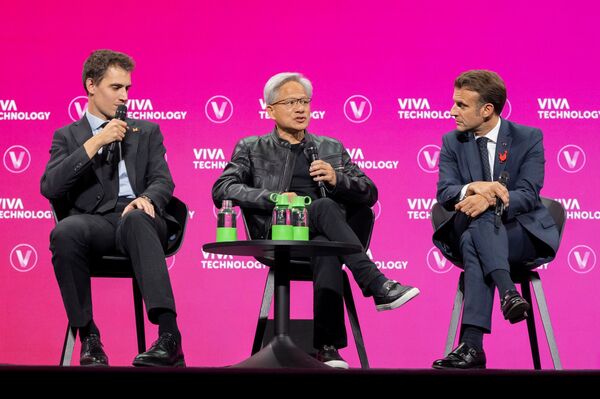
In Canadian leader Mark Carney’s head-turning speech at Davos in January, he made almost a throwaway call for middle powers to ensure they aren’t “forced to choose between hegemons and hyper-scalers” on AI development.
That warning is becoming more urgent by the day. Anthropic PBC’s release of Mythos in April sent shockwaves around the world , with Canada, the European Union, Japan and a range of other governments seeking access to the model to prevent potential attacks on their financial systems.
The rapid pace of technological change exemplified by Mythos presents a dilemma for Carney’s “like-minded democracies” as well as every other nation: How do governments both assert their own strategic autonomy and avoid getting left behind as the US and China pour hundreds of billions of dollars into cutting-edge AI capabilities?
“There’s a political realignment happening at the same time as a technological revolution,” Evan Solomon, Canada’s first-ever Minister of Artificial Intelligence and Digital Innovation, said in an interview. “Those two things don’t happen often.”

Getting the balance right will be one of the defining issues for governments everywhere over the next few years, with failure bringing the prospect of unrest or worse. A Bloomberg News survey of government approaches to AI in three continents — compiled from official responses, interviews and public documents — shows that administrations are increasingly fearful of being consigned to the sidelines as the US and China set the pace of innovation.
Read More: The Coming AI Upheaval Risks 'Collar-Flipping' the UK: Dispatch
Backed by unmatched financial firepower and Nvidia Corp.’s most-advanced chips, US tech leaders like Anthropic, Google and OpenAI are racing to build out infrastructure to train AI models, with the US estimated to outpace the world in computing power by a large margin. China is the only peer with anything resembling a rival ecosystem , through the likes of AI pioneer DeepSeek as well as tech giants Tencent Holdings Ltd. and Alibaba Group Holding Ltd .
The rest of the world is now trying to figure out how to keep pace. Canada, which unveiled a new AI strategy this month, is looking to pool resources with other nations to ensure they aren’t reliant on either superpower. In February, it signed a so-called Sovereign Technology Alliance with Germany that aims to “reduce strategic technology dependencies,” while Canadian developer Cohere Inc. agreed to buy German AI champion Aleph Alpha in April. Carney is due in France today ahead of President Emmanuel Macron’s AI-infused Group of Seven summit.
As the US and China move ahead technologically, the likes of nations in Europe and Canada need to work together “to give us the scale, to give us the IP, to give us the ingredients to compete and have control,” said Solomon.
Where US policy is focused above all on its world-leading build-out of data centers housing the computing power to drive AI — the Trump administration-backed Stargate Project is worth $500 billion alone — governments elsewhere are more insistent on industry guardrails.
“AI is the greatest disruption of our time,” Alexander Proell, Austria’s state secretary for digital affairs, said in an emailed response to questions. “It is here to stay, and we don’t want to be left behind.”
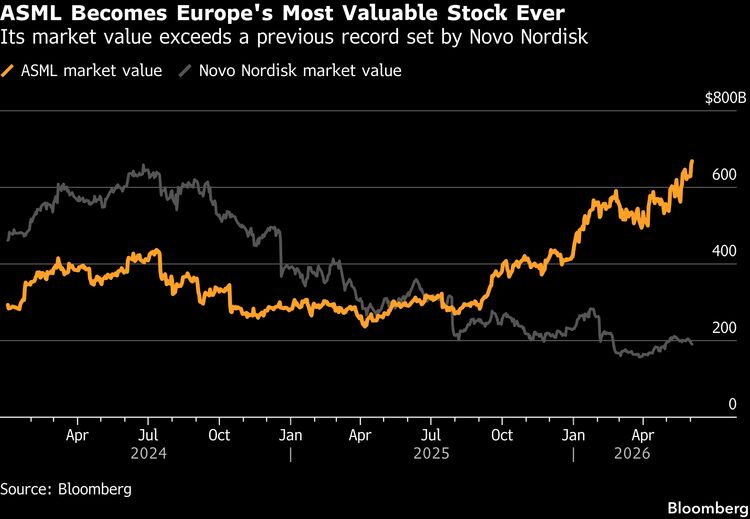
Austria, for example, has a guiding principle of “trustworthy and human-centered AI” while emphasizing the need for “technological sovereignty.” That approach is mirrored by the Netherlands, a rare European tech player through local champion ASML Holding NV, which makes the machines needed to produce the most advanced chips.
Willemijn Aerdts, who recently became minister for the digital economy and sovereignty, sees AI as not just a matter of economic prosperity, but one of political autonomy. The Dutch government is working on implementing an “ AI Delta Plan ,” an homage to its 1950s strategy to prevent the low-lying nation from flooding through a system of dikes, canals and land reclamation – all of which enabled the Netherlands to become a world leader in water management and engineering.
“It is important that companies here scale up innovation, produce, and apply it, so that the Netherlands becomes economically stronger and less dependent on countries outside Europe for AI,” Aerdts said.
The Dutch proposals include a disruptive technology agency like DARPA in the Pentagon, as well as a €200 million “AI factory” due to start operations this year that will allow companies to experiment with AI applications, make use of a supercomputer and securely store data. Some €30 million will also go toward studying the ethical, legal, and societal consequences of AI use.
“We need to ensure AI matches our values,” Aerdts said in an emailed statement.
Other nations are similarly looking at how to utilize AI in a way that benefits society without decimating entire industries and catalyzing mass layoffs. Some smaller countries are even worried about the survival of their languages.
Estonia, a Baltic state of just 1.3 million that pioneered the use of AI technology in public administration, has an aggressive strategy that includes doubling the value of the nation’s work output in the next 10 years. The prime minister, who has a dedicated AI advisory council staffed by successful tech entrepreneurs such as the CEO of ride-hailing firm Bolt Technology OU, recently undertook a session on vibe coding and built a “PM Cockpit” on Anthropic’s agent Claude that pulled together key government priorities.
Estonia sees little choice but to embrace AI, viewing it almost as an existential choice. The government introduced chatbots to all schools as part of a world-first education partnership with OpenAI that is both meant to foster innovation as well as ensure that AI doesn’t undermine its language and culture — and potentially its national security.
The government argues that AI models are significantly more accurate in English than in languages with far fewer speakers, and it fears that Estonian could be degraded as a digital language and go extinct unless the country moves quickly to adopt AI. The nation is making 4 billion Estonian data points available to Meta Platforms Inc. to help train large language models in a bid to shape the revolution.

Greece, a member of the US-led Pax Silica alliance on AI and supply chain security, is also focused on developing the Greek language and culture data space. Harking back to its ancient roots, Athens aims to launch a global AI ethics forum and “observatory for the democratic process.”
For many world leaders, jobs are the primary concern.
In Australia, where polls suggest three-quarters of the public is worried about AI and job security , Prime Minister Anthony Albanese’s Labor government is establishing a forum with employers and unions to tackle the impact of artificial intelligence on the workforce. The UK government has launched a Future of Work Unit meant to track AI’s effect on the jobs market as part of its plan to upskill millions of workers to use the technology by 2030.
Indian Prime Minister Narendra Modi, who oversees the world’s most populous nation, is looking to AI to create millions of jobs for its growing ranks of youth. It’s already starting to benefit farmers, a key voting constituency: They can now ask an AI chatbot how to access payments from a government-funded scheme, or for information on soil type and the amount of fertilizer to use.
In other places, governments are struggling to respond in the face of dire warnings. A World Bank study last year showed 19% of Philippine jobs risk being displaced by AI technologies, posing a major threat to its call center industry . Still, the government neither has a dedicated AI minister nor any major AI project underway, despite coming up with a policy “roadmap” and introducing a bill on deepfakes in Congress.
One major challenge is figuring out the right mix on regulation. Whereas the European Union’s AI Act has been criticized for being overly restrictive, Japan’s AI Promotion Act focuses on innovation without strict bans.
AI and labor-saving tools are seen as part of the solution rather than a threat to job losses in Japan, where the working-age population has been aging and shrinking fast with chronic labor shortages. Japan’s government has introduced a generative-AI pilot platform across all ministries aimed at speeding up policy and data analysis for overburdened officials, including drafting parliamentary responses.
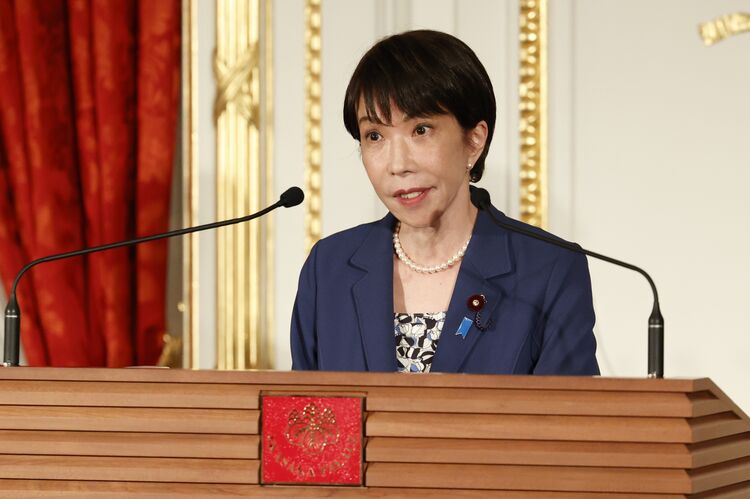
South Korea, perhaps the biggest AI winner so far among the middle powers, has a “core national policy goal” of joining the US and China as one of three AI superpowers, according to the Science Ministry, which is driving policy. The government’s AI budget for 2026 more than tripled to 9.9 trillion won ($6.7 billion).
Home to both Samsung Electronics Co. and SK Hynix Inc. — memory chipmakers that are critical to power AI accelerators and data centers — government policy is focusing on large-scale expansion of advanced GPUs, development of proprietary AI foundation models, and expanding AI into manufacturing sectors where it holds a competitive edge including robotics, smart factories and shipbuilding.
Rather than focus on legislating against potential downsides, South Korea enacted an AI Basic Act in January that stipulates “the minimum necessary obligations” to foster corporate innovation. It also plans a Special Act on AI Data Centers to streamline the process of building them.
That proactive attitude still may not shield South Korea’s government from blowback . After street protests last month, officials helped broker a labor dispute between Samsung executives and union leaders over AI-wage related increases. Yet the solution may bring new problems: Signs of resentment are brewing after some Samsung workers were handed AI bonuses of around 600 million won ($400,000), and others a mere 1% of that sum.
In one sign of enhanced cooperation among middle powers, France has been seeking to pool knowledge with scientific agreements and contacts between companies in South Korea and Japan, while pushing a joint research center with India in New Delhi, Clara Chappaz, France’s first-ever AI ambassador, said in an interview.
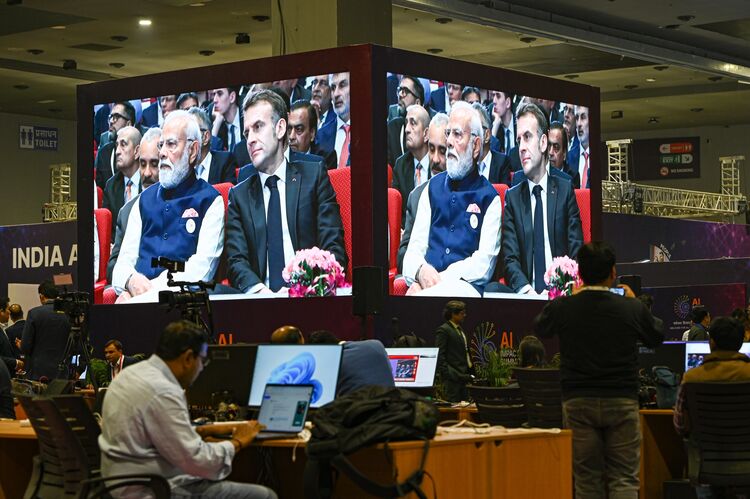
France is an AI leader in Europe , having deliberately capitalized on its mathematics base, its abundant nuclear power and a rapidly growing tech ecosystem to unveil an AI strategy back in 2018 with the aim of encouraging new ventures. Today it has Europe’s most valuable AI company in Mistral, while Yann LeCun, who was formerly Meta’s AI chief, raised $1 billion in March for his new Paris-based startup, Advanced Machine Intelligence Labs.
Japan’s SoftBank Group Corp. said on May 30 that it plans to invest as much as €75 billion ($87 billion) in data center capacity in France, which it hailed as poised to become a top European hub for AI infrastructure. France is committed to multilingual AI and access to artificial intelligence for all, according to Chappaz.
“There is a growing awareness of the strategic and industrial importance — but not only that,” she said. “There are also diplomatic and economic stakes: With this technology comes a dynamic of cultural influence.”