President Donald Trump has repeatedly said the US and Iran are on the cusp of a deal to end their conflict. The reality has proved more elusive — in part because of the nature of the negotiations themselves.
The latest confusion came as Trump claimed a deal was imminent on Thursday, saying an agreement could be signed as early as this weekend. By Friday, the president was posting on social media that “there is no such thing as dealing in good faith” with Tehran.
While Trump’s penchant for overstatement, threats and enticements helps explain some of the confusion, there’s another reason a conclusive deal has been so hard to reach: the unwieldy way in which the US and Iran are actually carrying out their negotiations.
US officials, analysts and people familiar with the matter say the negotiations are less actual talks and more a cumbersome process in which messages take days to move back and forth. The people asked not to be identified discussing the format of talks that have taken place well outside the spotlight.
Proposals from American negotiators wind their way through a circuitous diplomatic path, often involving human couriers on the Iranian side to conceal the whereabouts of Supreme Leader Mojtaba Khamenei, who was wounded early in the US and Israeli campaign. With the Iranian authorities fearing that he’s a potential target for assassination, his location is a closely held secret.
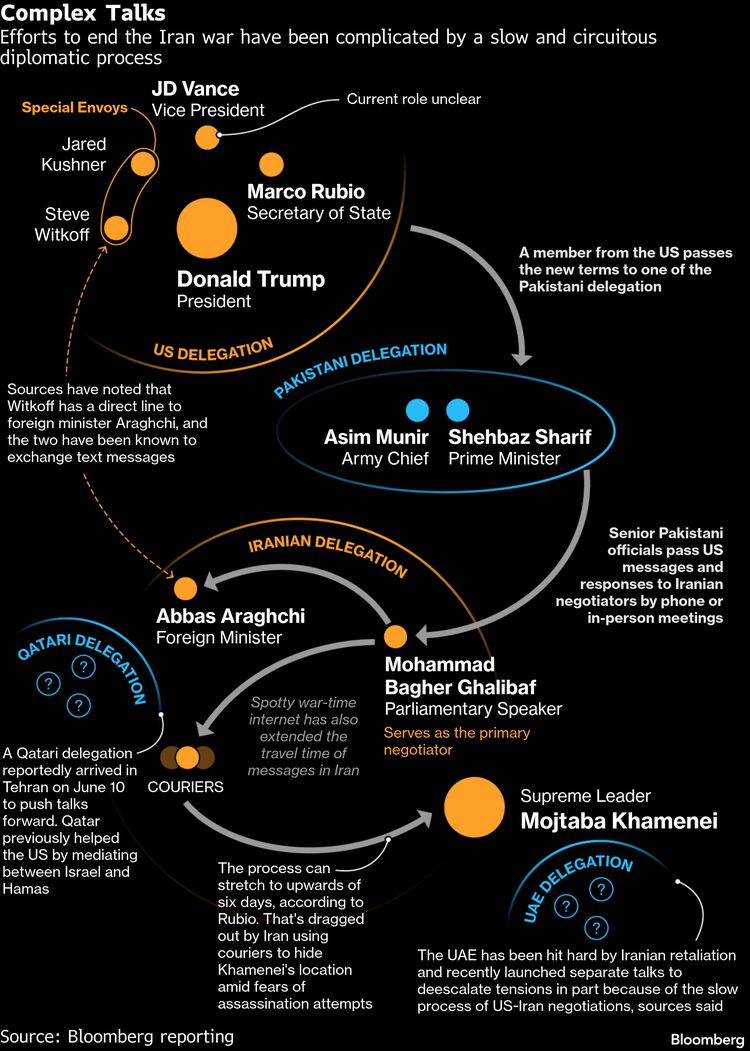
Patchy war-time connectivity in Iran has complicated matters, with WhatsApp messages sometimes taking 48 hours to get through, according to one diplomat who declined to be named in order to speak publicly. Negotiations also rely on Pakistani officials passing US proposals and responses onward via telephone calls and in-person visits to Tehran before the couriers are dispatched, the people said.
One senior administration official described the Iranian system as frustratingly slow and opaque. Even if the US gave Iran everything it wanted, five days would be needed to sign an accord, the official said, declining to be named in order to speak freely.
Secretary of State Marco Rubio has complained publicly about the slow process, telling lawmakers last week that it can take “five or six days” to get a response.
“What we are working through in many cases is delays in getting the responses to people, and this is why you see reporting about there might be a deal in the next few days,” Rubio said.
It’s possible that the US and Iran could sign an agreement to reopen the Strait of Hormuz on the sidelines of the Group of Seven leaders summit next week in the French Alps, deferring more complicated negotiations on Tehran’s nuclear program until a later date, according to senior officials. Geneva, in Switzerland, is nearby and being floated as a potential location for the signing.
Read more: US, Iran Edge Toward Interim Deal Signing Close to G7 Next Week
Some aspects of the agreement between the US and Iran will be left open to interpretation, according to people familiar with the terms. One person, who declined to be named, described that as normal flexibility to allow each side to portray the deal as a win.
That lack of crucial details raises the question of whether the adversaries will eventually return to the sort of face-to-face talks that would be required for a more comprehensive deal.
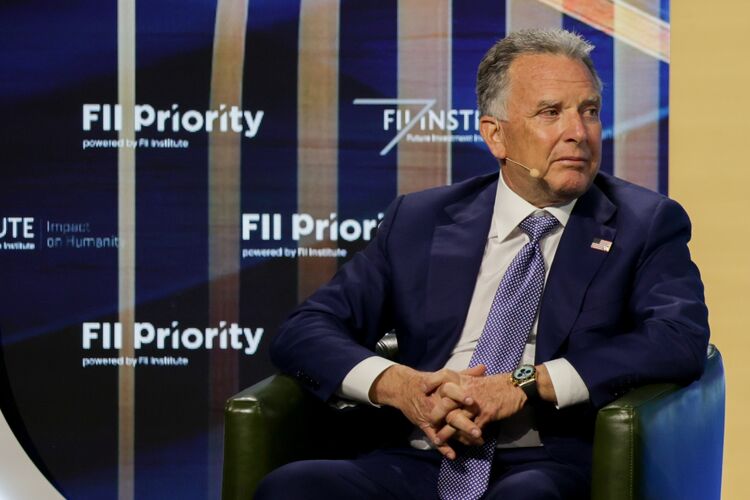
“Can you actually have successful negotiations through intermediaries or cell phones? No,” said Aaron David Miller, a longtime adviser to the State Department on Middle East negotiations. “Every issue they’re tackling –- sanctions, frozen assets, Iran’s nuclear enrichment –- every one of those issues contains a universe of detail that would take weeks, if not months, to negotiate.”
The Trump administration and Iran have declined to detail what the negotiations look like. But the descriptions from the people familiar with the matter make clear that they are a far cry from the face-to-face talks that Trump administration officials held with Iran early in his administration.
And it bears no resemblance to the months-long effort that yielded the Joint Comprehensive Plan of Action under President Barack Obama. During that initiative, US and Iranian officials booked themselves in a luxury Vienna hotel, the Palais Coburg, for nearly three weeks to iron out final details.
White House special envoy Steve Witkoff maintains a direct texting connection with Foreign Minister Abbas Araghchi, a channel the US has used more often, the people said. But Witkoff hasn’t traveled to the Middle East since the last in-person US-Iran meetings in Islamabad.
Working against Trump is the fact that the cumbersome nature of the talks may be intentional. Iran wants to avoid creating a digital trail that could reveal Khamenei’s whereabouts and lead to his assassination, other people familiar with the negotiations said.
Khamenei’s predecessor and father, Ali Khamenei, was killed at the start of the war, and Iran remains distrustful after the US bombed the country after two separate sets of negotiations. Israel has also targeted negotiators in the past, including an attack on Tehran-backed Hamas officials in the Qatari capital Doha that killed five.
The talks must also account for numerous stakeholders. In a social media post calling off strikes against Iran on Thursday, Trump tipped his hat to at least 10, mentioning “Israel, Saudi Arabia, UAE, Qatar, Turkey, Pakistan, Bahrain, Kuwait, Jordan, Egypt, and others.”
Read More: Trump Cancels Planned Iran Strikes in Latest Reversal ·
Fars laid the blame for any failure squarely with Trump, saying he had sought to add new provisions after US negotiators had accepted an earlier Iranian draft.
The talks have also frustrated US allies, spurring the United Arab Emirates to hold face-to-face meetings with Iran this week, according to people with knowledge of the situation. Qatar also sent a separate delegation to Tehran this week to push forward the stalled US-Iran discussions, Iranian media reported.
Diplomats and Gulf officials suggested Tehran is also deliberately stalling to keep pressure up on the White House.
“It serves the Iranian interest and seems to make us more uneasy,” said Dennis Ross, another former top US negotiator for Middle East peace processes. “They play on our uneasiness, and every time President Trump says we are close, they think it best just to play for time. They are waiting for the pressures to work on him.”