In today’s America, one of the rites of passage that marks the transition to full adulthood is paying your own phone bill. By this standard, many people — even those well into middle age — are stuck in an extended adolescence.
A survey released this month by the insurance firm Northwestern Mutual says that many Americans, including some in their 50s and 60s, rely on their parents for financial help. Some 56% of all respondents say it is “harder to achieve financial independence today than it was for previous generations.”
The Federal Reserve also conducts an annual survey on financial well-being, and it also reported an increase in the reliance on parents to pay the bills. About 23% of respondents needed some outside help in 2025, compared to 10% in 2017 — including more than 25% of Americans between the ages of 30 and 44.
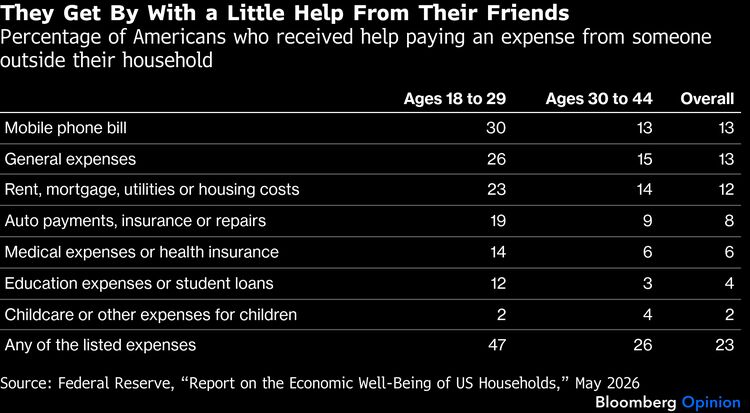
In many ways this is not surprising; the US is in the grip of an affordability crisis . The cost of housing has soared, as have energy and food. Wages fell last year after accounting for inflation, and the job market has weakened , especially for new graduates . Student debt is at a record high. Meanwhile ( for now at least ), many young people see living in a big, expensive city as critical to launching their career. And older Americans, who have more wealth than ever after a lifetime of saving and healthy stock returns, may think it only natural that they give a little back to their children.
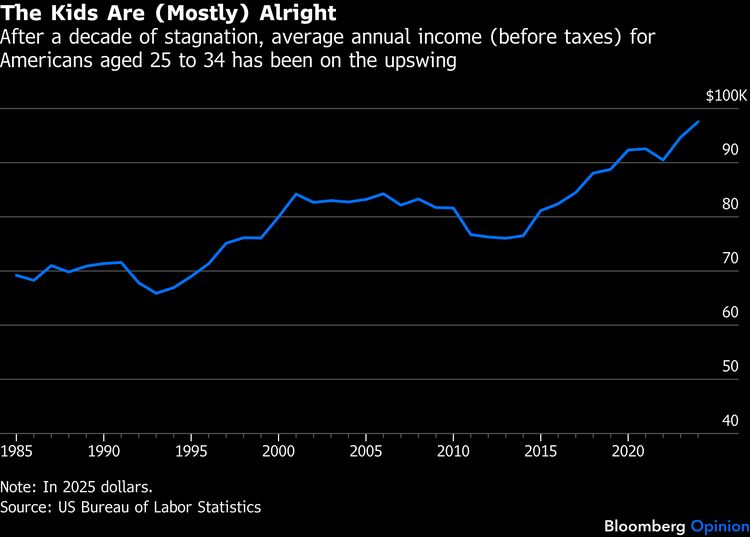
But not all of this new reliance on parents is about wealth and earnings. After a decade of stagnation, earnings for young adults are up in the last several years. They also have more financial wealth.
A deeper read of the Fed survey also suggests that things haven’t changed all that much. Slightly more Americans have three months of emergency expenses now compared to 2017, including half of the 30 to 44 population. About 70% of those surveyed say their own finances are in good shape, a steady share since 2017.
It could be that all the money from their parents is keeping them afloat, and this may explain why they don’t appear to be financially worse off than they were before the pandemic. There are also higher expectations of reasonable living standards. Keeping up with the Joneses requires more money than it used to.
The increased reliance on our parents may also reflect a cultural shift. A generation ago, living with your parents was an indication something had gone wrong in your life . Now it is just a smart way to save money . The pandemic also shifted norms around living at home and accepting money from your family or the government. Making it on your own is no longer something to be proud of or even aspire to. This could all be the result of people growing up closer to their parents .
No matter the reason, this overreliance on parents is a worrying trend. For one, it exacerbates inequality. If making it in America now requires help from your family, people who don’t have families who can afford to help them will fall further behind. And while the US has need-based financial aid for education, it does not exist — at least not yet — for early or even middle adulthood.
There was also something unifying about the struggle of being a young adult: living in a terrible apartment, barely making rent, eating instant noodles — and asserting your independence. Sometimes living with financial risk can be an important source of motivation. Now there is another divide in this country, between who takes money and who can’t.
Elsewhere in Bloomberg Opinion:
- For Generation X, the Grind Never Stops : Tobin Harshaw
- Are Parents Ready to Keep the Bank of Mom and Dad Open? : Erin Lowry
- Why Boomers Have More Money Than Everyone Else : Allison Schrager
For more, subscribe to our newsletter.