By Ed Ludlow | Updated on Jun 12, 2026 at 07:30 PM
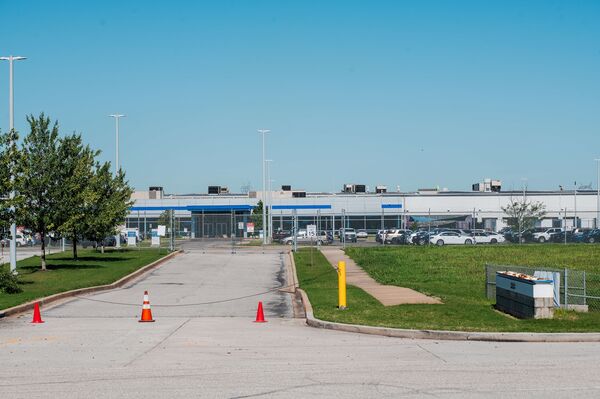
SpaceX decided to rent out the full capacity of its Colossus 1 data center in Memphis to Anthropic PBC after encountering technical challenges using the facility to develop and run its Grok artificial intelligence models, according to people familiar with the matter.
Elon Musk’s company had planned to train its most cutting-edge AI models on a massive amount of computing power by using a cluster of three data center campuses. However, the firm encountered latency issues when connecting Colossus 1 with two other sites located more than 10 miles away, the people said, compounded by aging network infrastructure.
Training bigger and better AI models requires ultra-fast connections. If the links between facilities are older or lower bandwidth, it can create delays that slow the entire data center cluster. Rather than continue trying to work through these limitations, SpaceX determined the facility would be more valuable serving other companies and creating a new revenue stream, said the people, who spoke on condition of anonymity as the information is not public.
SpaceX, which acquired Musk’s xAI earlier this year, has made its data center build-out a key part of the pitch to investors during the roadshow for its blockbuster initial public offering . Anthropic and Alphabet Inc.’s Google have each struck computing deals with SpaceX potentially worth tens of billions of dollars over several years, bolstering the rocket maker’s move to become more of an AI infrastructure provider.
Yet, the shifting plans for Colossus 1 also hint at the difficulties in Musk’s ambitious and costly efforts to rapidly build out a sprawling group of data centers, stocked with advanced chips, to support AI. Musk’s company had long stressed that its first Colossus facility was built in just 122 days, exceeding its own estimates and industry averages.
Representatives for SpaceX, which is formally known as Space Exploration Technologies Corp., didn’t respond to a request for comment.
In addition to latency issues, the attempt to integrate Colossus 1 with the other facilities was complicated by hardware variations, the people said. The facility contains a mix of Nvidia Corp. chip generations, including Hopper and Blackwell systems, as well as some older accelerators, which are the processors used for AI work, the people said. Colossus 2 and 3 were built more uniformly around Nvidia’s Blackwell chips, the people said.
In data center clusters, the workload is spread across many machines that need to stay synchronized. If one facility has older chips, it can create bottlenecks for the other locations by forcing faster accelerators to wait. The result is the cluster ends up performing closer to the slowest hardware rather than the fastest.
By leasing the facility’s capacity, the company was able to monetize infrastructure that was not being fully utilized internally while preserving newer facilities for AI development. SpaceX Chief Financial Officer Bret Johnsen recently said the company has not given up on its own internal AI services, such as Grok.
Musk has also said SpaceX reserves the right to cut its computing deal with Anthropic short, after providing them with advanced notice. “If compute gets super tight I said we might need it back at some point,” he said .