What exactly is “The Trouble with Europe” ? It’s the title of a book first published in 2014 by the prominent British economist Roger Bootle. A member of a group called Economists for Brexit , Bootle made what at the time seemed more of an academic or intellectual case that the benefits of the European Union were not as great as assumed, and that the costs of leaving might actually be bearable.
Twelve years later, with the 10th anniversary of Britain’s great Brexit referendum nearly upon us, he has just published a fifth edition. Neither what he sees as the problems with the EU — essentially that it was flawed by design by trying to combine both expansion to 27 ever more disparate countries with “ever closer union,” and that as a body it was far too wedded to regulation rather than encouraging innovation — nor his proposals for its future have changed that much.
He is still plainly what the British used to call a “euro-skeptic,” whose view is neatly and waspishly encapsulated thus:
The EU pulls off a remarkable feat: It is both too small and too large at the same time. It is too large to make a successful political entity and yet too small to be a self-contained, or even self-centered, economic bloc.
But the revised edition hits very differently in the political and economic reality of 2026. Brexit hasn’t done anything as yet to arrest British economic decline (which Bootle accepts), or to provide a salutary push to the EU to get its house in order. The same arguments that backed the UK in voting to leave the EU 10 years ago remarkably form the backbone for a way for Britain to take more of a formal and active role in Europe again — and even potentially help the continent regain some of its lost power.
Concentric Europe
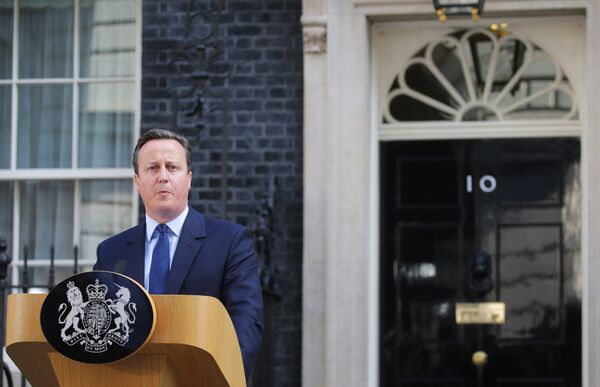
The concept he offers for an improved Europe was present in the first edition, and also at the heart of David Cameron’s fateful so-called Bloomberg speech in 2013, when he used this company’s London quarters to announce his plan for a referendum. Bootle, and Cameron, were both advocating a Europe of concentric circles, with a tightly integrated central core and outer rings with different layers of commitment.
The idea makes obvious intuitive sense. A currency union might indeed be a good fit for the six countries that formed the bloc — France, Germany, the Netherlands, Belgium, Luxembourg and Italy. It might be reasonable to drop Italy and replace it with Austria, for example, but the notion of a unit of countries who could comfortably live with the same monetary policy is clear.
As these members are tied together by currency while others aren’t, it makes sense for a next ring to have common policies on trade and so on, but to retain greater freedom over macro policy. That reaches the UK and Ireland, Scandinavia and the Mediterranean states. Then the countries that joined the EU in the wake of the fall of the Warsaw Pact should plainly be welcomed, and coordinate on trade, but need to be in an outer ring.
Cameron’s hope at the time was that the threat of a referendum, in combination to the profound tectonic shock administered to the euro zone by its sovereign debt crisis, would enable him to negotiate a new settlement along these lines. It didn’t happen, and he paid the political price. The tantalizing possibility that emerges from Bootle’s latest edition, just as dismissively critical of the Brussels eurocracy as the first, is that the crises now besetting the continent, and Britain, might allow it to happen.
Europe’s Own Ideas
The twin shocks of the sovereign debt crisis in 2010-12 and Brexit did spark Brussels into producing ambitious plans for reform — even if they haven’t as yet borne fruit in actual changes. In 2017, the then-president of the European Commission, Jean-Claude Juncker, admitted in his state of the union that the EU had been “battered and bruised by a year that shook our very foundation.” He also that year published a White Paper on the Future of Europe that dared to offer a range of alternatives to the ongoing policy of “ever closer union.”
Bootle summarizes Juncker’s first two options as “muddle along” and “concentrate on the single market” (another version of the status quo). The three that interest him are:
- inner and outer rings;
- “doing less more efficiently” (or leaving more to be done by national or local governments under the notion of subsidiarity) and;
- “more Europe” — even more coordination in foreign affairs, along with fiscal, tax and banking unions.
More Europe has some logic to it, but a veteran euro-skeptic is understandably not convinced by it. But Juncker’s notion of subsidiarity (that “a higher entity in the social order may not do for the lower order what it is capable of doing for itself” ) has roots in Catholic doctrine and might have particular appeal in a Europe where nation-states are themselves relatively recent constructs. Italy and Germany were both collections of city-states only two centuries ago, and the continent’s golden era of discovery came when these cities were competing against each other strenuously. The UK itself has secessionist movements, as does Spain, and so on. The idea of a looser Europe that coordinates on broad foreign policy and allows a thousand flowers to bloom is an appealing one, and Juncker did put the notion on the agenda.
But circumstances seem to be driving toward a concentric Europe. Rather than the economy, Bootle suggests that it could come about through the issue that drove the EU’s founders — defense and the avoidance of war.
The Crisis of Defense
The first shock came from Vladimir Putin. France’s President Emmanuel Macron convened the European Political Community in 2022 , initially to try to coordinate a broad response to Russia’s invasion of Ukraine. Separate from the EU’s institutions, it includes the UK and has now held five summits . For a body to cover the outer ring of Europe and deal with defense, in which all nations share an urgent interest, it makes sense as part of a concentric structure.
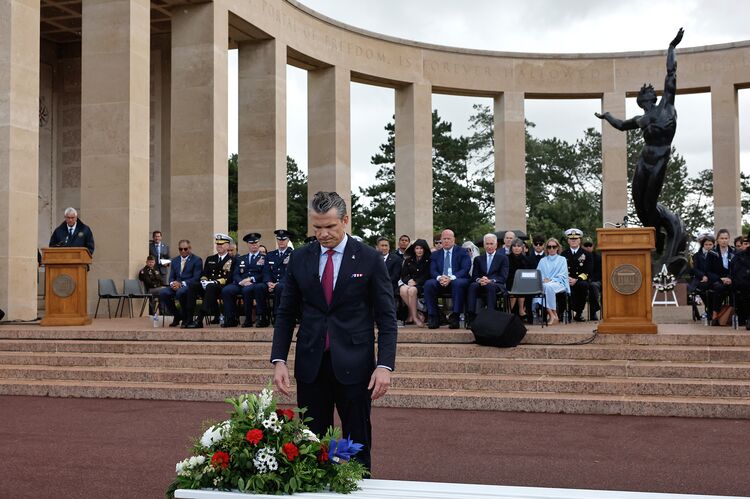
A second shock has now come from the Trump administration’s remarkable hostility to the EU. This goes beyond complaints about free-riding on defense budgets to viscerally fierce criticism of European immigration policies (which Defense Secretary Pete Hegseth even attacked in a speech at the Normandy American Cemetery near Omaha Beach for this year’s D-Day anniversary ).
The antagonism prompted a shocking reversal of decades of fiscal conservatism in Germany last year, as the government embarked on a big rearmament effort . Military vulnerability without a potential American umbrella is also causing acute problems for Britain, as made painfully clear this week with the shock resignation of John Healey, the defense secretary, from Prime Minister Keir Starmer’s cabinet . Healey argued that the plan to raise the defense budget to 2.68% from 2.6% of gross domestic product by 2030, rather than the 3% he had argued for, didn’t provide the resources necessary to “defend the country at this time of rising threats.”
If defense can provide the glue for a European NATO that excludes the US, it can be built without having to bring the UK back into the EU but in a cooperative arrangement that also allows the likes of Turkey. This is an outer circle. For the middle ring, focused on trade, free trade clubs along
the lines of
Asean
or Mercosur might offer the template. Members could shift between circles, but the ongoing entity of the EU needn’t change that much. What really matters, Bootle insists, is “not the EU, but Europe.”
If this is positive, his criticism of the EU’s current direction remains intense, and at times perhaps unfair. Bootle’s sharpest dig, in the conclusion, is that the EU’s main
goal still seems to be to get “wider still and wider.” That is a line from
Land of Hope and Glory
, a now-embarrassing hymn of praise to the British Empire from its glory days. The full verse,
still often sung
, is:
Wider still and wider
Shall thy bounds be set.
God who made thee mighty
Make thee mightier yet.
Such arrogance and presumption were at the heart of the British Empire. Bootle is a tad unfair to suggest that the EU springs from quite the same place. Its founders were passionately motivated by a desire to maintain peace after living through successive appalling conflicts.
But he does have a point that the Brussels project often teeters on the edge of Victorian grandiosity. The alternatives of concentric circles, or even of subsidiarity, are far more appealing. After a decade in which many attempts to institutionalize global harmony have come unglued, it’s good to have a little hope, if not yet glory.
More From Bloomberg Opinion
- The ECB Is Jumping at Old Inflation Shadows: Javier Blas and Mark Gilbert
- Ten Reasons Oil Is Still Below $100 a Barrel: Javier Blas
- The S&P 500’s SpaceX Snub Is a Public Service: Nir Kaissar
Want more Bloomberg Opinion? OPIN. Or you can subscribe to our daily newsletter .