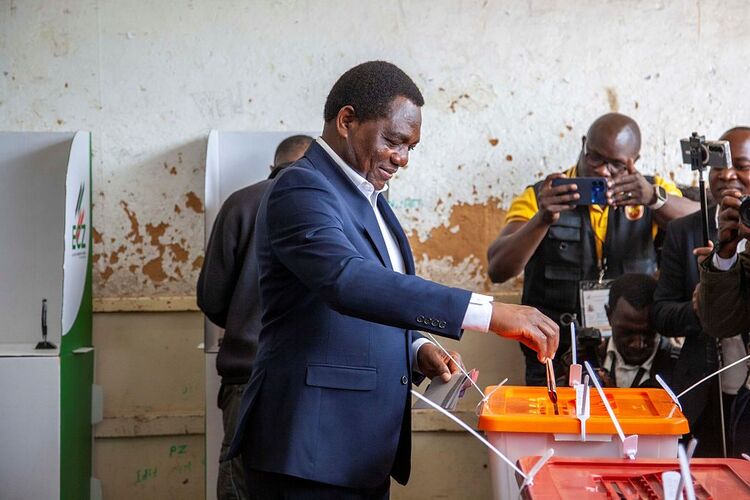
Zambia’s president held a solid lead over his main electoral rival as he seeks to extend his rule of the copper-rich southern African nation.
Hakainde Hichilema garnered 626,434 votes in 70 of the country’s 226 constituencies announced by the Electoral Commission of Zambia on Sunday. His closest rival, opposition leader Brian Mundubile, obtained 505,795, it said.
Since coming to power five years ago, Hichilema has shepherded a debt-restructuring plan that’s been lauded by investors, overseen record copper output in Africa’s second-biggest producer of the metal, and turned the kwacha into the continent’s best-performing currency this year. He has pledged to continue implementing pro-business reforms if reelected.
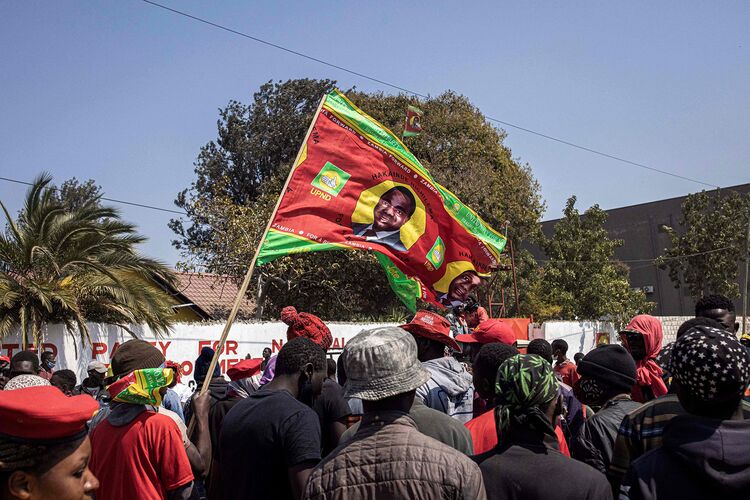
Mundubile — an accountant and former lead opposition lawmaker — has made the slow trickle-down of Zambia’s macroeconomic recovery under Hichilema a central part of his campaign, with promises to reduce the high cost of living.
The winner of Thursday’s presidential vote needs to secure more than 50% of the valid ballots cast.
Hichilema had been widely expected to win a second term, though Mundubile gained momentum in the closing stages of the race by tapping public anxiety over household budgets.
Read More: Zambia’s Wary Voters Weigh 2nd Term for Pro-Business Leader
Citing reports of violence, Zambia’s electoral commission suspended vote counting for a few hours on Friday before declaring the situation contained.
Zambia, in contrast with neighboring Zimbabwe or Mozambique, has no history of widespread electoral unrest. In a post less than an hour before the electoral commission’s suspended the count, Hichilema lauded “reports of peace, unity and solidarity across our country.”
Still, the elections took place against the backdrop of a constrained democratic space, the European Union Election Observation Mission said Saturday in a preliminary report.
It cited restrictions on the ability to campaign, and incumbency advantages that blurred the line between state and political campaigning creating an uneven playing field.
Mundubile separately warned that delays in publishing tallies suggested the election results may be rigged.
Sign up here for the daily Next Africa newsletter and subscribe to the Next Africa podcast on Apple , Spotify or anywhere you listen .