By Lydia Beyoud | Updated on Oct 05, 2026 at 07:29 PM
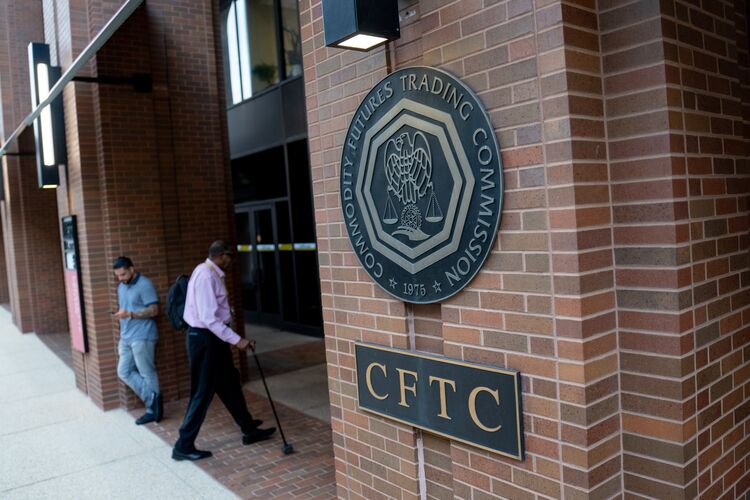
The Commodity Futures Trading Commission unveiled a proposal Monday to regulate digital asset transactions and markets, drawing on the agency’s existing authority after crypto market structure legislation was blocked last month.
If finalized, the measure would regulate leveraged crypto trades offered to retail customers. It would also establish a new category for crypto exchanges offering the leveraged trades to register with the agency.
Leveraged, financed or margin trading allows traders to borrow funds to potentially multiply their gains along with possible losses.
“The American people deserve clarity, certainty, and consumer protections in the crypto asset markets and the agency is committed to delivering this by incorporating crypto asset transactions into its uniform national market regulatory framework,” CFTC Chairman Michael Selig said in a statement about the early-stage proposal.
Some experts also say the measure indicates companies that offer both spot and margin trading, and become regulated by the CFTC, might be able to shift out of the current state licensing regime for spot crypto trading as well.
The CFTC’s rule appears to be developing a “textual case for state preemption of spot trading,” with the goal of crafting a relatively permissive federal regime for digital asset trading, said Aaron Brogan, founder and managing attorney at Brogan Law, a boutique law firm specializing in digital asset and other regulated fintech companies.
In a speech delivered Monday at Fordham Law School, Selig called out the implosion of once-popular crypto exchange FTX as an example of the shortcomings of a state licensing framework for crypto.
“Although FTX had a US subsidiary with state money transmitter licenses, its customers’ funds were nowhere to be found,” Selig said. However, customer funds held by the CFTC-registered subsidiaries were safe, unlike much of the rest of FTX’s once-sprawling financial apparatus.
The proposals could formalize a measure that was already promoted earlier in the second Trump administration as a way for the CFTC to directly regulate digital asset companies, without waiting for congressional action.
The CFTC will take public comment on the measure for 60 days.
The new proposal is part of an effort to bridge a regulatory gap left after a bipartisan group of senators blocked last month the so-called Clarity Act. The crypto market structure bill would have granted the CFTC authority to regulate spot trades of digital assets deemed commodities.
The heads of the CFTC and the Securities and Exchange Commission have vowed to push forward with their own moves in the absence of legislation, with the acknowledgment that rules could be more easily undone than law by a future administration. However, the Trump administration is hoping that companies will adopt the measures they put in place and make it more difficult for future administrations to roll back the regulations.
A number of crypto exchanges already offer leveraged or financed trading, including Coinbase Global Inc. and Crypto.com. Robinhood Markets Inc. is also preparing to offer perpetual futures, which have no expiration date, on select cryptocurrencies, with as much as 10 times leverage on some contracts.
Read More: Robinhood Debuts Weekend Trading, Perpetual Futures in US
Exchanges that want to also offer crypto perpetuals or crypto-linked prediction markets could still seek registration as standard designated contract markets, the agency’s general designation for derivatives exchanges. Exchanges that choose to solely list spot crypto transactions, such as trading on Bitcoin or Ether without leverage, could remain subject to state-by-state licensing rules.