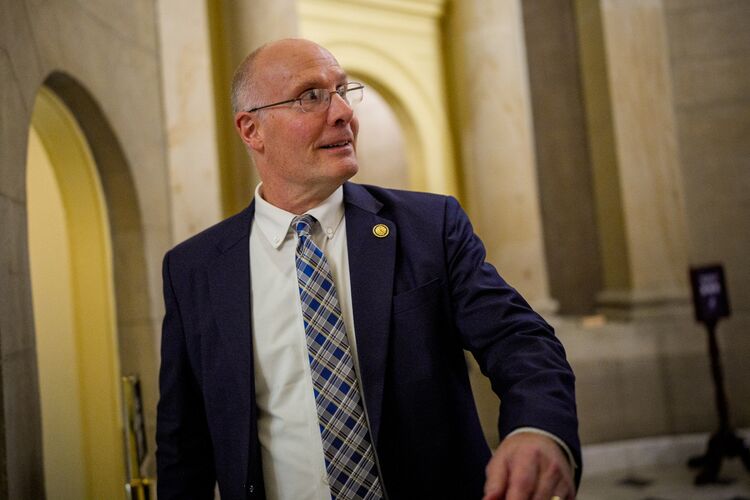
A top Republican lawmaker has asked the Federal Reserve to review Hong Kong’s access to a dollar liquidity facility designed to ease market stresses during times of volatility.
John Moolenaar, chairman of the House Select Committee on China, wrote to Kevin Warsh and asked the Fed chairman to conduct a formal review into the Hong Kong Monetary Authority’s access to the Fed’s Foreign and International Monetary Authorities Repo Facility, or FIMA, which allows foreign central banks to borrow US dollars using their Treasury holdings as collateral.
He cited Hong Kong’s role as a financial center for China and its strict crackdown on pro-democracy advocates as reasons for the review.
“Each of these grounds is sufficient on its own to warrant formal review,” Moolenaar, a Michigan Republican, wrote to Warsh. “Together, and combined with China’s weak financial situation and liquidity challenges, they make the case for it compelling.”
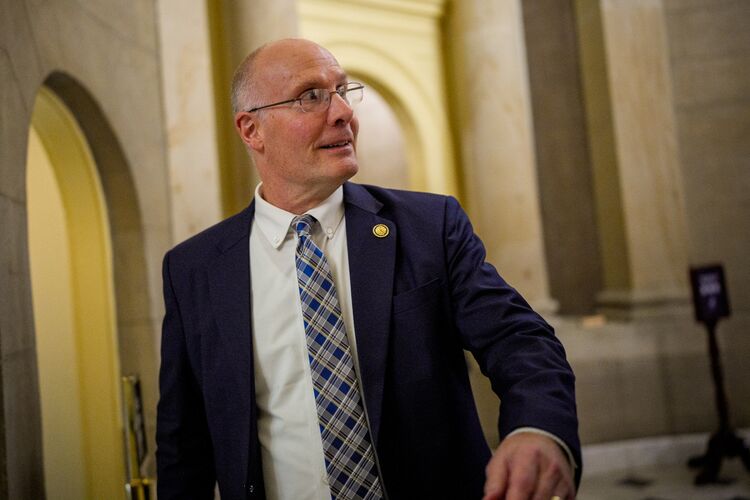
A spokesperson for the Fed said it has received the letter and planned to respond.
The FIMA facility is designed to cushion the impact on US bond yields when a foreign government seeks to provide liquidity to dollar funding markets by offering an alternative to selling Treasury holdings. It has a limit of $60 billion per counterparty per day, and any changes must be approved by the Foreign Currency Subcommittee of the Fed’s monetary policy panel, the Federal Open Market Committee.
$258 Billion
Any central bank or foreign monetary authority with an account at the New York Fed is eligible to apply to use FIMA. The Fed has the right to approve or deny requests.
Hong Kong, which maintains a fixed peg between its dollar and the greenback, held more than $258 billion of US Treasuries as of July.
Once a freewheeling Chinese territory, a security law imposed by Hong Kong authorities in 2020 has galvanized human rights advocates and drawn international scrutiny. Critics have called it draconian and a tool for Beijing to clamp down on dissent.
Still, in July the US restored privileges for Hong Kong that President Donald Trump revoked in 2020, in his first term, triggering praise from China. The US Treasury’s Office of Foreign Assets Control said in a statement at the time that Executive Order 13936 on Hong Kong Normalization had expired. The order had formed the legal basis for sanctions against Hong Kong officials and featured the suspension of a number of privileges for the city compared with the rest of China, such as exceptions for some export licenses and preferences for the territory’s passport holders.