Czech inflation accelerated more than expected last month, bolstering arguments for the central bank to tighten monetary policy further.
Consumer prices rose 2.5% from a year earlier in September, according to a flash estimate from the Prague-based statistics office released on Tuesday. The headline figure was above the 2.4% median estimate in a Bloomberg survey and also exceeded the central bank’s 2.2% projection for the month.
Policymakers left the benchmark interest rate unchanged at the past two meetings, after a quarter-point increase in June, but warned they may tighten monetary conditions “slightly further” if domestic pressures remained strong and high energy prices persisted. Officials have said they will decide between lifting borrowing costs or keeping them stable at the next meeting on Nov. 5.
“Unless the economic outlook changes dramatically during October, we expect another increase in interest rates at the November meeting,” said Martin Komrska, chief economist at the Prague-based unit of UniCredit SpA.
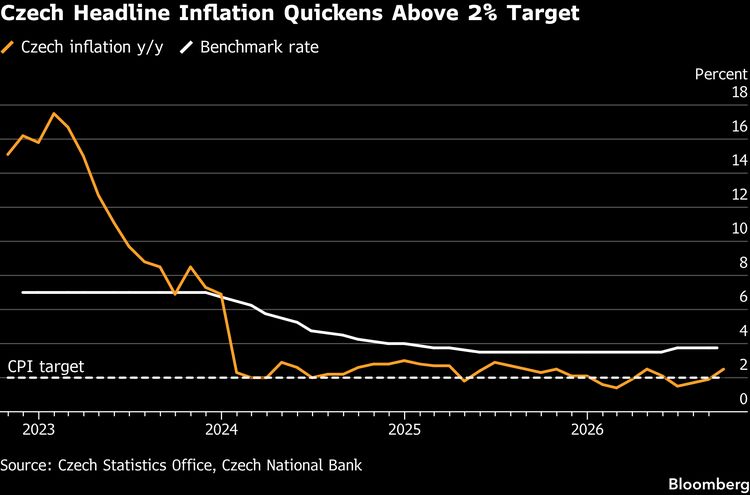
While the preliminary data showed inflation breached the central bank’s 2% target for the first time in four months, they didn’t include a full breakdown. Growth in the closely watched services prices quickened to 4.6% from 4.5% in August.
Central bankers are chiefly concerned about elevated core inflation, which excludes volatile items like food and energy. The main upside risks include rising costs of services, the housing market, wage growth and prospects of more government spending financed by debt. The core price measure will be published next week.
Read more: Long Afraid of Debt, the Czechs Are Now Ready to Binge on It
The Czech koruna erased an earlier loss and traded about 0.1% stronger to the euro as of 10:30 a.m. in Prague. Forward rate agreements indicate bets on between one and two quarter-point increases in the main repurchase rate by the end of the year, and four hikes in total over the next 12 months.
“Persistent high core inflation, the government’s expansive fiscal policy, less favorable developments on global energy markets and the expected higher interest rates of central banks abroad speak in favor of an increase in the repo rate,” UniCredit’s Komrska said.