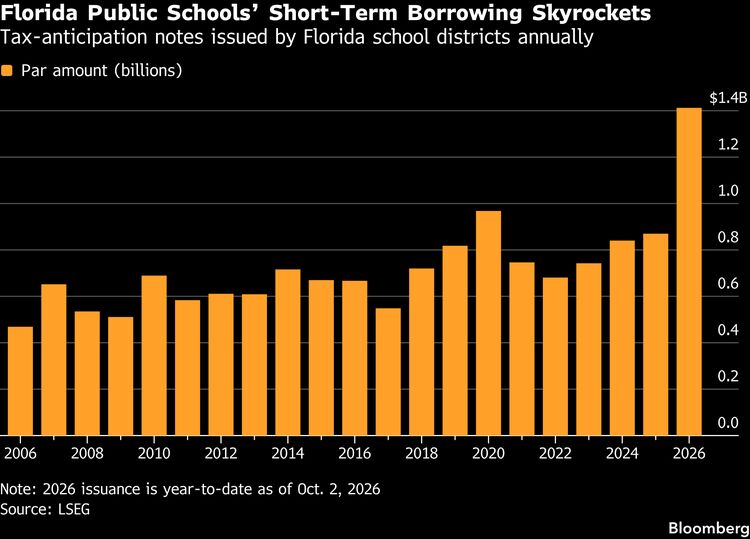
Florida’s public schools are borrowing to pay their bills at the highest level on record as enrollment declines put pressure on their budgets.
This year, school districts in the state have issued $1.4 billion in short-term notes via the municipal market to pay for operating expenses, a 62% increase compared to all of 2025, according to data from LSEG.
The debt, known as tax-anticipation notes or TANs, is often issued by local and state governments to bridge the gap between when bills need to be paid and when tax revenue comes in.
“Issuing tax anticipation notes in large or increasing amounts can indicate underlying liquidity or credit stress,” said Michael Rinaldi, a senior director at Fitch Ratings. “This reliance may signal a structural budget gap or lower year-end cash balances.”
Public schools around the country are facing growing financial strain due to rising costs and declining enrollment as the birth rate falls. The end of pandemic-era federal aid has exacerbated the pressures and weighed on school districts’ credit scores.
Over the past year, S&P Global Ratings’ downgrades and negative actions on school districts outnumbered upgrades by a ratio of about three to one, a September report said.
In Florida, the rapid growth of school choice programs has amplified the enrollment problem, as has President Donald Trump’s immigration crackdown, especially in south Florida, according to the rating firm.
Read More: Half of US Public Schools Report Operating Deficits, S&P Says
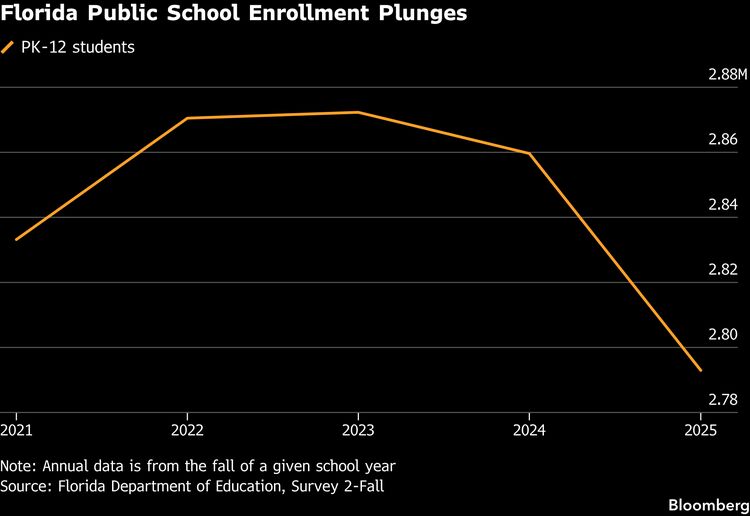
While the state’s population has skyrocketed since the pandemic, public school registration has been declining since 2023, lowering the amount of per-pupil funding schools receive.
In May, S&P revised its outlooks for the state’s two largest school systems to negative, citing the financial impact of falling enrollment. The districts, Miami-Dade and Broward, regularly issue TANs and did so earlier this year.
Florida schools also have a cash flow challenge since the state doesn’t collect property or income tax, which often goes toward education in other jurisdictions. Instead, most school funding comes from local property tax, where bills are only paid between November and March despite districts’ year-round expenses.
Floridians will vote on whether to mostly eliminate local property tax in the upcoming November election, though school-related levies would be exempt.
Read More: Florida Property Tax Cut Could Strain Local Credit, S&P Says
Hillsborough County Public Schools, which serves students in Tampa, issued TANs for the first time in July as a “cash flow management tool” to cover its expenses until the majority of revenue from local taxes comes in, said Tanya Arja, the district’s head of communications.
Fitch lowered Hillsborough’s outlook to negative in September, citing a decline in its reserves due to “continued operating pressure from enrollment-related revenue losses” against rising costs.
“It’s a combination of factors that have been building up over the past several years, but have really reached a significant level this year,” said Robert Gang, a Miami-based lawyer at Greenberg Traurig who works with schools on TANs.
School Choice
The shrinking of Florida’s public schools has accelerated since Governor Ron DeSantis opened up access to the state’s school choice programs in 2023.
Participation was once limited by income level or to students with disabilities, but now all families can use public dollars on private schools and other alternatives to public education.
“Florida recently expanded its school choice program, and many districts are making operational adjustments to account for lower student counts, such as staff reductions and school closures,” S&P analysts led by Michael Parker wrote in a June report.
In her decision to lower Hillsborough’s outlook, Fitch analyst Tammy Ou said “traditional enrollment has declined, driven by growth in school choice participation that has diverted state aid.”
In the 2024-2025 school year, the state funded almost $4 billion to pay for private or alternative schooling across several different programs, temporarily creating a $47 million funding shortfall for public schools, according to the most recent audit of Florida’s Department of Education.
“It’s this cumulative effect of vouchers and so many alternative choices for K-12 education that school districts are shrinking. Student population in public schools, particularly in South Florida, is shrinking,” said Gang.