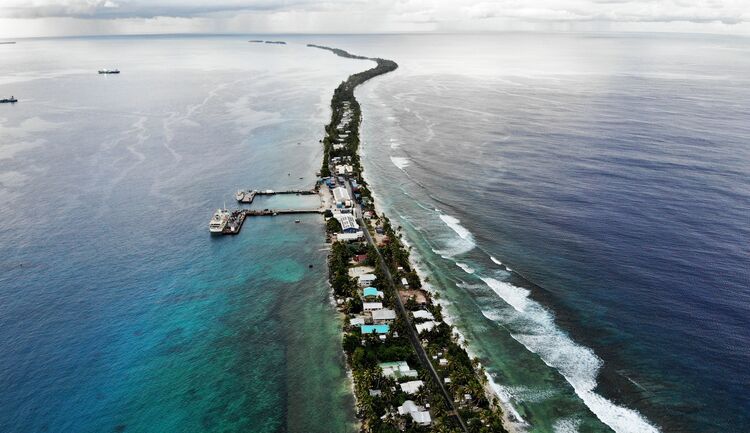
A delegation of global dignitaries visited remote, climate change-threatened Tuvalu in the western Pacific Ocean, as advocates press the case for stronger commitments to combat greenhouse gas emissions.
The archipelago of nine small islands is the world’s second lowest-lying nation and particularly susceptible to the impacts of sea-level rise, suffering frequent flooding that sweeps through homes, infrastructure and even the runway of the international airport .
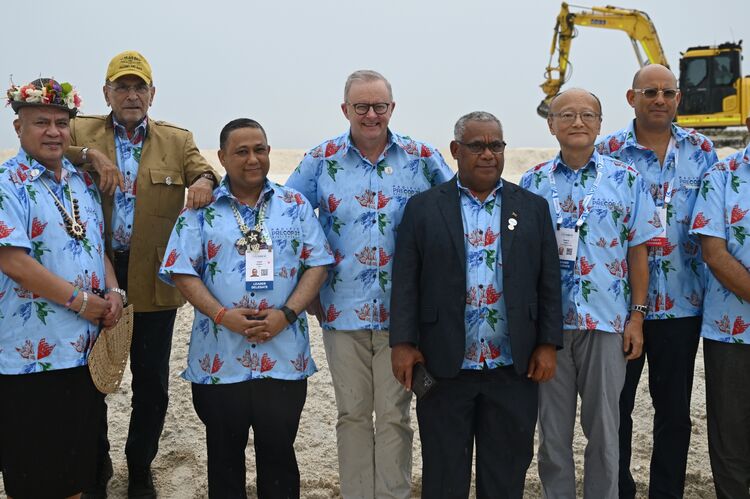
Australia’s Prime Minister Anthony Albanese and Mauritius’ Prime Minister Navinchandra Ramgoolam were among a group of more than a dozen leaders to join the visit Tuesday, part of a wider event hosted by Fiji to prepare for November’s annual United Nations-convened climate talks in Antalya, Turkey. Other attendees to travel to Tuvalu included Nepal’s Foreign Minister Shisir Khanal and the head of the Asian Development Bank.
“Climate change isn’t a future challenge for the Pacific, it’s a daily reality,” Albanese said Tuesday in a post on LinkedIn. “And here in Tuvalu, the stakes are higher than any other part of the world.”
Read More: Selling Passports for $140,500 Helps Nauru Fund Climate Defenses
Sea levels rose by an average of 4.7 millimeters a year in the decade to 2023 and a record 5.9 millimeters in 2024 as a result of melting glaciers and the thermal expansion of oceans triggered by human-induced global warming, the UN said in a report earlier this year. Around the world, nearly 770 million people live in coastal areas that are 5 meters (16.4 feet) or less above the high tide line, putting them at acute risk, the UN said.
Across parts of the Pacific, sea levels have advanced at more than twice the global average over the past three decades, triggering the relocation of communities in nations including Fiji, Vanuatu and the Solomon Islands. Pacific leaders are seeking to use talks this week to push the case for greater global efforts on decarbonization, improved access to climate finance and a new prioritization of ocean preservation.
“We are coming to the Pacific to bear witness for how the tide is already pressing against the door,” Murat Kurum, Turkey’s environment minister and president-designate of next month’s COP31 summit, said in a statement. “We want to remind world leaders that promises do not hold back the sea or shield homes from the fire. Only delivery can save us.”
Read More: Turkey Lays Out COP31 Agenda as China Seeks New Diplomacy Role
Under a compromise agreement on hosting arrangements for COP31, the event will take place in Turkey, and Australia — which had also sought to stage the talks — will manage formal negotiations. Both countries are facing criticism over their ties to fossil fuels. Australia is a dominant exporter of coal and natural gas, and Turkey’s power generation sector remains heavily reliant on the energy sources.
“As a fossil fuel exporting nation, we can bring something different to the table, which is the need for countries to work together on the transition, both on demand as well as supply,” Australia’s Climate Change and Energy Minister Chris Bowen — who will serve as COP31 president of negotiations — told reporters Monday.