It took just 13 months for David Ellison to acquire two of Hollywood’s most storied movie studios, but for the son of billionaire Larry Ellison, running both Paramount Skydance Corp. and Warner Bros. Discovery Inc. fulfills an ambition he’s held for years.
Long before sealing the deal for Paramount in August of last year, the 43-year-old film producer had set his sights on Warner Bros. Ellison thought the two studios would complement each other and that Warner in particular was undervalued, according to a person familiar with his thinking.
“We started talking about acquiring Warners well before we completed acquiring Paramount,” Ellison said in an interview with Bloomberg last week.
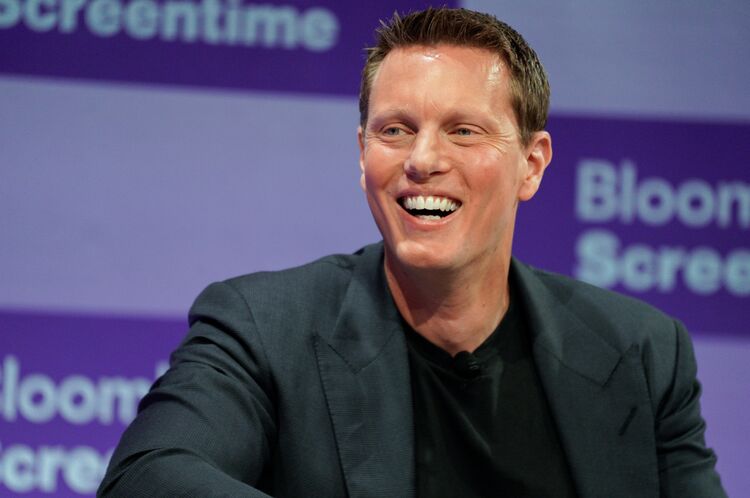
The road to finalizing the $110 billion transaction on Tuesday was anything but smooth. Ellison had to outmaneuver Netflix Inc. in a tense bidding war for Warner Bros., acquire additional funding from investors that included his father and Middle Eastern sovereign wealth funds, and reach a settlement in an antitrust lawsuit filed by 12 state attorneys general, all while combating criticism that the merger would cost thousands of jobs in the entertainment industry, reduce the number of films released and kill creativity in Hollywood.
Ellison personally led the deal-making, sweetening Paramount’s bid for Warner Bros. and later, negotiating a settlement with California Attorney General Rob Bonta that removed the final obstacle to completing the Warner acquisition. When Ellison announced last week that the combined company would be called Skydance, the name of his first film production company, it was an imprimatur of his victory.
But that also means that Ellison will shoulder the blame if the mega merger doesn’t work out as planned.
In running an empire that includes two major studios, streaming services, cable television portfolios and news networks, Ellison has taken on a huge burden at a challenging time marked by declining TV ratings and falling film profits. He faces the added complication of the deal being highly leveraged. Ellison will have to figure out how to achieve his goals of investing in new technology and boosting film production while paying down nearly $87 billion in total debt. To top it off, he agreed to produce 30 theatrical films a year as part of the settlement, a tall, expensive order to undertake in such an inherently risky business.
“When you’re looking at this industry, the money, the distribution and now the decision-making sit in a few hands and that can be a gift or a curse,” said Syleecia Thompson , an entertainment entrepreneur and professor at National University.
Ellison has tried to convince the entertainment world that he’s one of them. Though he grew up near Silicon Valley as his father made his fortune building the database software giant Oracle Corp., Ellison was transfixed by Hollywood. A lifelong cinephile, he and his sister Megan Ellison had access to a home library of more than 3,000 VHS tapes, counting Star Wars and The Terminator among their favorites.
After a stint at University of Southern California’s School of Cinematic Arts, David Ellison left without a degree and tried acting. He helped finance a $60 million film called Flyboys in 2006 where he and actor James Franco played World War I fighter pilots. The movie was a box office bomb.
Inspired by mentors like Apple Inc. co-founder Steve Jobs, who led Pixar Animation Studios, and DreamWorks SKG co-founders Steven Spielberg, Jeffrey Katzenberg and David Geffen, Ellison decided to go behind the camera. Using money from his father, he started the production company Skydance in 2006, with additional backing from investors like JPMorgan Chase & Co.
Ellison’s sister had founded her own production company, Annapurna Pictures, and racked up Oscar nominations for hits like American Hustle and Her, initially outshining her brother. His fortunes changed thanks to a production partnership with Paramount. The first film collaboration, the western drama True Grit , was a box-office hit in 2010, grossing $252 million and earning 10 Oscar nominations. Ellison began to generate more success in the industry, finding hits with the Mission: Impossible series and Top Gun: Maverick .
“Simply having a very wealthy father, simply having access to a lot of capital doesn’t tell the whole story here,” said Corey Martin , managing partner of the entertainment finance practice at the law firm Granderson Des Rochers.
Ellison began telling Skydance employees of his ambitions to eventually acquire a major studio. He mulled other options, such as selling Skydance to Apple or even going public, but by 2023, he began reaching out to Shari Redstone, Paramount’s controlling shareholder. It took a year for Redstone to take Ellison’s overtures seriously. After she did decide to sell to him, Redstone found herself in conflict with her own CEO and some board members. She moved forward with Ellison, but backed out at the last minute — eventually returning to the bargaining table and signing an $8 billion deal in July 2024.
Political drama delayed the merger of Paramount and Skydance as Paramount’s CBS News division faced a lawsuit from President Donald Trump, an ally of Ellison’s father, alleged that CBS’s 60 Minutes had made an overly flattering edit of an interview with then-presidential candidate Kamala Harris in October 2024 that was equivalent to election interference.
As the deal languished awaiting approval from federal regulators, Ellison deftly maneuvered behind the scenes, including speaking with Trump at a UFC match. While he was not directly involved in Paramount and Trump’s mediation talks, which eventually resulted in a $16 million settlement paid by Paramount, he did agree to certain concessions with the Federal Communications Commission in exchange for getting the deal approved, including ending diversity, equity and inclusion practices.
After Paramount and Skydance merged in August 2025, Ellison began a spree of high-profile changes. He signed a $7.7 billion media rights deal with the Ultimate Fighting Championship, and acquired media startup the Free Press, naming its controversial founder Bari Weiss editor-in-chief of CBS News, despite her lack of broadcast experience. Both of those moves won him support in Trump’s orbit.
“It’s going to be a great company,” the president told reporters outside the White House on Tuesday when asked about the merger. “They’re terrific people.”
About a month after finalizing the Paramount-Skydance merger, Ellison began a series of bids for Warner Bros., which was planning to separate into two publicly traded companies, with one dedicated to streaming and studios and the other focused on its cable TV networks.
“I can’t remember, in my career, where somebody closed a transaction and within weeks, went for an even bigger transaction,” said Blair Effron, co-founder of Centerview Partners and a key advisor to Ellison. “That takes a lot of guts, it takes a lot of vision, and it takes foresight.”
Warner Bros. rejected the offers as being too low, and opened the door for rival bidders that included Netflix and Comcast Corp. In December, Warner Bros. agreed to sell its streaming and studios business to Netflix in a $72 billion deal.
That was a pivotal moment in the deal — where, rather than surrender, Ellison decided to make his competing bid public and launch a proxy fight.
He and his team lobbied politicians to oppose Netflix’s offer and he relied on Gerry Cardinale, whose firm RedBird Capital Partners had backed Paramount’s merger with Skydance, to publicly attack the deal. Ellison traveled to Washington, where he courted favor with Trump. Eventually, Ellison sweetened Paramount’s offer to top Netflix’s bid, agreeing in February to pay $110 billion for Warner Bros. He also offered to cover the $2.8 billion termination fee Warmer would owe Netflix for walking away from the deal, and, in a gesture of confidence in winning swift regulatory approval, agreed to pay Warner investors a daily “ticking fee” totaling roughly $7 million a day if the deal failed to close before Oct. 1. That fee amounted to about $42 million as of Tuesday, according to a securities filing.
At first, it seemed like relatively smooth sailing. Regulators around the world, as well as the US Justice Department , gave it the green light.
But the agreement faced fierce opposition in Hollywood, including from thousands of members of the film and television industry who signed a letter criticizing Ellison’s plan. Cinema United, a trade group that represents the interest of global theater chains, also opposed the deal, citing concerns about the combined studios releasing fewer films, as was the case after Walt Disney Co. acquired 21st Century Fox in 2019.
In July, the group of 12 attorneys general and the Writers Guild labor union filed antitrust lawsuits , arguing that the deal allowed Paramount and Ellison to consolidate too much control over the industry and raising concerns about job losses.
The Directors Guild of America and the International Alliance of Theatrical Stage Employees, which represents behind-the-scenes workers, quietly worked to broker negotiations between Bonta and Ellison, and later urged the two sides to settle in a public letter, arguing that uncertainty would harm the business.
Ellison and his team mounted a pressure campaign — to force a settlement.
The CEOs of two of the largest theater chains in the US, AMC Entertainment Holdings Inc. and Regal Entertainment, broke with Cinema United and publicly backed the merger, citing Ellison’s pledge to release 30 films per year in theaters. This promise would later became a blueprint for his settlement with the states.
Ellison weighed a plan to move Paramount out of California, which has already seen job losses amid declining film production. Bonta dismissed the threat of relocating the studio’s headquarters as ‘blackmail,” but Governor Gavin Newsom and other prominent California politicians took the threat seriously, voicing support for a settlement. The Justice Department even urged the federal court overseeing the antitrust lawsuit to order the states to post a bond to cover the costs Paramount would incur from the deal’s delay. Paramount had asked for $1.9 billion .
Under these pressures, Bonta caved and reached a settlement.
Now, with all obstacles cleared for the finalization of the merger, Ellison is tasked with managing his new empire. He’s built a leadership team that preserves some of Warner Bros. talent, including streaming executives Casey Bloys and JB Perrette and CNN head Mark Thompson. He’s also brought Ynon Kreiz, whom he lured over from Mattel Inc., to serve as co-CEO. Kreiz, who oversaw the production of the 2023 blockbuster film Barbie , with Warner Bros., inspired by the toymaker’s doll, will assume day-to-management of the company while Ellison will remain focused on setting Paramount’s strategy and creative vision.
But anxieties still loom around how Ellison will run Paramount.
In the lead-up to finalizing the deal, Paramount sold $52 billion worth of loans and bonds in just a week, a tight timeline for any debt deal and particularly so for one of the largest financings in recent history. It racked up interest bills that are much higher now than if it had issued debt just a few months earlier, since inflation concerns have lifted global borrowing costs. Ellison has also committed to $47 billion in equity funding for the takeover, about $24 billion of which has come from three Middle Eastern sovereign wealth funds.
At the same time, Ellison is seeking to reduce $6 billion worth of costs at Skydance following the merger, even as he looks to invest more in content and technology at the new company.
“Skydance is going to have to be pretty ruthless in trying to figure out how they’re going to improve their cash flows, cut costs, take advantage of the so-called synergies that are associated with merging two former competitors with one another,” said Eric Talley, professor of law and business at Columbia University.
Ellison’s focus on reducing expenses has raised concerns that there will be extensive layoffs at Skydance. He acknowledged as much in a staff memo Tuesday, saying the combination will include “difficult decisions” that would impact the company’s workforce, as he looks to make the company more competitive.
In a town hall address with employees later, Ellison shared his view of the fight and where the business now stands.
“It wasn’t easy to get here. At times it was downright ugly,” he said. “I’d do it all over again in a heartbeat. Why? Because of what we now get to build together.”