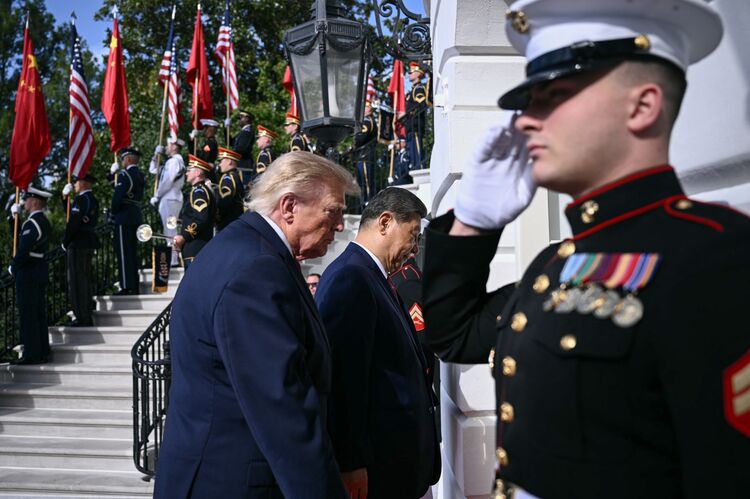
When the leaders of China and the US met in May, they announced a “Board of Investment” aimed at widening Chinese foreign direct investment in the US . In Washington last month, they barely mentioned the subject. The omission is unsurprising — and shortsighted.
Suspicion of Chinese companies runs high across the US political spectrum. National security hawks worry about letting in Chinese technology that could be used to spy on Americans , or be sabotaged remotely during a crisis. Economic nationalists warn that opening the door to heavily subsidized Chinese manufacturers will drive local firms out of business and lock in dependence on mainland supply chains. Even Transportation Secretary Sean Duffy recently blasted Ford Motor Co. for licensing Chinese battery technology at one of its Michigan factories and partnering with Chinese automaker Geely Automobile Holdings Ltd. on a venture in Spain.
Some concerns are valid. Officials have reason to scrutinize Chinese land purchases near military facilities or critical infrastructure. The risks of China gaining access to Americans’ sensitive data, weaponizing supply chain chokepoints, implanting backdoors in electric vehicles and other connected technologies, and unfairly undercutting US rivals shouldn’t be ignored. In some cases, the dangers of increased investment will clearly outweigh any potential economic benefits.
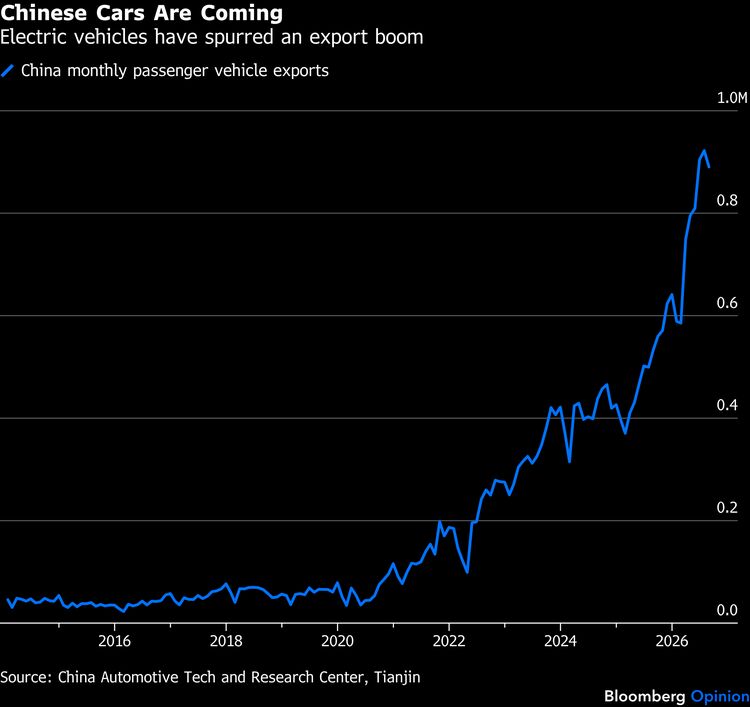
At the same time, Chinese firms have taken a highly competitive position in several key industries, from electric vehicles and energy storage to robotics and life sciences. Blocking them from the US market might temporarily shield domestic producers. But those manufacturers risk falling further and further behind globally, selling outdated technology in a captive US market while shedding business elsewhere.
Policymakers should remember how China reached its advantageous position. State subsidies helped, to be sure, as did industrial espionage. Also important, though, was the decision to welcome leading foreign manufacturers and press them to transfer technology and know-how to local firms through joint ventures. Chinese entrepreneurs used those new skills to launch their own enterprises. And fierce competition drove them to climb up the technological ladder: It was only after Tesla Inc. was allowed to operate a Shanghai factory with no local partner that Chinese automakers began developing EV models that rivaled the best in the world.
Borrowing from China’s strategy in sectors where its companies have developed world-beating technologies and processes could help several US industries to catch up, provided security risks can be mitigated. Licensing deals such as Ford’s may offer the clearest benefits and fewest worries. But the US should remain open to joint ventures and even wholly owned Chinese subsidiaries as long as certain conditions are met . Manufacturers should be required to build up diversified local supply chains and to bring their best technology. US data must be protected and measures taken to prevent dumping. Strategies can be coordinated with allies in Canada and Europe, who are grappling with similar challenges.
The goal should not be (as in China) a coercive transfer of intellectual property. Rather, it should be to seek voluntary and mutually advantageous partnerships that can help spread knowledge, build up expertise and spur process innovation.
Policymakers should encourage US companies to learn what they can from Chinese partners and trust that they will use that knowledge to outinnovate and outcompete rivals. It might be wise to start with one or two test cases to see how well existing bodies such as the Committee on Foreign Investment in the United States can address security concerns and where they need additional powers and resources.
China will, of course, be wary of surrendering valuable technology . But mainland companies facing brutal price competition at home are eager for access to the lucrative American market. The onus is on them to make the same case in Beijing that needs to be made in Washington: Boosting Chinese investment in the US would be good for both countries.
More From Bloomberg Opinion:
- How Ford and GM Can Avoid VW’s China Pains : Liam Denning
- The US Is Badly Losing Its Trade War With China: Scott Lincicome
- Europe Is In a Dangerous Place. It’s On the Menu : Lionel Laurent
Want more Bloomberg Opinion? OPIN <GO>. Web readers, click here . Or you can subscribe to our daily newsletter .