Allan Gray Australia Ltd. is favoring stocks related to beaten-down office landlords, expecting the sector to rebound as investors overestimate the threat artificial intelligence poses to demand for office space.
Office real estate investment trusts have been the A$2.6 billion ($1.8 billion) Allan Gray Australia Equity Fund’s largest area of capital deployment over the past 12 months “by a country mile,” Chief Investment Officer Simon Mawhinney said in an interview last week. Dexus, whose shares have fallen more than 20% over the same period, has risen from the fund’s 16th-largest investment in December 2025 to its second largest today.
The move in REITs reflects Allan Gray’s view that investors are pricing lasting disruption into office stocks when some of the pressures may prove cyclical. That same approach is keeping the firm away from data centers, where enthusiasm over the AI buildout has pushed valuations to levels Mawhinney says leave investors with too little compensation for the risks.
“The unknowable and the concerns over the future are typically a red rag to a bull from our perspective,” Mawhinney said. “Are you paying a sufficiently low price for the risks which present? Or are you paying too much for potential risks?”
Office landlords have been weighed down by elevated vacancies and excess supply, while the prospect that AI may reduce white-collar employment has raised questions about longer-term demand for space. Allan Gray sees those concerns as already heavily reflected in valuations.
“I can’t help but think that they are overpriced for the risks that I see on the table today,” he added.
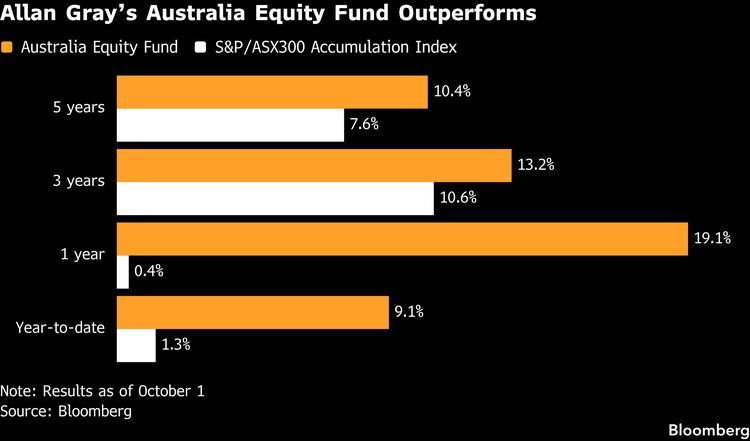
The office push follows strong performance elsewhere in the portfolio. The fund has gained more than 19% over the past year, outperforming 99% of its peers, according to data compiled by Bloomberg, pushed along by a heavy allocation to healthcare.
Yet while Allan Gray is buying property stocks hit by fears over AI, it is steering clear of one of the technology’s hottest trades . Mawhinney said data-center valuations fail to adequately compensate investors for risks including changing technology, equipment replacement cycles and uncertainty over future tenants.
“I do think spending billions and billions and billions of dollars on a data center where there is so much uncertainty as to who your tenant will be or even if you will have tenants in 10 years time, it is not a risk-free endeavor,” Mawhinney said.
Read: Axed Sydney Data Center Shows Backlash to Australia’s AI Boom