By Martin Ivens | Updated on Oct 05, 2026 at 05:00 AM
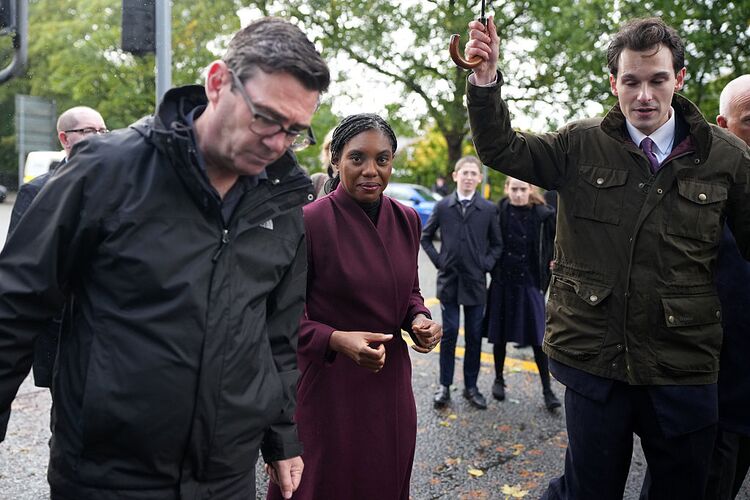
No wonder UK Prime Minister Andy Burnham was greeted as a conquering hero at Labour’s annual conference in Liverpool last week. At last the party has a leader who “does” politics and leads on mission and purpose. The impact has been like the consumption of an energy drink: A rank-and-file fizzing with enthusiasm and a decent uptick in Burnham’s personal ratings.
At the helm of the Conservatives, Kemi Badenoch, had to be taught her lesson the hard way. To be a good leader of His Majesty’s Opposition, she first had to learn to oppose. In her first year in the job, Badenoch kept a low profile while she fixed her party’s finances. Her approval ratings duly plummeted to minus 27%, allowing Nigel Farage’s populist Reform UK to fill the vacuum. Obituaries of the most successful political party in the history of Western democracy started to be filed.
That was premature. Badenoch’s highly personal assault on former Chancellor of the Exchequer Rachel Reeves’ budget last November saw her appeal recover. Some 38% now reckon she is doing a good job, according to YouGov, and 43% regard her as decisive. Her attacks on a “budget for ‘Benefit Street’ paid for by working people” hit home as the UK tax burden broke all peacetime records and promised welfare cuts were abandoned.
Badenoch has earned her reprieve until the next general election, but a wide gap remains between her own standing and support for her party. The Tories are scrapping with Reform for second place behind Labour. As she addresses the Conservatives’ own yearly get-together this week, can she translate her undoubted fighting qualities into an election win?
The Tory predicament is acute. She must fight a two-front war on her left and right. Farage’s fortunes have suffered from recent financial scandals but Badenoch cannot discount another Lazarus-like resurrection from the most durable operator in British politics. If the Tories chase right-wing voters with ever more extreme policies they will alienate centrist voters, with no certainty of winning votes from Reform.
Britain’s electorate roughly divides into left and right voting blocs, split between five parties and the nationalists in Scotland and Wales (Northern Ireland’s political landscape sits apart). The left bloc appears far more cohesive than the right. Many Reform and Tory voters won’t hold their nose and vote tactically for the other right-wing party to keep out a Labour candidate. Green and Liberal Democrat voters have happily supported any party that stops Farage. He is the country’s most hated politician.
And Burnham’s rapturously received conference speech last week appealed far beyond the conference hall. He sounded the right notes on Europe, Israel and proportional representation to win the attention of progressives beyond his own party. His bold proposal to reform state pensions impressed neutrals, too.
However, the PM’s speech did offer Badenoch an opening. Burnham scarcely made a financial down payment on his ambitious but fuzzy plans for a national care service, electoral reform, new social housing and public control of utilities. As for rejoining the European Union, the next day he outlined four contradictory paths to closer ties to Brussels, depending on which media organization was interviewing him. The paradise of reversing Brexit — indeed, most of his gambits — will be postponed until after the next election three years hence, although Tories are wargaming a possible snap election in May.
The prime minister had little to say on the country’s most pressing concerns. How will he meet increased defense spending commitments, cut the welfare bill and stimulate economic growth? There is no money for pump-priming. The government is paying roughly £110 billion ($146 billion) a year to cover the interest on the national debt and, under its fiscal rules, public spending is due to be cut in 2028-29 — unless Burnham raises taxes once more. This is Badenoch’s opportunity. She must position her party for the longer term as the only fiscally responsible alternative to Labour. At the weekend, she set out her principles in a 96-page pamphlet harking back to Margaret Thatcher’s Right Approach published 50 years ago.
Here her message is mixed. To appease their elderly core vote, the Tories have attacked Burnham’s modest proposals to slow the spiraling cost of state pensions, just as they attacked Starmer for trying to cut a winter-fuel allowance for old people. They are now appealing to middle class voters lost to the centrist Liberal Democrats by offering to end a £100,000 earnings limit to childcare support. Tax giveaways on buying houses and inheritance would be funded by reducing the welfare bill and civil-service headcount, in the expectation that the PM won’t follow suit. He could surprise them.
Meantime, Badenoch can enjoy doing what she does best: haranguing Labour for overpromising and under-delivering. She can interrogate Burnham’s woolier pledges and demand details. Either Burnham will look evasive or else his honest answers will drive a wedge between his government and the voters over the real cost of programs like a national care service — £18 billion per annum and rising. As in 2010, when Gordon Brown was turfed out of No. 10, the Tories opposition will caricature a Labour government as the anti-business party of welfare: “For the shirkers, not the workers.”
Still, there’s the human factor. Burnham’s sentimental shtick may pall eventually but for the moment he does “human” better than anyone else on the political field. Badenoch doesn’t look too bothered about the Tories becoming the “nasty party” again. But if she won’t make nice then she must use her opponent’s strengths, jujitsu-like, against him. The PM will be vulnerable to attacks that he’s all about “the feeling” not the doing.
If given two to three years, the Tory leader will have time to outline her competing vision and a realistic diagnosis for fixing the UK’s ills. Today only 27% see her as a prime minister in waiting. The voters respect her plain speaking, but governing is about delivery. That’s what Britain now wants to see from Burnham, and anyone who contends that they’d do better.