Coal inventories at India’s power stations are close to a five-year low, with plants equivalent to more than 40% of the nation’s coal-fired capacity left with just four days of reserves or even less, a level that raises the risk of widespread blackouts.
Unusually warm temperatures and erratic rains have kept demand for cooling, irrigation and industry strong through the day well into October, a month when the weather should typically begin to cool across the subcontinent. The supply of coal, meanwhile, has been disrupted by heavy downpours that stopped work at some mines, and by continued bottlenecks in rail capacity — forcing plants to dip into inventories.
As of Oct. 4, some 69 power stations — more than two-fifths of the nation’s coal power fleet — had fuel for just four days or less, a level monitored as a minimum by plant operators. That’s the lowest since December 2021, during a post-pandemic energy crisis that hit India and other major consumers in the region, as the return of industries ran down depleted stockpiles.
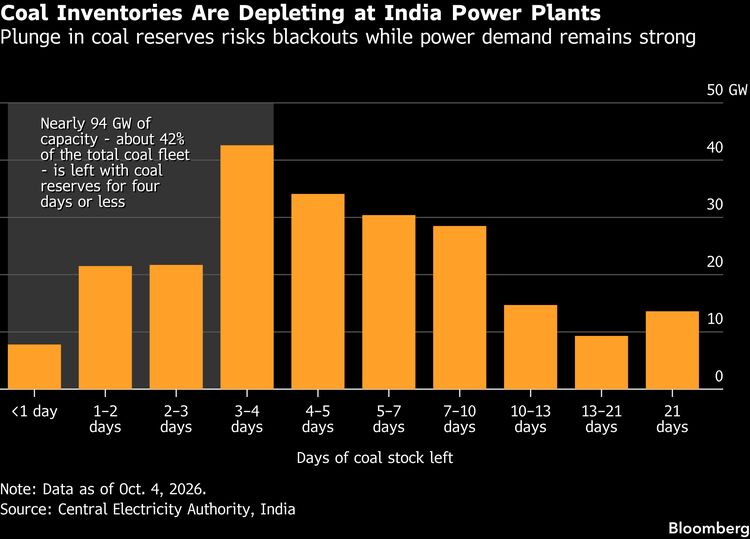
India has seen breakneck solar and wind growth over the past decades, but coal still produces nearly 70% of electricity in the country, leaving the power system vulnerable to weather events, disruptions in transport or strikes at mines. Almost 90% of plants with low inventories are located away from coal mines.
The disruption could have effects lasting into next summer, as the months through February, usually the coolest period in the country, offer a narrow window to rebuild inventories. Any interruption could hamper power plants’ efforts to prepare for heatwaves or unexpected spikes in demand.
“As the weather cools down over the next few months, it would give some breathing room to the system, allowing distribution utilities to carry out some daily load shedding to reduce demand,” said Rupesh Sankhe, senior vice president for research at Elara Capital India Pvt.
“Meanwhile, Coal India and railways will need to ensure supplies to power stations pick up so that we are well prepared for the summer.”