By Alicia Diaz | Updated on Oct 07, 2026 at 08:06 PM
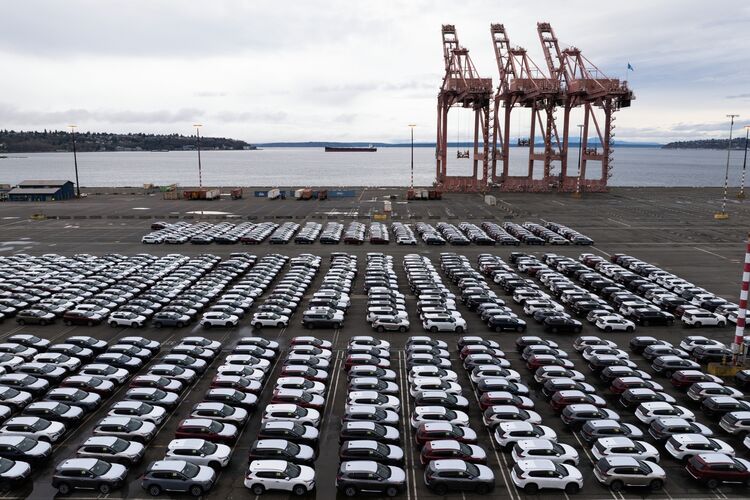
The US joined 14 other economies in pledging to confront excess manufacturing capacity and production in certain sectors, even as the Trump administration looks to punish some of those trading partners over those concerns.
The joint statement following the recent G20 trade ministers meeting in Milwaukee says the economies welcomed the US “focus on this issue,” citing what they called “increasing international recognition that structural excess capacity and production poses a fundamental challenge for the global economy and individual economies.”
They expressed their resolve to work together to “further examine and take effective actions” to address excess capacity, identifying autos, electric vehicles, batteries, chemicals, semiconductors and solar panels as sectors of concern.
The US is carrying out an investigation into excess capacity targeting more than a dozen major trading partners. It is not clear when that probe will conclude but it is expected to result in higher tariffs on those economies.
Several of the economies that signed the joint statement are already subject to that probe. Economies signing the joint statement with the US included Argentina, Australia, Canada, the European Union, France, Germany, India, Italy, Japan, South Korea, Mexico, Poland, Turkey and the UK
G20 countries that did not sign the agreement include China, Brazil, Russia and South Africa.
Read More: Trump’s Trade Agenda Meets a Skeptical World: Supply Lines
Structural excess capacity was one of the key topics at the recent G20 meeting of trade ministers. The US also led members in discussions on addressing weaponization of food supply chains, forced labor in goods and reforming the most favored nation tariff system.
“Left unchecked, these issues will continue to cripple domestic industries, displace local production, and hinder our ability to raise the standard of living for workers and their families,” US Trade Representative Jamieson Greer said in a statement.