By Anthony Osae-Brown | Updated on Oct 07, 2026 at 06:15 AM
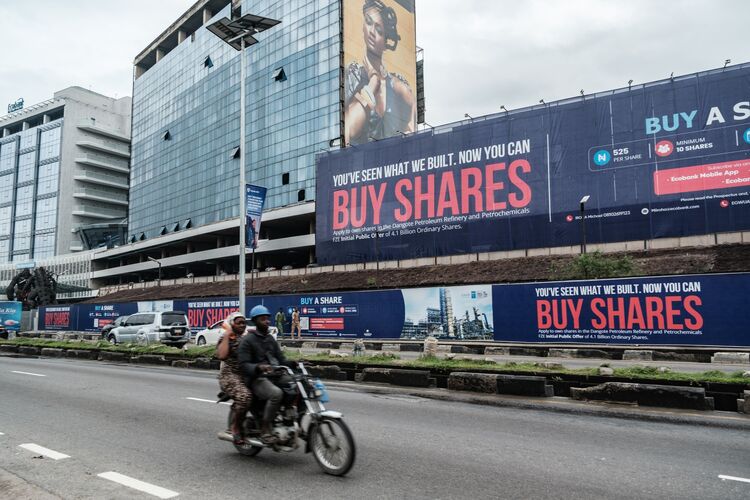
A mega-refinery in Nigeria owned by Africa’s richest person is going public, seeking to raise at least $1.6 billion to help fund its expansion . The share sale is set to be the continent’s largest-ever initial public offering. Aliko Dangote has pitched it as an “IPO for the people” and aims to draw in millions of first-time investors by setting the minimum stake in his firm at just $4 .
The listing of Dangote Petroleum Refinery and Petrochemicals FZE and the accompanying marketing blitz have ignited unprecedented local interest. Demand crashed trading apps after the sale on the Nigerian Stock Exchange opened in mid-September. There has also been strong international interest as opportunities to invest in such big, profitable businesses are few and far between in Africa.
The offer for shares, which closes on Oct. 13, will serve as a test case for other companies looking to mobilize capital in Africa, and could provide a template for financing mega-projects in the region. But it may be too early to herald the start of an African investing boom as the continent remains a risky place to do business.
Some 4.1 billion shares in the Dangote refinery are on offer at 525 naira ($0.40) each. That equates to about 3% of the company. It has regulatory approval to sell up to 30% more equity should there be sufficient demand, meaning the firm could raise as much as $2.1 billion.
The IPO is expected to value the business at nearly $50 billion, adding to the already considerable wealth Dangote has accumulated by cornering markets for key commodities while still remaining above the fray of Nigeria’s unpredictable politics.
Situated on the outskirts of the commercial hub of Lagos, the plant began operating commercially in February 2024 and cost around $20 billion to build. Plans are afoot to double its processing capacity of 700,000 barrels of crude a day by 2029, which would make it one of the world’s largest refineries.
While Nigeria is Africa’s biggest oil producer, its state-owned refineries were moribund for decades, meaning the country of more than 200 million people had to import all of its refined fuel. That changed when the Dangote plant came on stream.
The refinery has the capacity to supply the entire domestic fuel market and already provides at least 70% of its gasoline. It has also been exporting petroleum. Many other African countries turned to the facility for refined products after the Iran war disrupted global supply chains, and it emerged as the single biggest exporter of jet fuel to Europe.
Besides ample demand for its output, the plant enjoys operational advantages. It sources about 60% of its crude from its home market, which largely eliminates shipping costs and enhances profit margins, although Dangote has still complained that the refinery has been unable to access sufficient crude from Nigeria. The location of the plant in a free-trade zone also gives it substantial tax benefits.
The Nigerian government has declared the refinery systemically important to the country’s development and says it must be supported “at all costs.” The odds of a sizable rival refinery being established in Nigeria are remote, guaranteeing the Dangote plant’s dominance over the domestic market for the foreseeable future.
The refinery made a profit of $1.82 billion in the six months through June, after posting a $282 million loss a year earlier. Sales in the first half of 2026 have already exceeded those for all of 2025. With tensions in the Middle East showing no signs of easing, fuel prices — and the plant’s earnings — should remain elevated for some time to come.
The business plans to pay out between 30% and 50% of its profits in dividends while it is expanding, and about 50% once construction has been completed. Payouts will be dollar-pegged, a boon for Nigerian investors who have long been exposed to extreme currency volatility.
Dangote has had to contend with a series of challenges. He’s been engaged in a perennial fight with regulators over the issuance of import licenses to competitors, and struggled with plant breakdowns that have curtailed output.
While the Middle East conflict has squeezed energy supplies from the region for months and there’s uncertainty about when normal flows will resume, the Dangote refinery could lose market share when the war ends and Persian Gulf fuel exports rise.
Plans to expand the Dangote plant at an estimated cost of $14.3 billion are also partially contingent on it continuing to generate cash and retaining access to debt markets — funding that could diminish should market conditions change.
Policy shifts are another risk. One of the leading contenders in January’s upcoming presidential election has pledged to restore fuel subsidies if he’s elected, a move that could put pressure on domestic suppliers’ profit margins. The government may also consider reintroducing price controls if high fuel prices are sustained.
The listing, which is expected to be completed by late November or early December, will be the biggest ever on the Nigerian Stock Exchange. The refinery is set to account for about 40% of the total value of shares that trade on the bourse. The share sale follows Nigeria’s addition to the FTSE Russell’s equity indexes and should provide further incentive to global institutions to consider investing in Nigerian stocks.
Dangote’s goal of targeting 10 million shareholders in his company using fintech firms and digital channels should go some way toward broadening financial inclusion in a nation where the vast majority of people have a marginal stake in the mainstream economy. There are currently only 2.7 million active investors in Nigeria, according to the head of the country’s stock exchange.
The listing may also prove to be a catalyst for other closely held Nigerian companies to go public. They include the Nigerian National Petroleum Co., Nigeria LNG Ltd. and Indorama Eleme Fertilizer and Chemicals Ltd., all of which are big players in the oil and gas industry.
A successful share sale would demonstrate that sufficient funds are available within the region to execute very large projects and that more innovative thinking can encourage local investment and drum up the funds needed for development. With Dangote planning another massive refinery on Kenya’s coastline , the capital-raising model used for the Nigerian plant is likely to be replicated.
The IPO is already encouraging collaboration between African stock exchanges. Dangote is planning secondary listings, with the Nairobi and Johannesburg bourses seen as alternative trading platforms. Capital market authorities in Rwanda, Kenya and Botswana have already granted special approvals for their citizens to buy shares in the Dangote refinery, making the IPO the first pan-African capital issue.