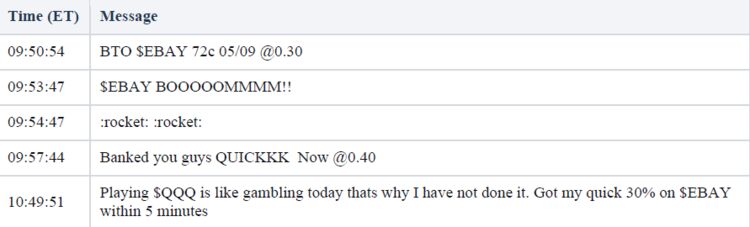
Shortly after the US stock market opened on May 7, 2025, a message landed in a Discord trading chat: “BTO $EBAY 72c 05/09 @0.30.”
In options-trader shorthand, it was a recommendation to buy a call option expiring two days later, a bet that eBay Inc. shares would rise. Then came a more enthusiastic message: “$EBAY BOOOOOMMMM!!” followed by two rocket emojis.
The option rose roughly 30% in five to seven minutes, depending on how the move is measured, as traders piled in. The move soon faded.
“Banked you guys QUICKKK,” the same poster wrote. “Playing $QQQ is like gambling today thats why I have not done it. Got my quick 30% on $EBAY within 5 minutes.”
That trading pattern extends beyond one instance. A recent academic study of 15 paid Discord servers found that recommendations by financial influencers, or ‘finfluencers,’ were followed almost immediately by a rush of retail buying and rising prices in the options they touted. The price effects typically disappeared within two hours.
More than five years after the meme-stock boom put Reddit traders in the spotlight, the findings offer a rare look at a more private corner of retail trading . Unlike posts on public message boards, these recommendations on Discord are typically delivered inside subscription services, sometimes costing hundreds of dollars a month.
“This is actually a really big community or a subset of retail trading that nobody hears about,” said Brian Roseman, an associate finance professor at Oklahoma State University, who co-wrote the working paper.
Discord is an online platform organized around servers, or communities, where users communicate through dedicated channels. Trading groups tend to build audiences on X or YouTube before directing followers to paid Discord servers. There, subscribers receive “callouts” specifying an option to buy and an entry price, sometimes followed by instructions to sell.
Their activity is a small slice of the vast US options market or even the finfluencer economy. But the researchers found pronounced trading around the contracts they recommended. Retail buying can surge in the first minute after a callout while the option’s price rises an average 3%. The researchers measured the jump in retail volume at roughly 14.5 standard deviations above normal.
But because the impact fades so quickly, followers fare worse the longer it takes them to act. After transaction costs, returns are generally negative even for subscribers who manage to follow an alert within seconds.
“The finfluencer generally would get in at a lower price, and then the herding of their followers pushes the price up,” said Roseman. “Their influence is driving the price up rather than their actual skill selecting good options.”
Podcast: At The Money: Becoming A FinFluencer
The researchers, including T. Clifton Green at Emory University and Russell Jame and Patrick Oliphant at the University of Kentucky, found the servers by searching Whop, an online marketplace, and required them to have at least 500 active subscribers or, when subscriber counts weren’t public, at least 75 reviews.
The trades tend to be highly speculative. The median recommended option expires in just three days and costs about $1.25. It also offers embedded leverage of roughly 30 times, allowing traders to make an outsized bet with relatively little money. The researchers found that subscribers responded most strongly to the more speculative recommendations, even though those tend to perform worse.
“That’s an interesting trade-off and it points to a potential conflict of interest,” said Jame. “I think of this much more like gambling than investing, and so I think this is appealing to people that value the possibility of making large gains.”
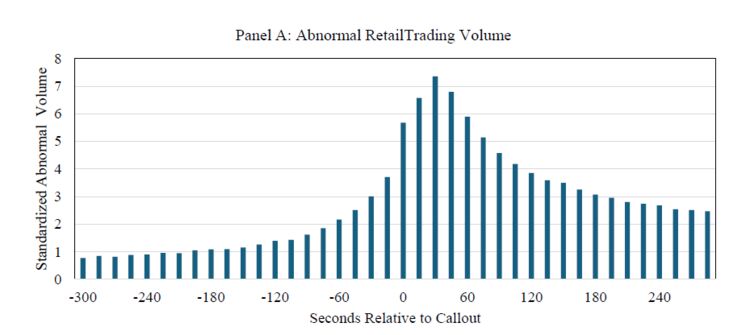
The researchers found some trading before callouts as well. They couldn’t tell whether the finfluencer was responding to an option that was already moving or whether some traders were getting in before the recommendation appeared.
The much bigger move came afterward. Trading jumped immediately after a callout and went the other way when subscribers were told to trim or exit.
The study makes no claim of wrongdoing by the services, but the trading patterns raise questions about how existing rules apply to financial advice delivered over social media . A finfluencer could face legal liability if recommendations are fraudulent or contradict their true views, or if followers are attracted with cherry-picked performance metrics, said Sue Guan, an associate professor at Santa Clara University School of Law.
Paid subscriptions further blur the distinction between social-media commentary and regulated financial advice, according to the law professor.
“From the perspective of a subscriber, I imagine at least some of them would say they reasonably believe that this is financial advice,” said Guan, who’s been studying finfluencers. “It turns out they would be wrong under how current laws are enforced.”
Trade recommendations are one way finfluencers keep subscribers engaged. For instance, one called Oculus Trading proclaims itself “the most elite trading group on Discord” and offers trade alerts, Q&As, mentorships, tutorials and live voice chats for potentially around $100 a month. Non-paying members can browse a channel filled with subscribers touting their profits. Another service claimed a win rate of “+80%-90%.” Oculus didn’t respond to requests for comment on social media and related contact methods.

All told, a series of small losses can be obscured by the occasional spectacular winner — the kind of trade most likely to be celebrated on an internet message board.
“This is not like they’re going broke the very first trade they do, and there’s a lot of volatility, so if they did 10 of them, they lose some, they win some,” said Green, a finance professor at Emory, commenting generally on the phenomenon. “But if they are drawn to this area by the claims of very, very high success rates, I think they should know what they’re going into, which is more this community of small losses on average.”