Apollo Global Management is scoping out a bigger role in financing debt-laden governments and state-backed companies as they increasingly turn to private capital to plug budget gaps.
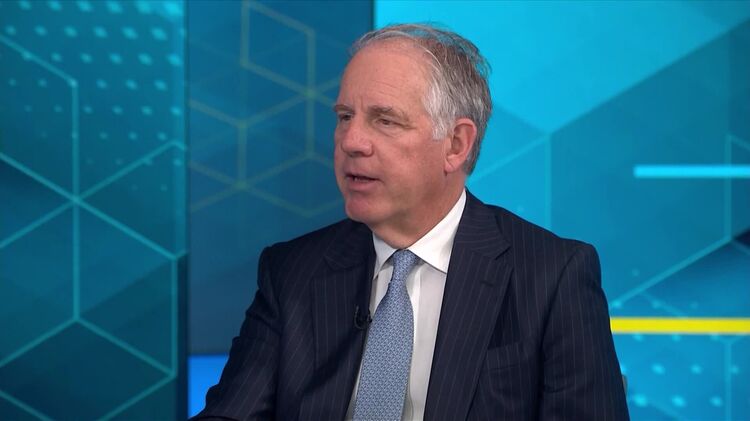
Particularly in Europe, governments are embracing private capital as “part of the solution” to addressing their mounting debt, Apollo’s President Jim Zelter said in a Bloomberg Television interview in London on Tuesday.
Apollo, known for creative financing , is exploring ways that government-backed companies can shore up their balance sheets, including long-term capital. Zelter said one option is to move hard assets into a subsidiary to raise capital. It’s a tool that’s helped Apollo expand its roster of clients, especially in Europe, over the years.
Apollo’s expansion in Europe has included investments in European energy infrastructure firms, including a major Orsted AS offshore wind project in the UK, RWE AG’s German power grid business, and an agreement to help finance the construction of the Hinkley Point C nuclear power plant in the UK.
“The challenges in Europe — you have a banking system, an investor system, and a pension system that’s not really primed in position to handle those demands,” Zelter said.
Apollo has been hiring well-connected bankers and policy advisers to help bring in big deals. The firm reshuffled leadership teams in Europe and Asia earlier this year and put former Standard Chartered Plc Chief Financial Officer Diego De Giorgi in charge of Europe.
Read More: Standard Chartered Caught Off Guard By CEO Hopeful’s Departure
Zelter said Apollo has also been spending more time in Washington and other global capitals looking for ways to finance the defense sector. He expects private capital to play a bigger role in US and European acquisition and supply programs.
The firm is also seeking to capture the trillions of dollars that companies need for AI infrastructure. Zelter said Apollo has a limit on how exposed it will be to the booming AI buildout, adding that savvy credit investors limit their portfolio exposure in any one industry to mid- to high-single digits.
Alternative asset managers including Apollo and Blackstone Inc. have poured billions of dollars into AI and the infrastructure needed to build and power it. At the same time, investors have been probing money managers to understand the extent of how AI-related investments have made their way into a variety of funds.
“We are all trying to figure out, as an investor today, what’s that unintended consequence, or what’s that second and third derivative,” Zelter said.