The Black Swan author Nassim Taleb warned that a pullback in demand for US Treasuries risks creating a fault line across markets, potentially hurting a record-beating stock rally.
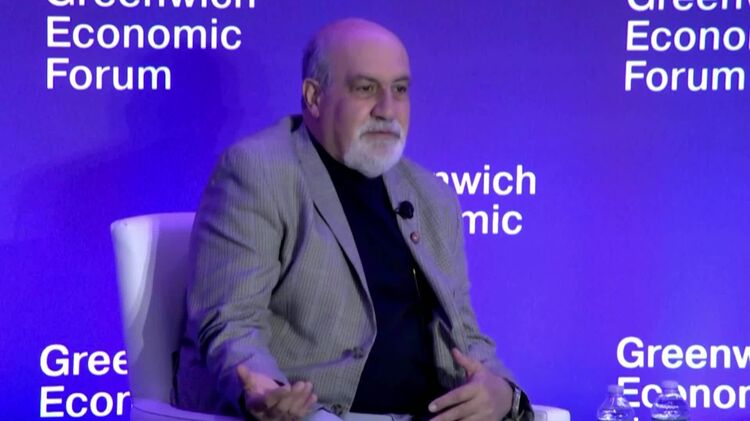
“The bond market is very vulnerable,” particularly as the US has to finance large fiscal deficits with investors who may become less willing to fund them, Taleb said at the Greenwich Economic Forum in Greenwich, Connecticut on Tuesday.
While echoing concerns by billionaire Ray Dalio that the rising cost of US government debt could test demand for Treasuries, Taleb sees domestic investors as the bigger risk. He fears US retirees and funds pulling back from long-duration debt would be a greater blow to the market than waning demand from China or Japan, as Dalio warned .
With yields on long-dated US government bonds already at 24-year highs, the outlook for Treasuries is particularly challenging, said Taleb, who serves as a distinguished scientist for hedge fund Universa Investments. That creates a potentially uncomfortable divergence between buoyant equities and growing vulnerabilities elsewhere in markets.
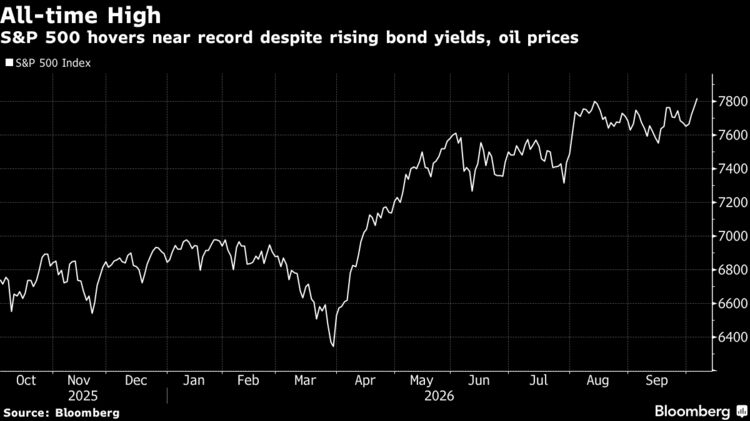
The warning comes as the S&P 500 closed at a record on Tuesday for the first time since August, buoyed by resilient corporate profits and the outlook for artificial intelligence-related spending. The move marked the gauge’s fourth consecutive advance and longest winning streak in about two months as investors look past lingering inflation concerns.
Taleb stopped short of predicting a crash, arguing that it’s more about investors recognizing that markets can become increasingly fragile before an unexpected event exposes vulnerabilities. An expensive market can continue rising, he said, and the catalyst that eventually causes a selloff is inherently difficult to predict.
“It’s false to think in terms of the market will go down,” Taleb said. “You think in terms of risks increase.”
The appropriate response is not necessarily to turn bearish, but to structure portfolios so that they can withstand an unexpected shock, he said.
AI Stock ‘Trap’
Taleb also cautioned against assuming that the tech companies currently driving the stock market higher will necessarily emerge as the ultimate winners from the artificial-intelligence boom. AI could transform the economy, but investors don’t know which companies will ultimately benefit, he said. Technology can fundamentally change the competitive landscape, leaving early leaders behind.
It would be “a trap to go invest in companies” that benefit from AI simply because the technology is changing the world, Taleb said. If you look backw, “the companies that benefitted were not the pioneers.”
Read: Black Swan’s Taleb Warns on Software Bankruptcies, Volatility
He also questioned how much the S&P 500 says about the health of the US economy. The index’s largest companies are global businesses, he said, meaning their performance doesn’t necessarily reflect the financial condition of American households.
“US companies are global,” Taleb said, arguing that investors should pay more attention to the experience of middle-income families than to the level of the stock market.
For investors, his message is not to predict when the market will break but to prepare for the possibility that it will.
“Always have a tail hedge, even if you have no reason to hedge,” Taleb said.