The euro fell against all G10 peers as investors worried about regional fiscal and political risks looked beyond the dollar to bet against the common currency.
The common currency dropped as much as 0.4% against the pound to 84.48 pence on Wednesday, its lowest since June 2025, while staying close to a one-year low versus the yen. It had already fallen to a 17-month low against the dollar earlier this week.
The broadening suggests that investors think there are cleaner ways to express a bearish view than the euro-dollar pair, which can be muddied by concerns over the US fiscal outlook and the dollar’s own risk premium.
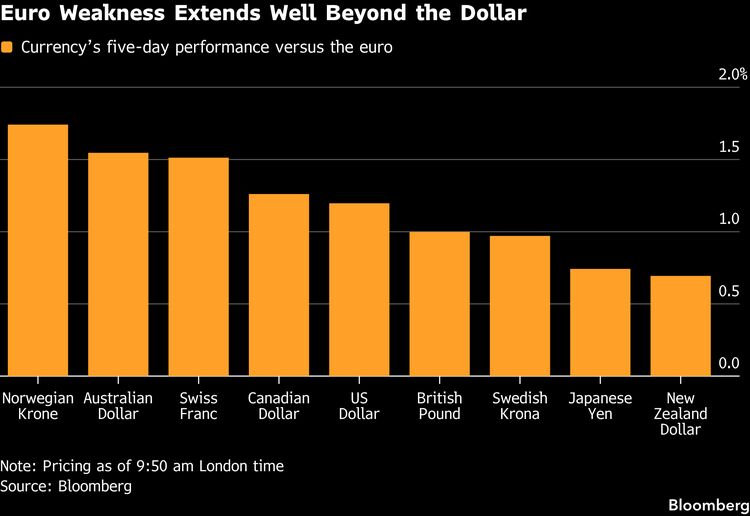
Hedge funds have increasingly favored euro shorts against the franc and yen, followed by the pound and dollar, according to FX traders familiar with the transactions who asked not to be identified because they aren’t authorized to speak publicly.
Morgan Stanley strategists led by David Adams expect the euro to weaken further, but see better opportunities to bet against it than via the dollar. They are selling the euro against the Australian dollar and Swiss franc to hedge against rising fiscal and political risks, as well as a potential dovish turn by the European Central Bank if bond markets remain volatile.
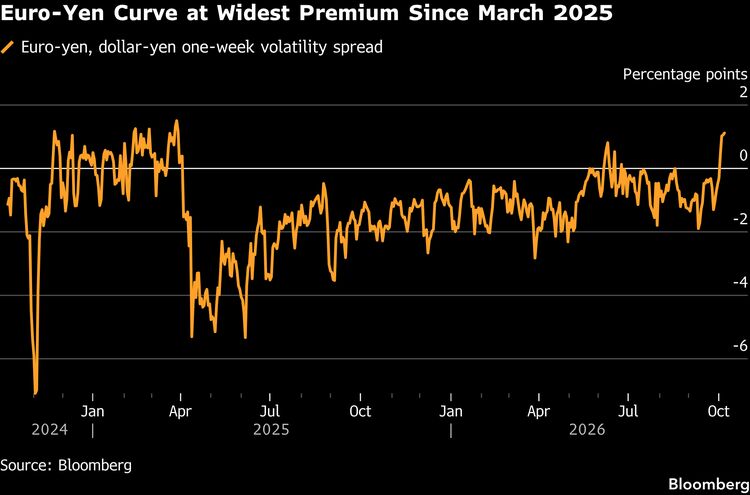
The preference for euro crosses is also showing up in volatility markets. For the first time since March 2025, the cost of hedging euro-yen swings exceeds that of dollar-yen by more than 100 basis points. Risk reversals in euro-pound, which depict the difference in demand for bullish and bearish exposure, flipped in favor of sterling for the first time since August 2024.
France is at the center of those concerns as sentiment deteriorates on missed deficit targets, policy gridlock and next year’s presidential election. Far-right presidential candidate Marine Le Pen on Tuesday called on the ECB to intervene to bring down surging debt costs.
What Bloomberg Strategists Say:
“The euro is in a bind: weakness in French bonds is weighing on the single currency but the most plausible source of OAT relief — a more dovish ECB — wouldn’t do it much good. EUR/USD has found itself tethered to the French-German 10-year yield spread. That’s unlikely to dissipate anytime soon.”
— Conor Cooper, Macro Squawk. Click here to read the full analysis.
“Concerns about France’s failure to reduce its budget deficit have been magnified by uncertainties connected with the approaching French presidential election,” said Jane Foley, a strategist at Rabobank. Rising French yields and a broader selloff in highly indebted European debt are adding to pressure on the euro, she said.
Foley expects the currency to remain under pressure into next year and sees euro-dollar at 1.12 over a one-year horizon, while allowing for a near-term rebound toward 1.13 as market nerves ease.
The turmoil has spilled into Europe’s government bond market, where a sharp selloff last week revived memories of the region’s debt crisis. A call for snap elections by Spanish Prime Minister Pedro Sánchez has injected fresh political risk into regional markets.
Meanwhile, traders have started paring wagers on further ECB rate hikes, with swaps favoring three quarter-point increases by September 2027 compared with four early last week.