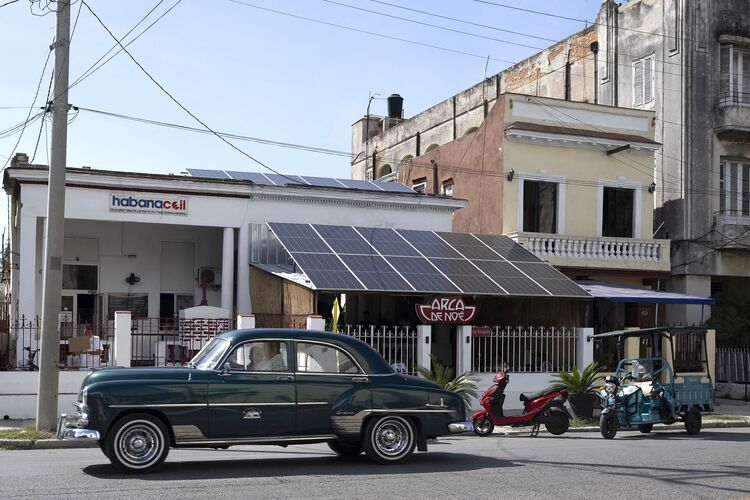
When Cuba suffered its seventh national blackout this year, the guests at La Campana in Havana kept partying. Thanks to the event center’s solar panels and backup batteries, they didn’t even realize the lights were out.
Cuba’s chronic power woes have made life a misery on the island of 9.4 million people. But that pain is being mitigated by one of the fastest solar adoption rates in the hemisphere. And the US is helping keep at least some of the lights on.
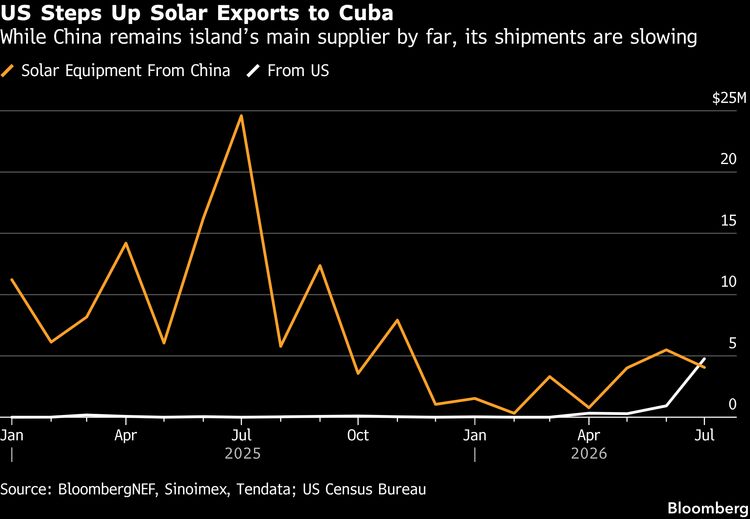
In the first seven months of this year, the US exported $6.3 million worth of solar cells and modules to Cuba, according to US Census data. That’s up 1,070% versus all of 2025, when just $538,000 worth of equipment was shipped to the island from American ports.
And while China remains the main supplier by far, exports from Cuba’s longtime ally are dropping. By the end of July, the Asian giant had exported $19.5 million in solar equipment to Cuba. That’s down 83% from 2025’s full-year tally, according to data compiled by BloombergNEF .
Another fresh donation of 5,000 solar systems from China arrived in September, yet it’s US shipments that have become a lifeline for average Cubans trying to find a few watts to keep their phones charged or their businesses afloat. Among them is Ramiro Llovet, who runs La Campana out of his home in Havana, hosting weddings, birthdays and corporate gatherings for groups as small as 15 people and as large as 350.
Even as President Donald Trump squeezes Cuba hard in hopes of ousting the Communist Party that’s held power for almost seven decades, his administration is allowing goods to be sent to entrepreneurs on the island like Llovet through a loophole in the longstanding trade embargo.
Trump’s de-facto fuel blockade and ever-tighter sanctions have chased away allies such as Venezuela and Mexico, dovetailing with the president’s push to reassert US dominance of the Western Hemisphere and curb the influence of China and Russia. That’s created space for American exporters to step in, with the resulting surge in cargo shipments helping both to stave off a complete humanitarian collapse in Cuba and to create a dependency on the US in the absence of other benefactors.
The energy crisis is nonetheless forcing the island to dramatically ration power.
Deputy Cuban Foreign Minister Carlos Fernández de Cossío told Bloomberg News that for the last eight months he’s only had power at his home for two or three hours a day. Trump’s pressure campaign “has successfully intimidated the whole world so it doesn’t export fuel and other products” to Cuba, he said. “That’s an aberration.”
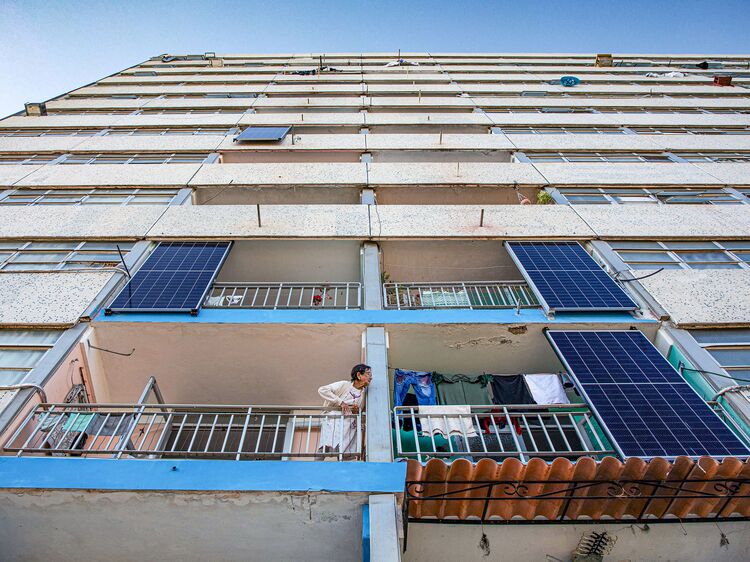
Running out of fuel and frequent breakdowns in Cuba’s aging power plants have made the island increasingly reliant on solar.
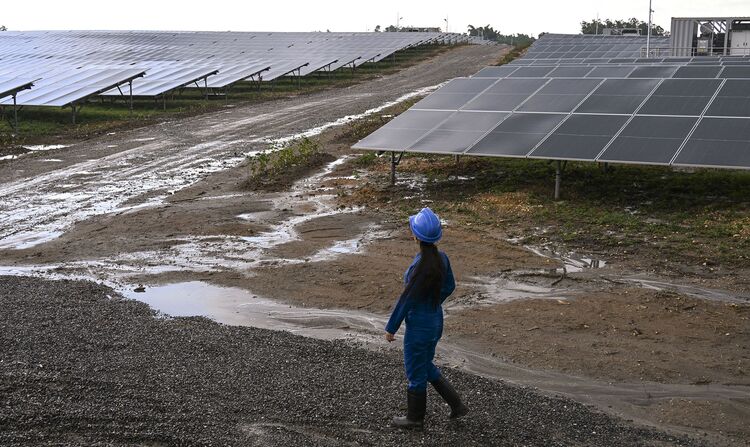
Cuba’s 144 solar parks now produce 1,418 megawatts of energy, or about a fifth of total national electric generation, President Miguel Díaz-Canel told state radio last month. In addition, the private sector now produces 20% of its own energy needs.
“Despite the blackouts, this is an area where we’ve made great strides,” the president said.
Some analysts, however, are less effusive.
Jorge Piñon, a researcher at the University of Texas Energy Institute who tracks power issues on the island, said that while Cuba is ramping up solar, it’s not doing so in a strategic way. The country has virtually no utility-scale battery storage, he explained, which means solar parks are only functional during the day and not properly integrated into the grid.
“Solar is a good investment as long as you do it smartly, which — regrettably — they are not doing right now,” he said.
Given Cuba’s size, solar will never be able to provide baseload energy, Piñon added, and it will always need large thermoelectric plants.
Llovet, 52, and his wife relied for years on a small noisy generator to get through temporary power outages that have plagued La Campana, their 15-year-old business. But as Washington cranked up the pressure, the outages grew untenable.
Last year, Llovet started gathering the pieces for a solar system, but could only find the 5 kilowatt-hour lithium batteries he was looking for on Amazon.com. He had them shipped to a relative in Miami and then forwarded to Cuba through CubaMax — one of the dozens of delivery services that have become a key source of goods for the island.
After plowing about $10,000 into the system, La Campana runs almost entirely on self-generated power. “It was a big investment, but it was obvious that this isn’t a problem that is going to be resolved in the near future,” Llovet said.
While most of Cuba’s solar imports are manufactured in China, the growing role of ports in Florida, Texas and Louisiana to deliver the technology to the island is significant, according to John Kavulich, president of the US-Cuba Trade and Economic Council.
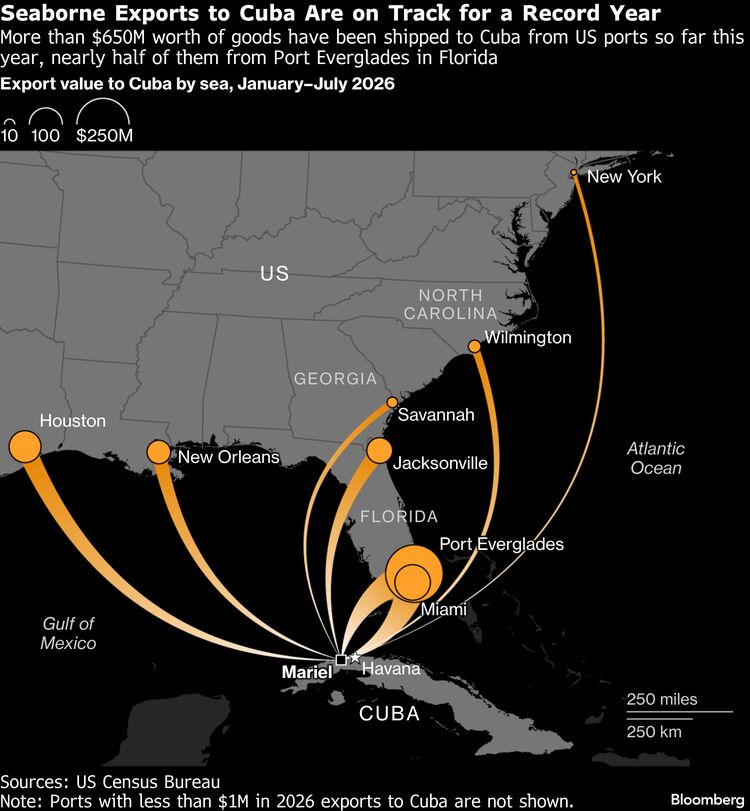
“It’s sort of ironic that Cuba could become a substantial renewable export market for US companies,” Kavulich said. “Particularly given the less than supportive view from the White House on renewables.”
The solar bandaid is just one of the elements keeping the island from imploding, he explained.
Cuba also produces about 40% of the crude it needs to fuel its power plants and has been making strides in refining more of it. And, crucially, the population and economy are both in decline, with the number of people living on the island down 16% over the past decade.
“The reason Cuba hasn’t stopped and collapsed and halted is because the economy has shrunk almost equal to the magnitude of the fuel that they were importing,” Kavulich said.
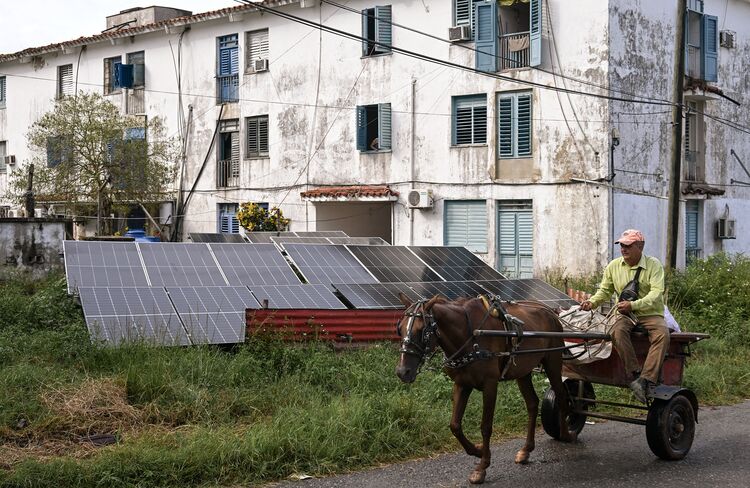
Despite the increased flow of solar panels and other goods, life remains a struggle for Cubans like Llovet.
Amid diesel and fuel shortages he swapped out his car for an electric tricycle, which have become ubiquitous in Havana. He said he’s also trying to navigate new local laws that would allow him to import his own party supplies.
But, more than anything, he needs a break in the drumbeat of US sanctions and other bad news.
“I would really like for everyday life to be just normal,” he said. “We’ve had that in the past and everything went well. We just need things to go back to normal, one way or another.”