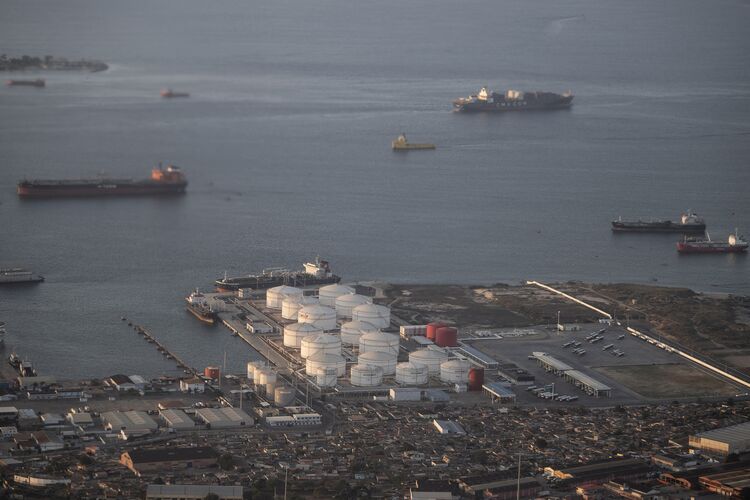
West African crude traded at the biggest discount in more than a decade as freight rates soared and demand from Asia weakened with a recovery in oil flows through the Strait of Hormuz.
A shipment of Angolan Hungo due for loading next month traded at a $19.60 per barrel discount to the Dated Brent benchmark Tuesday, according to S&P Global Energy’s Platts pricing window. That’s the biggest markdown for any West African crude cargo in the Platts data compiled by Bloomberg since 2011.
The resurgence in Persian Gulf oil shipments, mainly destined for Asia, is hitting demand for West African crude. The jump in Gulf loadings has also left fewer vessels available in the West, compounding the increase in freight rates, said Yash Bajaj, a crude analyst at Energy Aspects.
“Softer Asian demand is the key reason why Angolan differentials are discounting,” said Bajaj. The highest Gulf loadings since the start of the Iran war have “led to a softer Asian pull on WAF and more generally Atlantic Basin barrels,” he added.
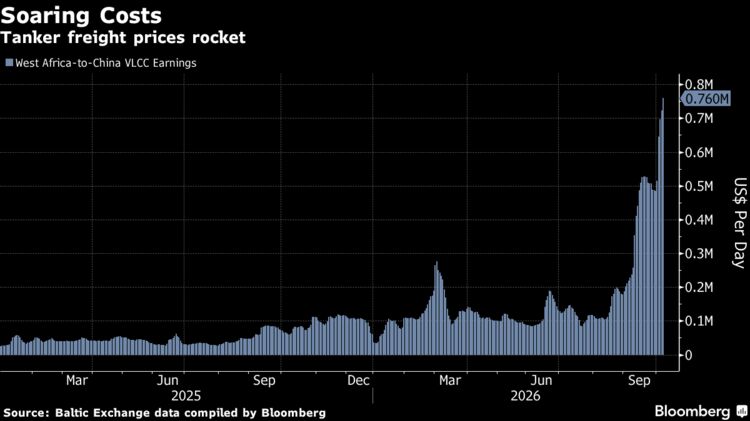
Sellers are being forced to discount their prices at the point of export because freight rates have jumped fourfold from pre-war levels, deterring buyers incurring the full cost of bringing in the cargoes.
Daily earnings for so-called very large crude carriers from West Africa to China rose to $759,787 on Tuesday, the highest in Baltic Exchange data starting from early 2020. That’s pushing refiners to seek crude closer to home.
“You don’t want to be a refiner, pick up a cargo at exorbitant rates, and have its value fall through the floor on the water,” said Neil Crosby, head of crude oil analysis at researcher FGE NexantECA.
Another November-loading cargo of Republic of the Congo’s Djeno crude was offered at an even bigger discount of $23.10 a barrel to the same benchmark, but failed to secure a buyer.
An overhang of October barrels has added to the problems for a West African market seeking to place November’s crude, with 13 shipments of Angolan and Nigerian crude for loading this month still available in estimates compiled earlier this week from traders specializing in the region’s deals.
A recovery in flows through Saudi Arabia’s East-West pipeline to the Red Sea port of Yanbu and the release of emergency oil and diesel stocks by the Group of Seven nations will also deter buying, according to Energy Aspects. The weakness is set to persist unless renewed hostilities in the Middle East depress Gulf shipments.
“We believe this weakness could last, given our expectations of Atlantic basin freight rates remaining elevated,” Bajaj said. “We are also monitoring Middle Eastern loadings and exports closely as any decline in this could arrest the weakness.”