The first Atlantic hurricane of the season is forecast to reach the US Gulf Coast early Saturday, threatening damaging winds, flooding and potential disruptions to energy production after an otherwise quiet storm season.
Tropical Storm Isaias is expected to grow into a Category 2 hurricane in the coming days, with top winds of 110 miles (177 kilometers) per hour, the US National Hurricane Center said in a 5 a.m. New York time advisory. The forecast takes the storm east of major oil platforms and natural gas pipelines off the coast of Louisiana and Texas, though the center said confidence in the forecast is “below average.”
Forecasts show the storm making landfall near Mobile, Alabama, which has proven susceptible to storm surge in the past, according to risk modeler Chuck Watson of Enki Research. Watson said in a blog post Wednesday morning that effects from Isaias could extend eastward to Pensacola, Florida, and Eglin Air Force base in the western Florida panhandle before the storm collapses. If that comes to pass, Watson said potential damages and economic impacts could exceed $6 billion.
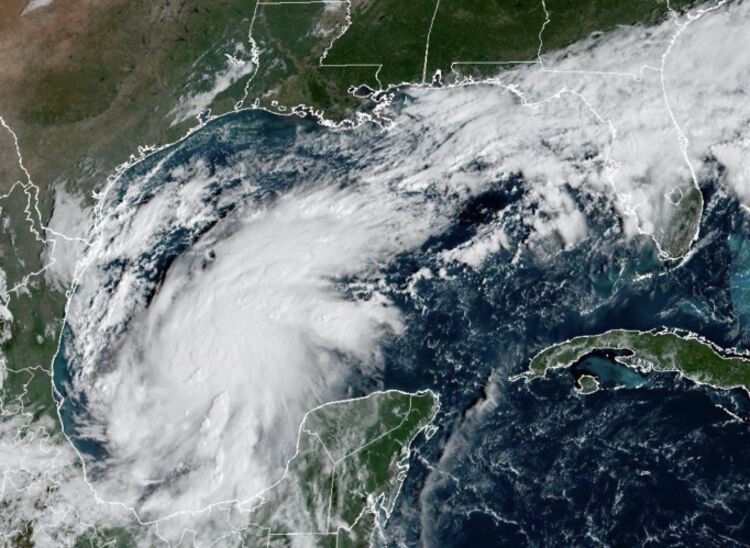
Regardless of its exact trajectory, “it is looking more likely that Isaias will be a significant hurricane when it reaches the coast,” forecaster Philippe Papin wrote in an update early Wednesday.
Chevron Corp. is evacuating non-essential personnel from its Gulf platforms as a precaution. No changes to production or operations are expected at this time, the company said.
As of Tuesday, roughly 9.24% of Gulf oil production and 3.36% of natural gas production had been shut in ahead of the storm, according to data published by the federal Marine Minerals Administration.
The storm arrives at a precarious time for oil markets. Amid strain from the war in Iran, they can’t afford disruptions to diesel production, the workhorse fuel used by trucks, trains, industry and for heating. A shift westward could bring more offshore production and Gulf Coast energy infrastructure into the storm’s path.
Read More: Atlantic Hurricane Season at Most Tranquil Since 1941 on El Niño
Forecasters have warned that portions of the US Gulf coast face increasing risks of high winds and storm surge impacts. Heavy rains are expected to extend for miles, bringing a threat of urban flooding and isolated river flooding in the US Southeast.
Isaias was situated 580 miles southwest of the mouth of the Mississippi River early Wednesday morning. In the coming days, it’s expected to rapidly strengthen as it draws power from warm waters off the US Gulf Coast. By Thursday, it’s expected to grow into the first hurricane of the Atlantic season — a milestone normally reached in the second week of August.
This Atlantic season has lagged well behind the usual pace, with eight named storms, none of which became hurricanes. By early October, an average season typically has produced about 11 named storms, including five hurricanes and two major hurricanes.
Read More: Even Quiet Hurricane Seasons Can Bring Big US Power Disruptions
Strengthening El Niño conditions have increased wind shear that helped suppress activity across the basin. Shear occurs when winds change speed or direction at different altitudes, disrupting a storm’s structure.