Indonesia’s Constitutional Court dismissed a bid to unseat Vice President Gibran Rakabuming Raka over his educational credentials, keeping former President Joko Widodo’s son in office even as the judges cast doubt on whether he met the requirements to run in 2024.
The court late Tuesday declared inadmissible a petition that sought to remove Gibran, saying the petitioners were not participants in the 2024 presidential election and therefore lacked legal standing to bring the challenge.
The judges did say, however, they found no convincing evidence that Gibran held a foreign diploma or other graduation document showing he had completed education equivalent to an Indonesian high school education — a requirement to run. Even so, they didn’t rule Gibran had failed to meet the requirement and added the court couldn’t disqualify him through an election-results dispute after he’d been inaugurated as vice president.
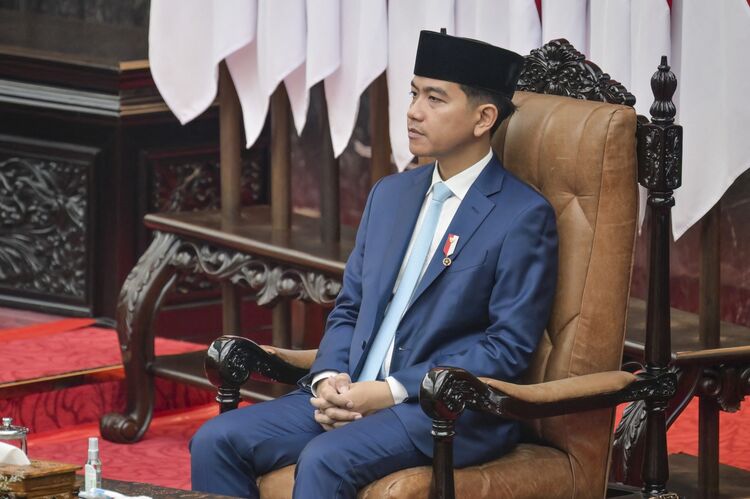
The ruling keeps Gibran in office but leaves questions about his educational credentials unresolved nearly two years into his term as coalition parties begin maneuvering over who might join President Prabowo Subianto for a possible re-election bid in 2029.
The petitioners, who included a former deputy law minister, an election monitoring group and a political party among others, had asked the court to disqualify Gibran and annul his inauguration as vice president. They also sought to have national lawmakers and regional representatives choose a replacement from candidates proposed by Prabowo within 60 days.
Gibran said in a statement from his office Wednesday that he respected the court process and would follow up on its concerns about documents used to establish his education credentials. He added that his university degree demonstrated he had completed secondary school.
“If I hadn’t graduated from high school, I wouldn’t have been able to go to university,” he said.
Indonesia’s election commission, known as the KPU, defended its decision to approve Gibran’s education credentials in 2024, saying the documents were issued by an authorized government ministry, remained legally valid and had previously been accepted when he ran for mayor of Solo in 2020.
The KPU said it therefore had no reason at the time to seek additional clarification and concluded that Gibran had met the education requirement based on the information then available. The commission acknowledged, however, the Constitutional Court’s view that such checks should involve greater scrutiny and said the ruling would guide improvements to future election procedures.
Gibran’s path to the vice presidency was opened by an earlier controversial Constitutional Court ruling. In October 2023, the court created an exception to the minimum age requirement for presidential and vice-presidential candidates that allowed the then 36-year-old to join Prabowo’s ticket.
That ruling drew scrutiny because then-chief justice Anwar Usman, Gibran’s uncle, participated in the case. The court’s ethics council later found Anwar had committed ethical violations, including breaches of impartiality and independence, and removed him as chief justice. The age ruling itself remained binding.
Prabowo and Gibran went on to win 96.2 million votes, or 58.59% of valid ballots, in the February 2024 election.
The ruling Tuesday also shifts the focus to whether parliament or election-oversight bodies will take up the issues the court left unresolved.
Titi Anggraini, an election-law lecturer at the University of Indonesia’s Faculty of Law, said the ruling raised a substantive question over whether Gibran had met the education requirement.
“The flaw lies in whether the candidacy requirement was actually met, not merely in how the KPU verified it,” she said. The question of whether Gibran remains qualified to hold office could be addressed through constitutional procedures in parliament, while alleged negligence by election officials could separately be brought before the election ethics council, she added.
Bivitri Susanti, a law lecturer at the Jentera School of Law, said the court had gone unusually far into the merits of the case while ultimately ruling that the petitioners lacked standing. In effect, she said, “the court has passed the hot potato to parties in parliament to initiate impeachment.”
The case centered on a 2019 Education Ministry certificate that assessed Gibran’s overseas education as equivalent to completing an Indonesian vocational high school. The ministry told the court that the assessment considered his combined academic records from Orchid Park Secondary School in Singapore and UTS Insearch in Australia.
During the hearings, officials also said Gibran’s 2019 application included academic records from UTS Insearch and that the ministry assessed the continuity of his studies, the curriculum and his learning outcomes. Education officials defended the resulting equivalency certificate as a valid government administrative decision.
The challenge was brought more than two years after the presidential election results were declared. Election officials argued the Constitutional Court had no authority to reopen a dispute over candidate eligibility that long after the election, while the petitioners said key documents underpinning their case only became available later.
The KPU had argued the case shouldn’t be heard as a presidential election-result dispute because it concerned candidate eligibility, which it said should have been handled via the election-process dispute mechanism. KPU also challenged the petitioners’ legal standing, saying presidential election-result cases can ordinarily be brought only by participating candidate tickets, not by election monitors, political parties or individual voters.