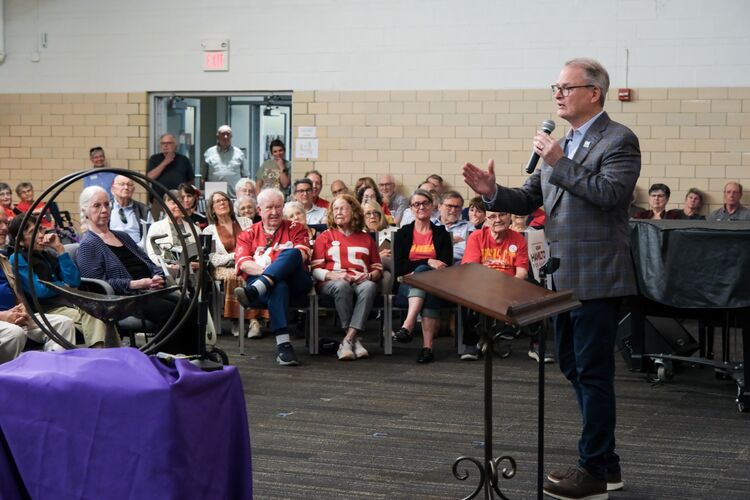
The Democratic Party’s path to controlling the US Senate continues to widen four weeks before Election Day, with once solidly conservative Kansas now considered a tossup race, the nonpartisan Cook Political Report said Tuesday .
Democrats haven’t won a Senate seat in Kansas in 94 years, but the party’s strong recruit in megachurch pastor Adam Hamilton and economic angst over President Donald Trump’s tariff policies and the Iran war have put the agricultural state in play.
A New York Times/Siena poll released over the weekend showed Hamilton tied with incumbent Republican Senator Roger Marshall among likely voters.
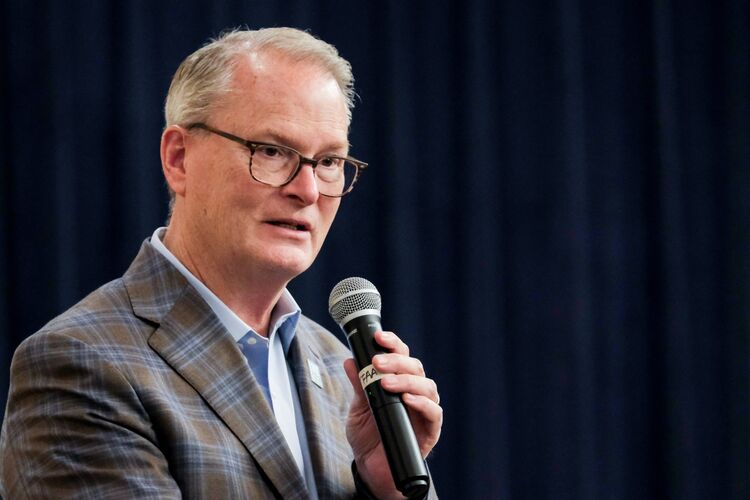
“President Donald Trump is a drag across the board even in deep red states due to rising fuel prices and the persistent high cost of living,” wrote Jessica Taylor, the Cook Political Report’s Senate and governors editor.
Cook now estimates Democrats will pick up two to six Senate seats in the Nov. 3 midterms. They need a net pickup of four seats to win the majority.
The Republicans’ bright spot on the Senate map had been New Hampshire, a seat now held by retiring Democratic Senator Jeanne Shaheen. Cook had shifted that race toward Republicans in recent weeks but moved it back to “lean Democrat” on Tuesday.
In North Carolina, where Republican Thom Tillis is retiring, the race between Democrat Roy Cooper and Republican Michael Whatley was moved from “lean Democrat” to “likely Democrat.”
The Senate Leadership Fund, which already spent $32 million on Whatley’s race against Cooper, has no plans to spend further and will cancel existing reservations, a person familiar with the situation said last week.
Republicans, who have a cash advantage over the Democratic Party, still have hopes of flipping a seat in Michigan and reelecting Susan Collins in Maine, which would narrow the Democrats’ potential pathway to the majority.
“But the momentum nationally remains against the president’s party, with less than a month for them to right the ship,” Taylor wrote.
Other traditional Republican strongholds, including Nebraska and South Carolina , have also become more competitive.