Norway’s $2.3 trillion sovereign wealth fund held on to shares in three Turkish companies this year even after regulators found in 2025 that the stocks had been manipulated.
Norges Bank Investment Management bought stakes in Baticim Bati Anadolu Sanayi ve Ticaret AS, Visne Madencilik Uretim Sanayi VE Ticaret AS and Peker Gayrimenkul Yatirim Ortakligi AS since 2024 and still held them as of June 30 this year, filings show. Turkish regulators fined multiple individuals for manipulating shares in those companies late last year.
That prompted NBIM to cut ties with Istanbul Porftoy Yonetimi AS, the external manager that had been overseeing some of its 20.4 billion kroner ($2.1 billion) in Turkish stock holdings, Bloomberg reported this year. Yet the Oslo-based fund continued to hold on to the stocks along with stakes in multiple other obscure companies in Turkey, filings show.
Many of those stocks have now been swept up in the stock-market crisis that has rocked Turkey since last month. Local investment funds are under scrutiny for allegedly pumping up the values of small, thinly-traded shares that have since collapsed in what Justice Minister Akin Gurlek has described as “Ponzi-like schemes.” The Borsa Istanbul All Share Index has fallen 22% from its all-time high in May, wiping out 4.6 trillion lira ($94.6 billion) of market value.
External managers oversee 1.1 trillion kroner, or 5%, of NBIM’s assets. The fund, created in the 1990s to invest Norway’s oil wealth, owned stakes in at least 10 Turkish companies as of June 30 that prosecutors or regulators have linked to the current probe, Bloomberg has reported.
“The Turkish holdings raise a broader governance question for NBIM,” said Karin Thorburn, a Norwegian School of Economics professor who has served on numerous committees related to the fund’s investment strategy. “When investment decisions are delegated to external managers, are they subject to the same scrutiny and oversight as investments made internally?”
A spokesperson for NBIM declined to comment on the stakes.
It’s unknown whether NBIM still holds shares in Visne, Baticim or Peker. The fund publishes its holdings twice a year and doesn’t reveal changes in between, meaning its most recent disclosure covers up to June 30.
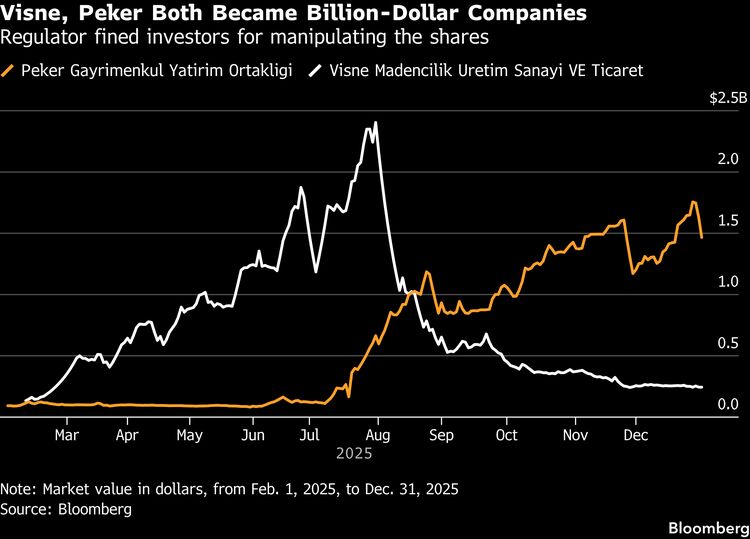
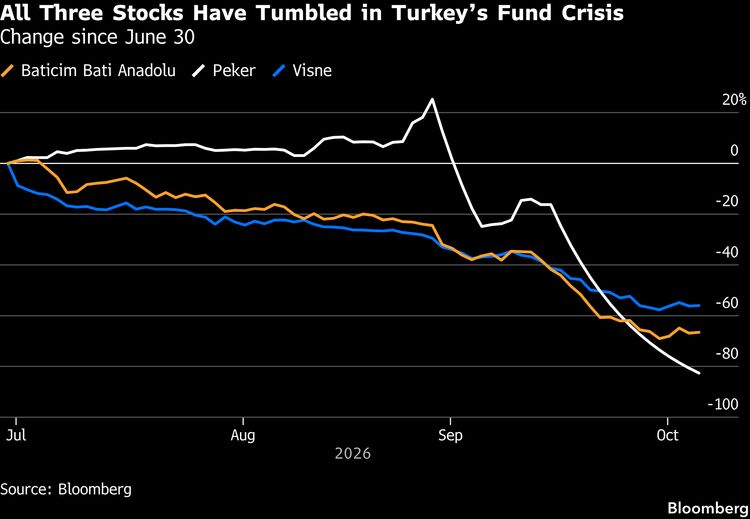
Shares in Visne, a mining company, have lost more than half their value since June 30. Baticim, a cement producer, is down 67% and Peker, a real estate developer, plunged more than 80%. The companies didn’t immediately reply to emails seeking comment.
The Turkish crisis revolves around a group of local finance firms. Prosecutors are probing whether these firms — through investment funds that they oversaw and that were open to retail investors — and others helped drive up the values of stocks to dizzying levels. Dozens of people have been arrested and detained, including fund managers, finance executives and the heads of companies.
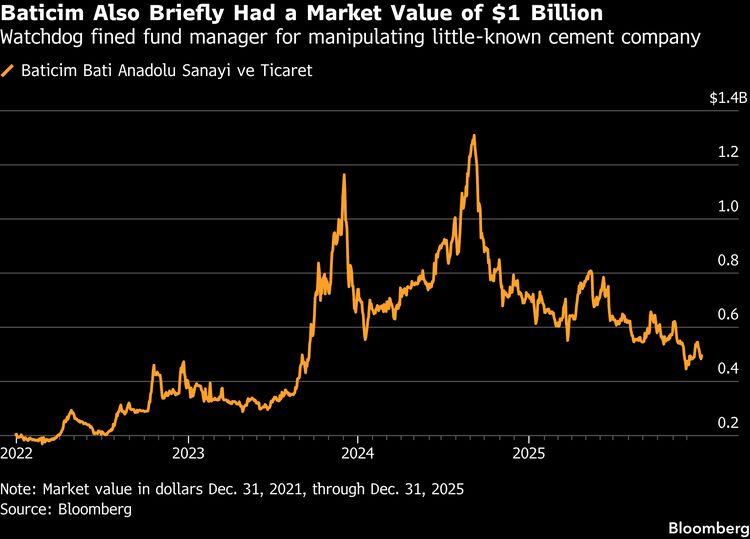
Last year, in a forerunner to the current crisis, local regulators probed movements in the shares of Baticim. The company had soared to a market value of 45 billion lira in 2024 — 10 times its historic average — before tumbling again within weeks. The Capital Markets Board, the Turkish markets watchdog, fined an Istanbul Portfoy managing partner 18.5 million liras in October for “creating a misleading impression about the supply, demand and price” of shares in Baticim, filings show.
| Read more | ||
|---|---|---|
| Turkish Fund’s Goldman Dreams Collapse in ‘Ponzi-Like Scheme’ | ||
|
Norway Wealth Fund Owned Turkish Stocks Swept Up in Probe Norway Fund Bought Tera-Run Turkey IPO That Plunged in Weeks |
Istanbul Portfoy managed about $600 million on behalf of NBIM. The seriousness of the regulator’s allegations — as well as the firm’s alleged failure to proactively disclose it — prompted NBIM to end the relationship, Bloomberg has reported.
Regulators also reviewed movements in Visne and Peker shares. Both had close ties to Tera Yatirim Menkul Degerler AS, one of the local finance firms at the heart of the current crisis. Tera arranged a February 2025 initial public offering for Visne — following which its shares surged more than 2,000% within months to a $2.4 billion valuation. Funds overseen by Tera also controlled almost 40% of traded shares in Peker, which had surged more than 1,000% around the same time, data compiled by Bloomberg show.
The Capital Markets Board fined Alper Ozturk, head of a Tera subsidiary, 8.9 million liras in October for the manipulation of Visne shares, according to filings. In December, the regulator then levied a record amount in fines against 19 individuals over market manipulation involving shares of Peker.
How NBIM came to amass its troubled Turkish stock portfolio is unclear. While the fund invests most of its vast wealth in line with a bespoke index set by the Norwegian Finance Ministry, at least some of its Turkish holdings have been managed by external firms.
NBIM hired another local company, Neo Asset Management, as a replacement after ending the relationship with Istanbul Portfoy, and continued to invest in Turkish deals. In July, the fund was a key investor in the IPO of a company called SA-RA Enerji Insaat, which has since lost about half its value. That deal was arranged by Tera.
The Norwegian Finance Ministry should consider “tightening the mandate” for external managers and imposing restrictions on what they can buy, said Thorburn. NBIM had to terminate relationships with external managers in Israel last year and dump Israeli stocks to address public uproar over investments linked to the war in Gaza.
“Such scandals can impose political and reputational costs in Norway that may outweigh the incremental financial gains from positions outside the benchmark, particularly in emerging markets,” Thorburn said.